
How Professional Interior Designers Transform Spaces
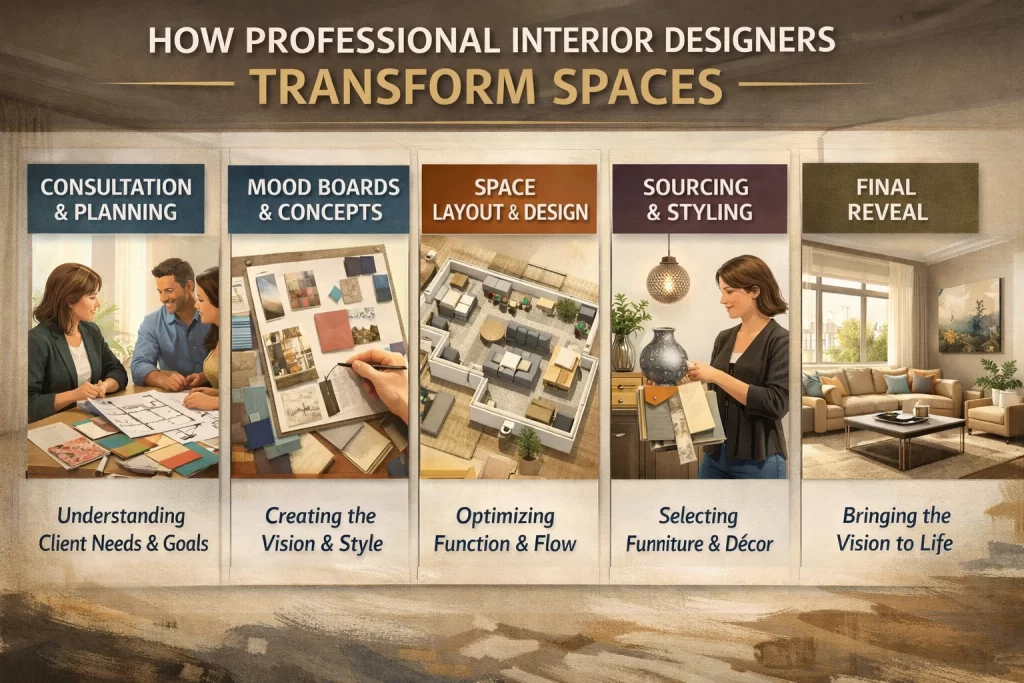

Have you ever walked into a space and instantly felt a sense of comfort, elegance, or inspiration? That seamless blend of aesthetics and functionality is rarely accidental—it is the result of thoughtful planning and expert execution by professional interior designers. In today’s fast-paced world, where homes and workplaces must serve multiple purposes, interior design has evolved into a powerful tool that enhances not just the look of a space but also the way people live and interact within it.
Professional interior designers go far beyond choosing colors or arranging furniture. They analyze spatial dynamics, understand human behavior, and create environments that reflect personality, purpose, and practicality. This comprehensive guide by Avinnyya explores how professional interior designers transform ordinary spaces into extraordinary experiences through a structured and creative process.
What Does an Interior Designer Really Do?
Beyond Decoration – The Science of Design
Many people confuse interior design with simple decoration, but the two are fundamentally different. While decoration focuses on surface-level aesthetics like furniture, accessories, and color schemes, interior design is rooted in technical knowledge and strategic planning. Designers consider factors such as spatial layout, lighting distribution, ergonomics, acoustics, and even ventilation to create spaces that are both beautiful and functional.
Professional interior designers apply principles of architecture and psychology to ensure that every element in a space serves a purpose. For instance, the placement of furniture is not random—it is designed to optimize movement, enhance usability, and create visual balance. This scientific approach is what transforms a room from merely attractive to truly livable.
Understanding Client Needs and Lifestyle
A successful interior design project always begins with understanding the client. Designers invest time in learning about the client’s lifestyle, preferences, habits, and aspirations. Whether it’s a family home, a bachelor apartment, or a corporate office, every space has unique requirements that must be addressed.
For example, a family with children may require durable materials and ample storage, while a professional working from home might prioritize a functional workspace. By aligning design solutions with real-life needs, designers ensure that the final outcome is not just visually appealing but also deeply practical and personalized.
Step-by-Step Process of Interior Transformation
Initial Consultation & Site Analysis
The transformation journey begins with an in-depth consultation and site analysis. During this stage, designers evaluate the existing space, taking note of dimensions, structural elements, lighting conditions, and potential constraints. This helps them identify opportunities and challenges early in the process.
Budget discussions also play a crucial role at this stage. A clear understanding of financial parameters allows designers to propose solutions that are both realistic and impactful, ensuring maximum value without unnecessary compromises.
Concept Development & Mood Boards
Once the initial groundwork is complete, designers move on to concept development. This is where creativity comes into play. Mood boards are created to visually represent the design direction, including color palettes, textures, materials, and overall themes.
These visual tools help clients understand how their space will look and feel after transformation. Whether the concept leans toward minimalism, luxury, or contemporary elegance, this stage sets the foundation for the entire project.
Space Planning & Layout Optimization
Space planning is one of the most critical aspects of interior design. Designers carefully plan the layout to ensure optimal use of available space while maintaining comfort and accessibility. Every piece of furniture is strategically placed to enhance functionality and flow.
In smaller spaces, this might involve using multifunctional furniture or creating open layouts to avoid clutter. In larger spaces, designers focus on defining zones to create a sense of structure and harmony.
Material Selection & Finishes
Choosing the right materials is essential for achieving both durability and aesthetic appeal. Designers select flooring, wall finishes, fabrics, and fixtures that align with the overall design concept while also meeting practical requirements.
For instance, high-traffic areas may require durable flooring, while living rooms might benefit from softer textures that enhance comfort. This careful selection ensures that the space remains functional and visually appealing over time.
Lighting Design Strategy
Lighting plays a transformative role in interior design. Professional designers use a layered lighting approach that includes ambient, task, and accent lighting to create depth and atmosphere.
Natural light is maximized wherever possible, while artificial lighting is strategically placed to highlight key features and improve usability. The right lighting can completely change the mood of a space, making it feel warm, energetic, or relaxing depending on the design intent.
Execution & Project Management
The final stage involves bringing the design to life. This requires coordination with contractors, vendors, and craftsmen to ensure that every detail is executed as planned. Designers oversee the entire process, managing timelines, budgets, and quality standards.
Their expertise ensures that the project runs smoothly and that the final outcome matches the original vision. This end-to-end management is one of the key reasons why hiring a professional designer makes a significant difference.
Key Elements Designers Use to Transform Spaces
Color Psychology
Colors have a profound impact on human emotions and behavior. Professional designers use color psychology to create environments that evoke specific feelings. Soft, neutral tones can create a calming atmosphere, while bold colors can add energy and vibrancy.
By carefully selecting and combining colors, designers ensure that each room serves its intended purpose while maintaining visual harmony throughout the space.
Furniture & Layout
Furniture is not just about style—it plays a crucial role in defining functionality. Designers choose pieces that complement the space while meeting practical needs. Custom furniture is often used to maximize efficiency, especially in compact areas.
The layout is equally important, as it determines how people move and interact within the space. A well-planned layout enhances comfort and usability, making the space more enjoyable to live in.
Lighting & Ambience
Lighting is used to create ambiance and highlight architectural features. Designers use a mix of lighting sources to add depth and dimension to a space. From statement chandeliers to subtle LED strips, each element contributes to the overall aesthetic.
Textures, Patterns & Materials
The combination of different textures and materials adds richness and depth to a design. Designers experiment with wood, metal, glass, and fabrics to create visually engaging spaces. Patterns are used strategically to add interest without overwhelming the design.
Accessories & Décor Styling
Accessories are the finishing touches that bring a design to life. From artwork and rugs to plants and decorative items, these elements add personality and character to the space. Professional styling ensures that every detail aligns with the overall theme.
How Designers Maximize Small Spaces
Smart Storage Solutions
In compact homes, storage is often a challenge. Designers address this by incorporating smart storage solutions such as built-in wardrobes, modular units, and hidden compartments. These solutions help keep the space organized without compromising aesthetics.
Space Illusions & Visual Tricks
Designers use clever techniques to make small spaces appear larger. Mirrors reflect light and create a sense of depth, while light color palettes make rooms feel more open. Glass partitions and open layouts further enhance the perception of space.
Residential vs Commercial Space Transformation
Home Interior Design
Residential design focuses on comfort, personalization, and functionality. Designers create spaces that reflect the homeowner’s personality while ensuring that every room serves its purpose effectively.
Office & Commercial Design
Commercial spaces require a different approach. Designers focus on productivity, branding, and customer experience. A well-designed office can boost employee morale, while an attractive retail space can enhance customer engagement.
Benefits of Hiring Professional Interior Designers
Saves Time and Money
While hiring a designer may seem like an added expense, it often results in significant savings in the long run. Designers help avoid costly mistakes and ensure efficient use of resources.
Access to Resources & Expertise
Professional designers have access to a wide network of vendors and suppliers, allowing them to source high-quality materials at competitive prices.
Unique & Customized Designs
Every project is tailored to the client’s needs, ensuring a unique and personalized outcome that stands out.
Increased Property Value
Well-designed spaces have higher market value, making interior design a smart investment for homeowners and businesses alike.
Common Mistakes Homeowners Make Without Designers
Many homeowners attempt to design their spaces independently, often leading to common mistakes such as poor space planning, mismatched color schemes, inadequate lighting, and overcrowding. These issues not only affect the aesthetics but also reduce functionality and comfort.
Latest Interior Design Trends Used by Professionals
Sustainable & Eco-Friendly Design
Sustainability is becoming increasingly important in interior design. Designers are using eco-friendly materials and energy-efficient solutions to create environmentally responsible spaces.
Smart Homes & Technology Integration
Technology is playing a major role in modern interiors. Smart lighting, automated systems, and integrated devices are enhancing convenience and efficiency.
Minimalist & Functional Spaces
Minimalism continues to be a popular trend, focusing on clean lines, clutter-free environments, and functional design.
Biophilic Design
Bringing nature indoors is another growing trend. Designers incorporate plants, natural materials, and organic elements to create calming and refreshing environments.
Why Choose Avinnyya for Interior Design Services
Choosing the right design partner is crucial for achieving the desired results. Avinnyya stands out for its client-centric approach, experienced team, and commitment to excellence. From concept development to final execution, Avinnyya offers end-to-end services that ensure a seamless and stress-free experience.
Their ability to combine creativity with practicality allows them to deliver designs that are not only visually stunning but also highly functional. Whether it’s a residential or commercial project, Avinnyya transforms spaces into meaningful experiences.
For those exploring premium design solutions, you can also explore an interior design company in bangalore to understand how regional expertise enhances project outcomes and connects seamlessly with broader design trends.
Before & After Transformations (Case Study Section)
One of the most compelling aspects of professional interior design is the visible transformation it brings. Before-and-after comparisons highlight the impact of thoughtful planning and execution. Spaces that once felt cluttered, dull, or inefficient are transformed into organized, vibrant, and functional environments.
These transformations often involve reimagining layouts, upgrading materials, and introducing cohesive design elements that tie the entire space together.
Tips to Work Effectively with an Interior Designer
Working with a designer is a collaborative process. Clear communication is essential to ensure that expectations are aligned. Clients should be open about their preferences, budget, and timeline while also trusting the designer’s expertise.
Being open to new ideas can lead to innovative solutions that enhance the final outcome. A strong partnership between client and designer is key to achieving a successful transformation.
Conclusion
Professional interior designers have the ability to transform spaces in ways that go far beyond aesthetics. Through a combination of technical expertise, creative vision, and strategic planning, they create environments that enhance both functionality and quality of life.
From initial consultation to final execution, every step in the design process contributes to a cohesive and impactful result. Investing in professional interior design is not just about improving a space—it’s about creating an experience that reflects who you are and how you live.