
How to Design a Studio Apartment Efficiently: The Complete Smart Space Planning Guide
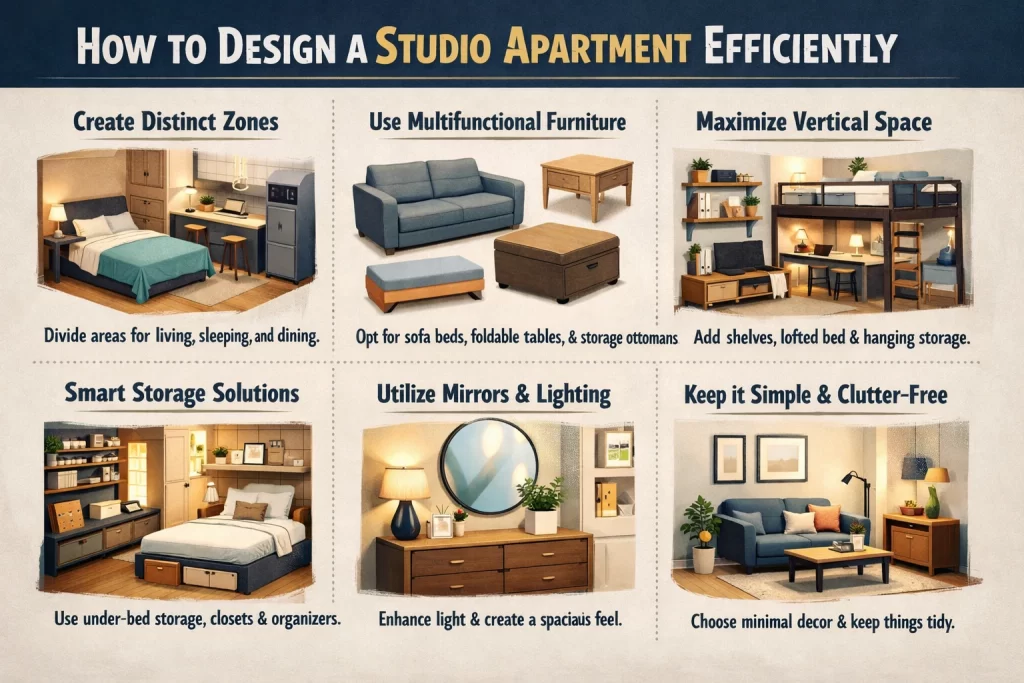

Introduction to Studio Apartment Living
Studio apartments are becoming increasingly popular in modern urban living, especially among young professionals, students, and couples seeking affordable and compact housing solutions. A studio apartment typically combines the living room, bedroom, and kitchen into a single open space, with only the bathroom separated. While this layout offers convenience and simplicity, it also presents unique design challenges.
Designing a studio apartment efficiently is not just about making it look visually appealing—it’s about creating a functional, organized, and comfortable living environment within limited square footage. Without proper planning, a studio can easily feel cluttered and cramped. However, with the right strategies, even the smallest space can be transformed into a stylish and highly functional home.
This guide explores every aspect of studio apartment design, helping you maximize space, improve functionality, and enhance aesthetics.
Understanding Your Space Before Designing
Before diving into furniture or décor, it’s essential to understand your space thoroughly. A well-planned design always starts with a clear assessment of the layout.
Measure and Analyze the Layout
Accurate measurements form the foundation of efficient design. Begin by measuring the dimensions of your apartment, including wall lengths, ceiling height, window placements, and door openings. This helps in selecting furniture that fits perfectly without overcrowding the space.
Analyzing the layout also allows you to identify awkward corners, dead zones, or underutilized areas that can be optimized with smart design solutions.
Identify Functional Zones
Even though a studio apartment is a single room, it should still function like a complete home. Dividing the space into zones ensures better organization and usability. Key zones typically include a sleeping area, living space, kitchen/dining area, and sometimes a work-from-home corner.
Defining these zones early helps you plan furniture placement and avoid a chaotic layout.
Natural Light and Ventilation Considerations
Natural light plays a crucial role in making a small space feel larger and more inviting. Observe how sunlight enters your apartment throughout the day and plan your layout accordingly. Positioning your living or work area near windows can enhance comfort and productivity.
Good ventilation is equally important, as it keeps the space fresh and prevents it from feeling enclosed.
Smart Zoning Techniques for Studio Apartments
Creating distinct zones without compromising openness is key to efficient studio design.
Visual vs Physical Dividers
Visual dividers such as rugs, color changes, or lighting variations can subtly separate spaces without blocking light or airflow. For example, placing a rug under your bed can define the sleeping area.
Physical dividers like curtains, open shelving units, or glass partitions provide more privacy while still maintaining a sense of openness.
Open-Plan vs Semi-Partition Layouts
An open-plan layout keeps the apartment airy and spacious, making it ideal for very small studios. On the other hand, semi-partitions can offer a balance between openness and privacy, especially for separating the bedroom area.
Choosing the right approach depends on your lifestyle and personal preferences.
Choosing Multi-Functional Furniture
Furniture plays a critical role in determining how efficiently your studio apartment functions.
Space-Saving Furniture Ideas
In compact spaces, every piece of furniture should serve a purpose. Sofa-cum-beds are excellent for converting a living area into a sleeping space. Foldable dining tables can be tucked away when not in use, freeing up valuable floor space.
Wall-mounted desks are perfect for creating a workspace without occupying permanent floor area.
Convertible and Modular Furniture
Convertible furniture is a game-changer for studio apartments. Murphy beds that fold into the wall, expandable tables, and stackable chairs allow flexibility and adaptability.
Modular furniture adds another layer of efficiency, enabling you to rearrange or customize pieces based on your needs.
Custom Furniture Solutions by Avinnyya
Custom-designed furniture ensures that every inch of your apartment is utilized effectively. Tailored solutions can address specific challenges such as awkward corners or limited storage.
If you’re looking for professional expertise, working with an interior design company in bangalore can help you achieve a perfectly optimized and aesthetically pleasing studio layout.
Maximizing Storage Without Clutter
Storage is often the biggest challenge in studio apartments, but smart solutions can make a huge difference.
Vertical Storage Solutions
Utilizing vertical space is essential in small homes. Wall-mounted shelves, tall cabinets, and floor-to-ceiling wardrobes provide ample storage without consuming floor space.
Vertical storage not only keeps your belongings organized but also draws the eye upward, making the room appear taller.
Hidden Storage Ideas
Hidden storage solutions help maintain a clean and uncluttered look. Beds with built-in drawers, storage ottomans, and multi-purpose furniture with concealed compartments are highly effective.
Built-in cabinetry can also be customized to blend seamlessly with the overall design.
Decluttering Strategies
Efficient design goes hand in hand with minimalism. Regularly decluttering your space ensures that only essential items remain. Adopting a “less is more” approach can significantly improve both functionality and visual appeal.
Color Schemes and Visual Expansion Tricks
Color choices can dramatically impact how spacious your studio apartment feels.
Best Colors for Small Spaces
Light and neutral colors such as white, beige, and soft pastels reflect light and create an airy atmosphere. Monochromatic color schemes further enhance the sense of continuity and openness.
Using Mirrors and Reflective Surfaces
Mirrors are one of the most effective tools for making a small space appear larger. Placing mirrors opposite windows can reflect natural light and create the illusion of depth.
Reflective surfaces such as glass and glossy finishes also contribute to a more spacious feel.
Accent Colors Without Overcrowding
While neutral tones dominate, adding subtle accent colors can bring personality to your space. The key is to use them sparingly through cushions, artwork, or décor elements.
Lighting Design for Studio Apartments
Lighting plays a vital role in both functionality and ambiance.
Layered Lighting Approach
A combination of ambient, task, and accent lighting ensures a well-lit and versatile space. Ambient lighting provides overall illumination, while task lighting focuses on specific activities such as reading or cooking.
Accent lighting highlights décor elements and adds depth to the design.
Natural vs Artificial Lighting
Maximizing natural light should always be a priority. Use sheer curtains to allow sunlight to flow in while maintaining privacy.
For artificial lighting, choose fixtures that complement the overall design and do not occupy too much space.
Space-Saving Lighting Fixtures
Wall-mounted lights, pendant lights, and LED strips are excellent choices for studio apartments. They provide sufficient lighting without taking up valuable floor or surface space.
Designing a Functional Kitchen in a Studio
The kitchen in a studio apartment needs to be compact yet efficient.
Compact Kitchen Layouts
Straight-line and L-shaped layouts are ideal for small kitchens. They ensure easy movement and efficient use of space.
Smart Storage for Small Kitchens
Pull-out cabinets, corner units, and hanging racks help maximize storage in limited kitchen areas. Keeping countertops clutter-free enhances both functionality and aesthetics.
Appliance Selection Tips
Opt for compact, multi-purpose appliances that save space and energy. Built-in appliances can also create a seamless and organized look.
Creating a Comfortable Sleeping Area
A well-designed sleeping area is essential for comfort and relaxation.
Bed Placement Strategies
Placing the bed in a corner or against a wall helps free up central space. Loft beds are another excellent option for maximizing floor area.
Privacy Solutions
Curtains, folding screens, or sliding panels can create a sense of privacy without permanently dividing the space.
Bedding and Décor Tips
Keep bedding simple and cohesive with the overall color scheme. Avoid excessive décor to maintain a clean and calming environment.
Work-from-Home Setup in a Studio Apartment
With remote work becoming common, incorporating a workspace is essential.
Choosing the Right Spot
Select a quiet corner with good natural light for your workspace. This enhances productivity and reduces distractions.
Compact Desk Ideas
Foldable desks and wall-mounted workstations are ideal for small spaces. They can be easily stored when not in use.
Maintaining Work-Life Balance
Visually separating your workspace from living areas helps maintain a healthy balance between work and personal life.
Decorating Without Overcrowding
Decorating a studio apartment requires a careful balance between style and simplicity.
Minimalist Décor Approach
Adopting a minimalist approach ensures that your space remains uncluttered and visually appealing.
Wall Art and Accessories
Choose a few statement pieces instead of multiple small items. This creates a focal point without overwhelming the space.
Indoor Plants for Freshness
Small indoor plants add life and freshness to your apartment without taking up much space.
Flooring and Material Selection
Flooring and materials play a crucial role in creating a cohesive design.
Best Flooring Options for Small Spaces
Light-colored flooring, whether tiles or wood, enhances brightness and openness.
Consistency in Materials
Using consistent materials throughout the apartment creates a seamless flow, making the space appear larger and more unified.
Budget-Friendly Studio Apartment Design Tips
Designing efficiently doesn’t always require a large budget.
Prioritizing Essentials
Focus on essential furniture and features before investing in decorative elements.
DIY vs Professional Design
While DIY solutions can save money, professional designers bring expertise and efficiency, especially for complex layouts.
Cost-Effective Design Hacks
Repurposing furniture, using multipurpose items, and choosing affordable décor can significantly reduce costs.
Common Mistakes to Avoid
Avoiding common mistakes can greatly improve your studio apartment design. Overcrowding the space with too much furniture, ignoring vertical storage, and using dark or heavy materials can make the apartment feel smaller. Poor lighting and lack of planning are also common pitfalls that should be addressed early in the design process.
Why Choose Avinnyya for Studio Apartment Design
Avinnyya specializes in creating smart, functional, and aesthetically pleasing interiors for compact homes. With a focus on customization and modern design solutions, Avinnyya ensures that every space is optimized to its full potential. From planning to execution, their expertise helps transform even the smallest studio into a comfortable and stylish living space.
Conclusion
Designing a studio apartment efficiently requires thoughtful planning, smart furniture choices, and a focus on functionality. By utilizing space-saving techniques, optimizing storage, and maintaining a cohesive design, you can create a home that feels spacious, organized, and inviting.
Whether you’re designing from scratch or renovating an existing space, the key lies in balancing aesthetics with practicality. With the right approach, even the smallest studio apartment can become a dream living space.
FAQs on Studio Apartment Design
How do I make my studio apartment look bigger?
Using light colors, mirrors, and minimal furniture can create the illusion of a larger space.
What furniture is best for studio apartments?
Multi-functional and convertible furniture such as sofa beds and foldable tables are ideal.
How can I create privacy in a studio apartment?
Curtains, partitions, and smart furniture placement can help define private areas.
What is the best layout for a studio apartment?
An open-plan layout with clearly defined zones works best for most studio apartments.
Is hiring an interior designer worth it for small spaces?
Yes, professional designers can maximize space efficiency and create a well-balanced design.