
Residential vs Commercial Interior Design: Key Differences
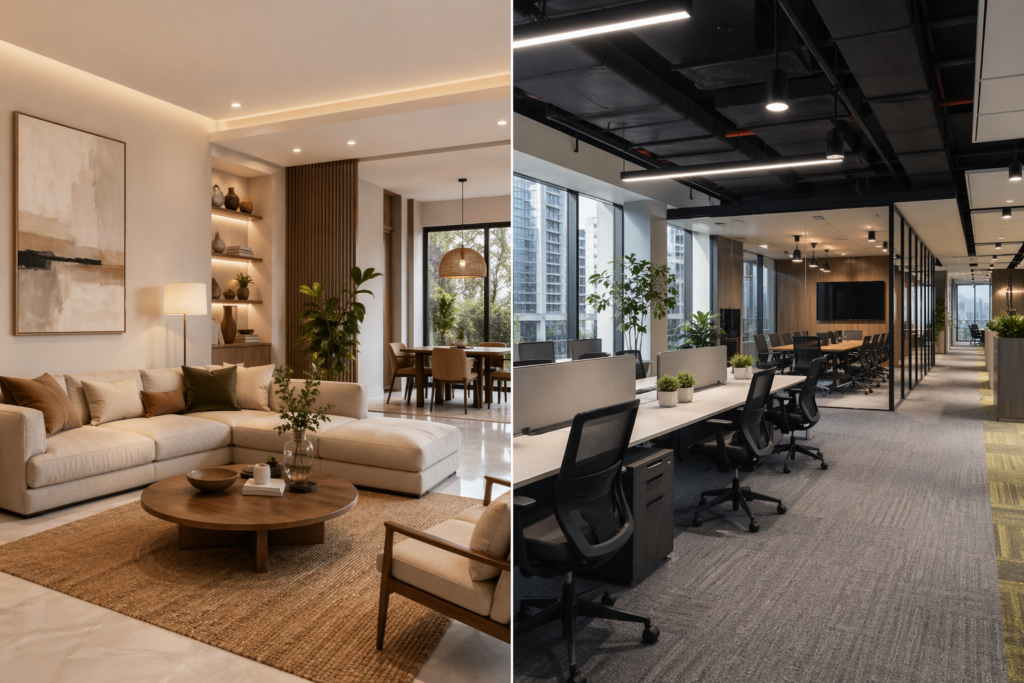

Interior design plays a crucial role in shaping how we experience spaces—whether it’s the comfort of our home or the functionality of a workplace. Every space is designed with a purpose, and that purpose determines the approach, materials, aesthetics, and execution involved in the design process. Among the many branches of interior design, residential and commercial interior design stand out as the two primary categories.
While both disciplines share foundational principles like space planning, color theory, and lighting design, they differ significantly in terms of goals, scale, and execution. Understanding these differences is essential for homeowners, business owners, and even investors who want to make informed decisions about their spaces.
In this comprehensive guide, we’ll explore the key differences between residential and commercial interior design, diving deep into every aspect—from functionality and aesthetics to budget and compliance—while helping you determine which approach best suits your needs.
What is Residential Interior Design?
Definition and Purpose
Residential interior design focuses on creating comfortable, functional, and aesthetically pleasing living spaces tailored to individual lifestyles. These spaces include homes, apartments, villas, and any environment where people live and relax. The primary goal of residential design is to reflect the personality and preferences of the homeowner while ensuring maximum comfort and usability.
Unlike commercial design, which is driven by business goals, residential design is deeply personal. Every element—from furniture selection to color palette—is chosen to evoke a sense of belonging and emotional connection.
Types of Residential Spaces
Residential design encompasses a wide range of living environments. Apartments and flats are among the most common, especially in urban areas, where space optimization becomes critical. Independent houses and villas offer more flexibility in layout and design, allowing for creative experimentation. Studio apartments and duplex homes present unique challenges and opportunities, requiring smart design solutions to maximize functionality without compromising style.
Each type of residential space demands a tailored approach, considering factors such as family size, lifestyle habits, and spatial constraints.
Key Goals
The core goals of residential interior design revolve around comfort, personalization, and functionality. Designers aim to create spaces that cater to daily routines while also offering a relaxing environment. Personal style plays a significant role, as homeowners often want their space to reflect their tastes, whether modern, traditional, or eclectic.
Emotional connection is another crucial aspect. A well-designed home doesn’t just look good—it feels right. It becomes a sanctuary where individuals can unwind and recharge.
What is Commercial Interior Design?
Definition and Purpose
Commercial interior design focuses on designing spaces used for business, public interaction, or professional activities. These include offices, retail stores, restaurants, hotels, hospitals, and educational institutions. The primary purpose is to create environments that enhance productivity, reinforce brand identity, and improve user experience.
Unlike residential design, commercial design is less about personal preference and more about achieving strategic business objectives. Every design decision is aligned with functionality, efficiency, and brand messaging.
Types of Commercial Spaces
Commercial spaces vary widely in their function and design requirements. Offices and coworking spaces prioritize productivity and employee well-being. Retail stores and showrooms focus on customer engagement and visual merchandising. Restaurants, cafes, and hotels emphasize ambiance and customer experience, while hospitals and educational institutions require strict adherence to safety and functionality standards.
Each type of commercial space demands a unique design approach based on its purpose and audience.
Key Goals
The primary goals of commercial interior design include creating a strong brand identity, optimizing workflow, and ensuring compliance with safety regulations. For example, an office layout should facilitate collaboration, while a retail store should guide customers seamlessly through the space.
Efficiency is key. Every square foot must be utilized effectively to support business operations and maximize return on investment.
Residential vs Commercial Interior Design: Core Differences
1. Purpose and Functionality
The most fundamental difference lies in purpose. Residential design is centered around personal comfort and lifestyle, whereas commercial design is driven by business objectives such as productivity, sales, and customer satisfaction.
2. Design Approach
Residential design is flexible and emotionally driven, often evolving through collaboration between the designer and homeowner. In contrast, commercial design follows a strategic, data-driven approach that considers user behavior, branding, and operational efficiency.
3. Aesthetic Choices
In residential spaces, aesthetics are highly personalized, with warm tones, cozy textures, and unique décor elements. Commercial spaces, however, prioritize consistency and brand alignment, often featuring clean lines, professional finishes, and cohesive themes.
4. Material Selection
Material selection differs significantly between the two. Residential interiors often use soft, comfortable materials like fabrics, wood, and cushions. Commercial interiors require durable, high-performance materials such as metal, glass, and laminates that can withstand heavy usage.
5. Budget Considerations
Residential budgets are typically based on individual financial capacity, with flexibility in spending. Commercial projects usually involve larger budgets with a focus on return on investment, making cost efficiency a critical factor.
6. Timeline and Scale
Residential projects are generally smaller in scale and allow for flexible timelines. Commercial projects, on the other hand, are often large-scale and must adhere to strict deadlines to minimize business disruptions.
7. Regulations and Compliance
Commercial design must comply with strict building codes, safety standards, and accessibility regulations. Residential design has fewer legal constraints, offering more creative freedom.
8. User Experience
Residential design focuses on the comfort of individuals and families, while commercial design prioritizes the experience of customers, employees, and visitors.
Design Process Comparison
Residential Design Process
The residential design process begins with understanding the client’s lifestyle, preferences, and needs. Designers create mood boards and concepts that align with the homeowner’s vision. Material selection and customization follow, ensuring every detail reflects the desired aesthetic. Finally, the execution phase brings the design to life, often with a focus on styling and finishing touches.
Commercial Design Process
Commercial design starts with analyzing business goals and brand identity. Designers then focus on space planning and workflow optimization to ensure efficiency. Compliance checks and approvals are critical before execution begins. The implementation phase involves precise project management to meet deadlines and maintain quality standards.
Challenges in Residential vs Commercial Design
Residential Challenges
One of the biggest challenges in residential design is balancing aesthetics with budget constraints. Designers must also accommodate diverse family needs, which can sometimes conflict. Limited space is another common issue, especially in urban homes, requiring innovative solutions for storage and layout.
Commercial Challenges
Commercial design presents its own set of challenges, including strict regulatory requirements and the need to design for high foot traffic. Aligning the design with brand identity while maintaining functionality can be complex. Additionally, managing large teams and tight deadlines requires strong coordination and planning.
Similarities Between Residential and Commercial Design
Despite their differences, both residential and commercial design share several similarities. Both require creativity, technical expertise, and a deep understanding of space planning. Elements like lighting, color schemes, and furniture selection play a crucial role in both types of design.
Client collaboration is also essential in both cases. Whether designing a home or a corporate office, understanding the client’s needs is key to delivering a successful project.
Trends in Residential and Commercial Interior Design
Residential Trends
Modern residential design is increasingly focused on smart homes and automation, allowing homeowners to control lighting, temperature, and security with ease. Sustainability is another major trend, with eco-friendly materials gaining popularity. Minimalist and multifunctional furniture is also in demand, especially in compact urban homes.
Commercial Trends
Commercial spaces are evolving to accommodate flexible work environments, especially with the rise of hybrid work models. Biophilic design, which incorporates natural elements, is becoming popular for enhancing well-being. Technology integration, including AI and IoT, is transforming how commercial spaces function and interact with users.
Which One Do You Need?
Choosing between residential and commercial interior design depends entirely on your needs. If you’re designing a home, residential design is the obvious choice, focusing on comfort and personalization. For businesses, commercial design is essential to create functional and brand-driven spaces.
In some cases, hybrid spaces like home offices require a blend of both approaches. This is where professional expertise becomes invaluable in achieving the perfect balance.
If you’re looking for expert guidance, working with an experienced interior design company in bangalore can help you seamlessly navigate both residential and commercial projects with tailored solutions.
Why Choose Avinnyya for Interior Design?
Avinnyya stands out as a trusted name in interior design, offering expertise in both residential and commercial projects. With a focus on customization, innovation, and quality, the brand delivers spaces that are not only visually appealing but also highly functional.
From concept to execution, Avinnyya provides end-to-end solutions, ensuring a smooth and hassle-free experience. Their ability to understand client needs and translate them into stunning designs makes them a preferred choice for a wide range of projects.
Conclusion
Understanding the differences between residential and commercial interior design is essential for making informed decisions about your space. While residential design focuses on comfort and personalization, commercial design emphasizes functionality, branding, and efficiency.
Both disciplines require a unique approach, and choosing the right one can significantly impact the success of your project. Whether you’re designing a cozy home or a dynamic business space, professional interior design can transform your vision into reality.