
How to Make a 2BHK Look Spacious Without Breaking Walls
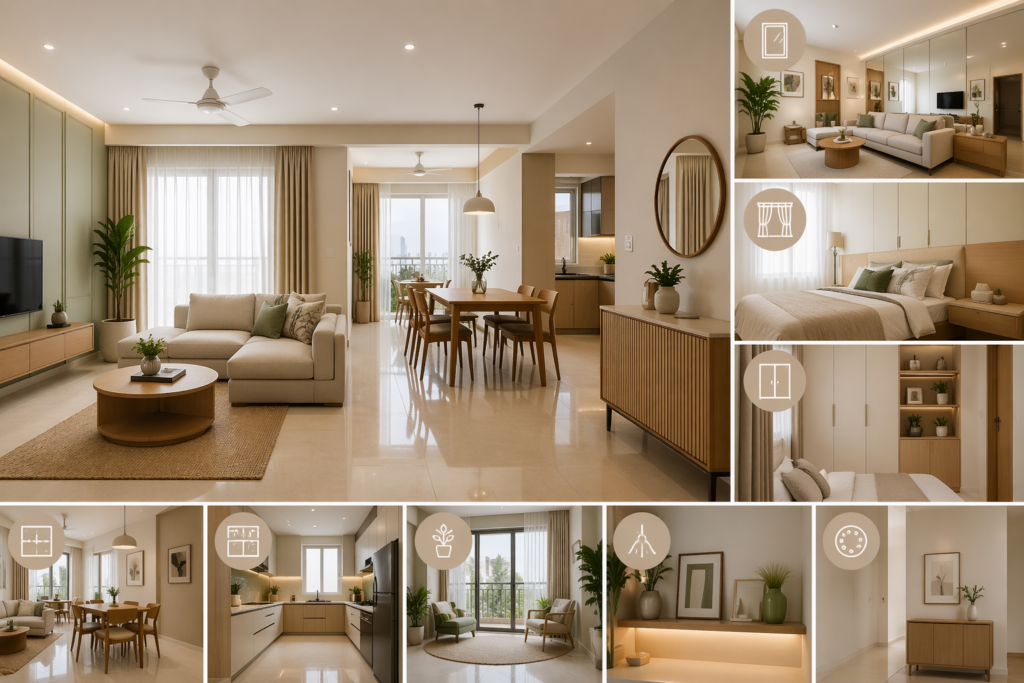

In today’s urban lifestyle, 2BHK apartments have become the most practical choice for families, working professionals, and even investors. However, one of the most common challenges homeowners face is making these compact spaces feel open, breathable, and clutter-free. While breaking walls or undertaking major renovations might seem like the only solution, the truth is—you don’t need structural changes to create a spacious home.
With the right interior design strategies, even a modest 2BHK can feel expansive, elegant, and highly functional. The secret lies in understanding how visual perception works and using smart design techniques to manipulate space. This blog explores practical, expert-approved ways to make your 2BHK look spacious without touching a single wall.
Understanding Space Perception in Interior Design
Visual vs. Physical Space
When it comes to interior design, spaciousness is not always about square footage. A home may be physically small but visually expansive if designed correctly. Visual space refers to how large or open a room feels, which can be influenced by color, lighting, furniture, and layout.
By focusing on enhancing visual openness, you can make your 2BHK appear significantly larger than it actually is. This approach is cost-effective and far less disruptive than structural modifications.
Key Factors That Affect Spaciousness
Several elements contribute to how spacious a room feels. Lighting plays a crucial role—well-lit rooms appear larger and more inviting. Color schemes, especially lighter tones, can open up a space visually. Furniture placement determines flow and movement, while efficient use of vertical space ensures that the room doesn’t feel cramped. When all these factors work together, they create a seamless sense of openness.
Smart Furniture Choices for Compact Living
Multi-Functional Furniture
In a 2BHK apartment, every piece of furniture should serve more than one purpose. Multi-functional furniture such as sofa-cum-beds, foldable dining tables, and storage ottomans can drastically reduce clutter while maximizing usability. These pieces allow you to transform your living area based on your needs without overcrowding it.
For example, a foldable dining table can remain compact when not in use, freeing up valuable floor space. Similarly, a bed with built-in storage eliminates the need for extra cabinets.
Opt for Sleek and Leggy Furniture
Bulky furniture can make a small room feel even tighter. Instead, opt for sleek designs with exposed legs. Furniture that sits slightly above the ground creates a sense of openness by allowing light to flow underneath it. This simple visual trick makes the room feel less crowded.
Minimalist sofas, slim chairs, and compact tables contribute to a lighter, more airy aesthetic.
Built-In and Custom Furniture
Custom-built furniture is one of the smartest investments for small homes. Wall-mounted TV units, built-in wardrobes, and modular storage solutions are designed to fit perfectly into your space without wasting an inch. These designs eliminate awkward gaps and create a clean, streamlined look.
Decluttering: The First Step to Spaciousness
Minimalism in 2BHK Interiors
No matter how well-designed your home is, clutter can instantly make it feel cramped. Adopting a minimalist approach helps maintain a clean and open environment. This doesn’t mean your home should feel empty—it simply means keeping only what is necessary and meaningful.
Regularly decluttering your home ensures that every item has a purpose and a designated place.
Smart Storage Solutions
Effective storage is key to maintaining a spacious look. Hidden storage options such as under-bed compartments, sofa storage, and concealed cabinets help keep everyday items out of sight. Vertical shelving units make use of wall space, reducing the need for additional furniture.
In kitchens, modular storage accessories like pull-out drawers and corner units ensure that even the smallest areas are utilized efficiently.
Color Psychology to Make Rooms Look Bigger
Light and Neutral Shades
Color has a powerful impact on spatial perception. Light and neutral shades such as white, beige, cream, and soft pastels reflect more light, making a room appear larger and brighter. These colors create a calm and airy atmosphere, which is essential for compact homes.
Monochromatic Color Schemes
Using a consistent color palette throughout your home creates visual continuity. When there are fewer color breaks, the eye moves smoothly from one area to another, making the space feel larger. Monochromatic schemes, where different shades of the same color are used, are particularly effective.
Accent Colors Done Right
While light colors dominate, adding subtle accents can enhance depth and character. The key is to use bold colors sparingly—through cushions, artwork, or small décor elements—without overwhelming the space.
Lighting Techniques to Enhance Space
Maximize Natural Light
Natural light is one of the most effective ways to make a space feel bigger. Keep windows unobstructed and use sheer curtains instead of heavy drapes. The more sunlight that enters your home, the more open and inviting it feels.
Layered Lighting Design
A well-lit home uses a combination of ambient, task, and accent lighting. Ceiling lights provide overall illumination, while task lighting focuses on specific areas like kitchens or study zones. Accent lighting highlights décor elements and adds depth to the room.
Wall-mounted lights are a great alternative to floor lamps, as they save space while maintaining brightness.
Mirrors and Reflective Surfaces
Mirrors are a classic trick for creating the illusion of space. Placing a mirror opposite a window reflects natural light and makes the room appear larger. Glossy finishes, glass surfaces, and metallic accents also enhance brightness and openness.
Layout Planning for Better Flow
Open Layout Illusion Without Breaking Walls
Even without removing walls, you can create an open-plan feel through smart furniture placement. Arrange furniture in a way that defines zones without blocking movement. For instance, a sofa can act as a divider between the living and dining areas.
Rugs and lighting can further differentiate spaces while maintaining visual continuity.
Avoiding Overcrowding
One of the biggest mistakes in small homes is trying to fit too much furniture into limited space. Prioritize essential pieces and leave enough breathing room between them. Negative space is just as important as occupied space in creating a balanced design.
Functional Room Zoning
In a 2BHK, rooms often serve multiple purposes. A corner of the bedroom can double as a workspace, while the living room can include a compact dining area. Thoughtful zoning ensures that each area is functional without feeling cramped.
Vertical Space Utilization
Floor-to-Ceiling Storage
Instead of spreading storage horizontally, take advantage of vertical space. Floor-to-ceiling wardrobes and cabinets provide ample storage while drawing the eye upward, making the room appear taller.
Wall Decor That Enhances Height
Vertical design elements such as tall curtains, vertical panels, or elongated artwork can create the illusion of higher ceilings. Hanging curtains closer to the ceiling rather than just above the window frame enhances this effect.
Smart Use of Glass and Transparent Elements
Glass Partitions Instead of Solid Dividers
If you need to separate spaces, consider using glass partitions instead of solid walls. Glass maintains visual connectivity while providing functional separation, making the home feel more open.
Acrylic and Transparent Furniture
Transparent furniture pieces, such as acrylic chairs or glass tables, occupy less visual space. They blend seamlessly into the environment, reducing visual clutter.
Flooring and Ceiling Design Tricks
Consistent Flooring Across Rooms
Using the same flooring throughout your 2BHK creates a seamless look. It eliminates visual breaks and makes the entire space feel larger and more connected.
Large Tiles or Light Flooring
Large-format tiles or light-colored flooring materials enhance the sense of space. Fewer grout lines create a cleaner, more expansive appearance.
Minimal False Ceiling Design
While false ceilings can add aesthetic appeal, overly complex designs can make a room feel smaller. Opt for simple, minimal ceiling designs with subtle lighting elements.
Small Bedroom Design Hacks
Space-Saving Bed Designs
Beds with hydraulic storage or built-in drawers are ideal for small bedrooms. They eliminate the need for additional storage units, freeing up space.
Wall-mounted nightstands further reduce clutter and keep the floor area open.
Wardrobe Optimization
Sliding wardrobes are a great choice for compact bedrooms, as they don’t require extra space to open. Well-organized interiors ensure maximum storage efficiency.
Kitchen Space Optimization
Modular Kitchen Layouts
Efficient layouts such as L-shaped or parallel kitchens make the best use of available space. These designs ensure smooth workflow and easy movement.
Smart Storage Accessories
Modern kitchens benefit from pull-out cabinets, tall units, and corner storage solutions. These features make it easier to access items while keeping the kitchen clutter-free.
Bathroom Design for a Spacious Feel
Use of Glass Shower Partitions
Replacing shower curtains with glass partitions keeps the bathroom visually open. It allows light to flow freely, making the space appear larger.
Wall-Mounted Fixtures
Floating vanities and wall-mounted toilets create more visible floor space, enhancing the sense of openness.
Balcony and Utility Space Utilization
Balconies are often underutilized in 2BHK homes. With the right design, they can become functional extensions of your living space. Foldable furniture, vertical gardens, or compact seating arrangements can transform balconies into relaxing zones.
Utility areas can also be optimized with wall-mounted racks and foldable drying systems.
Common Mistakes to Avoid
Many homeowners unknowingly make design choices that reduce the sense of space. Over-decorating, using too many dark colors, blocking natural light, and ignoring storage planning are some of the most common mistakes. Avoiding these pitfalls is essential to maintaining a spacious and harmonious home.
Why Professional Design Makes a Difference
While DIY solutions can help, professional interior designers bring expertise, creativity, and precision to the table. They understand how to balance aesthetics with functionality, ensuring that every inch of your home is utilized effectively. If you’re looking for expert guidance, working with an interior design company in bangalore can help you achieve a well-planned, spacious home tailored to your needs.
Conclusion
Creating a spacious 2BHK without breaking walls is entirely possible with thoughtful design choices. From smart furniture and strategic lighting to clever storage and cohesive color schemes, every element plays a role in enhancing visual space.
Instead of focusing on structural changes, focus on optimizing what you already have. With the right approach, your 2BHK can feel open, stylish, and perfectly suited to modern living.