
Interior Design Mistakes to Avoid in Small Spaces
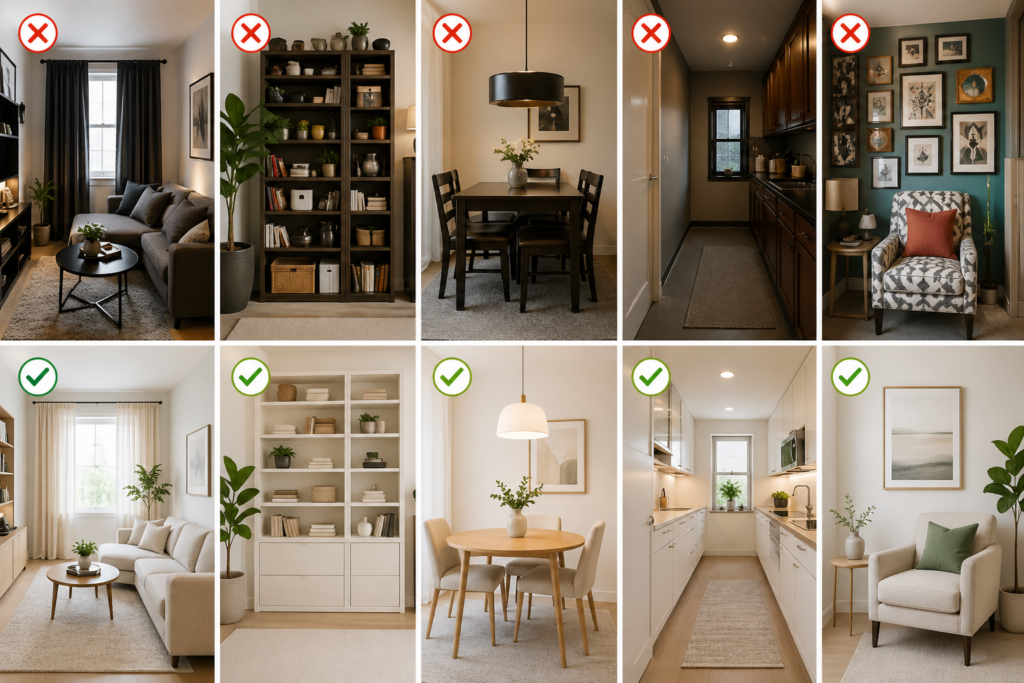

Designing a small space is both an art and a challenge. While compact homes and apartments are becoming increasingly common, making them feel spacious, functional, and stylish requires thoughtful planning. Unfortunately, many homeowners unknowingly make design mistakes that make their space feel even smaller, cluttered, and uncomfortable.
The good news is that most of these mistakes are easy to fix once you understand them. By making smarter design choices, even the tiniest room can feel open, airy, and inviting. In this guide, we’ll walk you through the most common interior design mistakes to avoid in small spaces and show you how to transform your home into a beautifully optimized living environment.
Overcrowding the Space with Furniture
One of the most common mistakes in small homes is trying to fit too much furniture into limited square footage. While it may seem practical to include everything you might need, overcrowding quickly leads to a cramped and chaotic look.
Large, bulky furniture pieces dominate the room and leave little space for movement. Instead of making your home functional, they make it feel suffocating. The key is to choose furniture that fits the scale of your space. Opt for sleek, compact designs that provide utility without overwhelming the room.
Multi-functional furniture is a game changer for small spaces. A sofa that doubles as a bed or a coffee table with storage can significantly reduce clutter. Always remember that leaving some empty space is just as important as filling it—it allows the room to breathe.
Ignoring Vertical Space
When floor space is limited, the smartest move is to look upward. Many homeowners focus only on horizontal layouts and ignore the potential of vertical space, which leads to wasted storage opportunities.
Walls can be transformed into highly functional areas with shelves, cabinets, and hanging organizers. Tall bookshelves or vertical storage units draw the eye upward, creating an illusion of height and making the room feel larger.
Incorporating vertical design elements also helps keep the floor clear, which enhances movement and openness. Whether it’s floating shelves in the living room or wall-mounted storage in the kitchen, using vertical space effectively can completely change the way your home feels.
Poor Lighting Choices
Lighting plays a crucial role in how spacious a room feels. A poorly lit space appears smaller, dull, and uninviting. One major mistake is relying on a single overhead light source, which creates harsh shadows and uneven brightness.
Layered lighting is the solution. Combining ambient lighting with task and accent lighting adds depth and dimension to the room. Table lamps, wall sconces, and LED strips can create a warm and well-balanced environment.
Natural light is equally important. Maximizing sunlight by keeping windows unobstructed can instantly make a space feel larger and more welcoming. Mirrors placed strategically can reflect light and amplify brightness, further enhancing the sense of openness.
Choosing Dark or Heavy Colors Incorrectly
Color has a powerful impact on spatial perception. While dark colors can add sophistication, using them incorrectly in small spaces can make rooms feel enclosed and heavy.
Light and neutral shades are generally a safer choice as they reflect light and create an airy atmosphere. However, this doesn’t mean you have to avoid dark tones completely. The key is balance. Using darker shades as accents or on a single feature wall can add depth without overwhelming the room.
Monochromatic color schemes are especially effective in small spaces. By using variations of the same color, you can create a seamless look that visually expands the room.
Blocking Natural Light
Natural light is one of the most valuable assets in a small space, yet it is often unintentionally blocked. Heavy curtains, bulky furniture placed near windows, or dark window treatments can significantly reduce the amount of light entering the room.
This makes the space feel smaller and more confined. Instead, opt for sheer curtains or light blinds that allow sunlight to pass through. Keep the area around windows clear to maximize brightness.
A well-lit room not only appears larger but also feels more comfortable and inviting. Making the most of natural light should always be a top priority in small space design.
Lack of Smart Storage Solutions
Clutter is the biggest enemy of small spaces. Without proper storage solutions, even a well-designed room can quickly become messy and overwhelming.
Many homeowners make the mistake of not planning storage in advance. As a result, items end up scattered, reducing both functionality and aesthetics. Smart storage solutions can help you maintain a clean and organized space.
Hidden storage options like under-bed compartments, ottomans with storage, and built-in cabinets are highly effective. Decluttering regularly and keeping only essential items also plays a crucial role in maintaining a spacious feel.
Using Oversized or Incorrect Rugs
Rugs can define a space and add warmth, but choosing the wrong size can disrupt the balance of a room. Oversized rugs can overwhelm a small space, while rugs that are too small can make the room feel disjointed.
The key is proportion. A well-sized rug should complement the furniture layout without dominating it. In small spaces, rugs can also be used to define zones, such as separating the living and dining areas in an open layout.
Selecting the right rug size and placement helps create a cohesive and visually appealing environment.
Neglecting Mirrors and Reflective Surfaces
Mirrors are one of the simplest yet most effective tools for making a small space appear larger. However, many homeowners overlook their potential.
A well-placed mirror reflects light and creates the illusion of depth, making the room feel more open. Large mirrors, especially when placed opposite windows, can significantly enhance brightness and space perception.
In addition to mirrors, reflective surfaces like glass furniture and glossy finishes can also contribute to a more spacious look. Incorporating these elements thoughtfully can elevate the overall design.
Ignoring Scale and Proportion
Scale and proportion are critical in interior design, especially in small spaces. Using furniture or décor that is too large or too small can disrupt the visual harmony of the room.
A common mistake is mixing oversized pieces with tiny accessories, which creates imbalance. Instead, aim for consistency in scale. Choose furniture that fits comfortably within the room while leaving enough space for movement.
Maintaining proper proportions ensures that the room feels balanced and visually pleasing.
Too Many Décor Items
While decorating is essential for adding personality, over-accessorizing can quickly lead to visual clutter. Small spaces cannot handle too many decorative elements without appearing crowded.
Instead of filling every corner, focus on a few statement pieces that reflect your style. A minimalist approach works best, where each item serves a purpose and contributes to the overall aesthetic.
By keeping décor simple and intentional, you can create a clean and elegant look.
Poor Layout Planning
A poorly planned layout can make even a well-decorated room feel uncomfortable. Blocking pathways, placing furniture randomly, or ignoring the natural flow of movement are common mistakes.
In small spaces, every inch matters. Creating clear walkways and arranging furniture strategically can significantly improve functionality. Zoning techniques, such as using rugs or furniture placement, can help define different areas within the same room.
Experimenting with layouts before finalizing one can help you find the most efficient arrangement.
Ignoring Multi-Functional Design
Single-purpose furniture can limit the functionality of a small space. This is why multi-functional design is essential.
Furniture that serves multiple purposes, such as foldable tables, sofa-cum-beds, or extendable dining tables, can save space and increase usability. These pieces allow you to adapt your home to different needs without overcrowding it.
Investing in versatile furniture is one of the smartest decisions you can make for a compact home.
Not Personalizing the Space
In the pursuit of functionality, many people forget to add a personal touch to their homes. A space that lacks personality can feel cold and uninviting.
Even in small spaces, it’s important to incorporate elements that reflect your style and lifestyle. Artwork, plants, and textures can add warmth and character without taking up too much space.
Personalization makes your home unique and ensures that it feels comfortable and lived-in.
Forgetting About Ceiling Design
Ceilings are often overlooked in interior design, but they can play a significant role in how spacious a room feels. A plain ceiling can make the room feel flat and uninspired.
Using light colors on the ceiling can create an illusion of height. Adding subtle design elements, such as false ceilings with integrated lighting, can enhance the overall look.
By paying attention to the ceiling, you can add another dimension to your space.
Expert Tips from Avinnyya
Creating a beautiful small space requires a balance between functionality and aesthetics. Planning ahead is essential to avoid costly mistakes. Instead of buying furniture impulsively, consider how each piece will fit into your overall design.
Investing in quality over quantity ensures durability and a refined look. Flexibility is also important, as your needs may change over time. Choosing adaptable designs allows your space to evolve with you.
If you’re looking for professional guidance, working with an experienced interior design company in bangalore can help you achieve a well-optimized and stylish home tailored to your needs.
Conclusion
Designing a small space doesn’t mean compromising on style or comfort. By avoiding common mistakes and making thoughtful choices, you can transform even the most compact home into a functional and visually appealing space.
From choosing the right furniture and colors to optimizing lighting and storage, every detail matters. Small changes can have a big impact when executed correctly.
With the right approach, your small space can feel larger, brighter, and more inviting than ever before. And when in doubt, expert guidance from Avinnyya can help you bring your vision to life with precision and creativity.