
MDF vs Plywood for Modular Kitchens
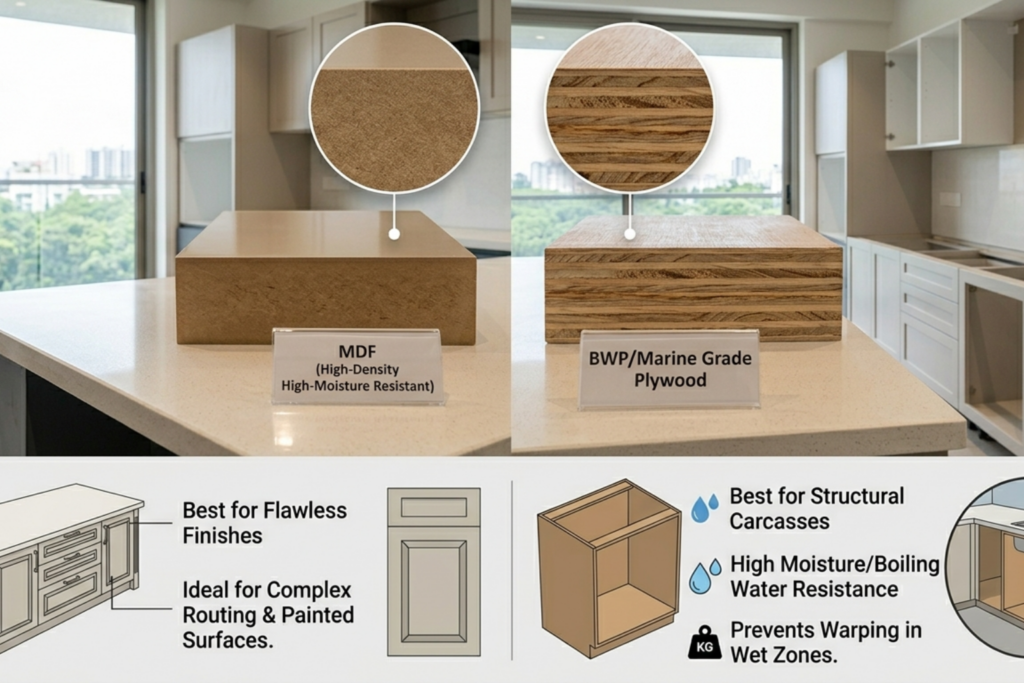

Choosing the right material for a modular kitchen is one of the most important decisions in interior design. While layouts, finishes, and accessories influence aesthetics, the core material used inside cabinets determines:
- durability
- moisture resistance
- structural strength
- maintenance requirements
- long-term performance
Among the most commonly used materials in Indian modular kitchens, MDF and plywood remain the two most discussed options.
Homeowners often struggle with questions such as:
- Which material lasts longer?
- Which is better for Indian kitchens?
- Is MDF suitable for modular cabinetry?
- Is plywood worth the higher cost?
- Which material offers better value long term?
The answer depends on:
- kitchen usage
- budget
- environmental conditions
- customization needs
- maintenance expectations
Modern modular kitchen planning requires balancing:
- functionality
- longevity
- aesthetics
- budget efficiency
For homeowners seeking customized kitchen interiors, Avinnyya – Interior Design & Turnkey Solutions designs modular kitchens tailored around intelligent material selection, modern functionality, and long-term usability.
What Is MDF?
MDF (Medium Density Fiberboard) is an engineered wood product manufactured using:
- wood fibers
- resin
- wax
- compressed heat pressure
The result is a smooth and uniform board commonly used in modular furniture and interior applications.
MDF is popular because of:
- smooth surface quality
- affordability
- easy machining
- paint-friendly finish
It is widely used for:
- wardrobe shutters
- decorative panels
- furniture facades
- modular kitchen shutters in low-moisture environments
What Is Plywood?
Plywood is manufactured by bonding multiple thin layers of wood veneer under high pressure.
The layered grain structure gives plywood:
- high structural strength
- better load-bearing capacity
- improved moisture resistance
- greater durability
Plywood is one of the most preferred materials for Indian modular kitchens due to its long-term performance and stability.
Popular kitchen-grade plywood types include:
- BWR plywood
- BWP plywood
- marine plywood
which are specifically designed for moisture-prone environments.
Key Difference Between MDF and Plywood
Feature | MDF | Plywood |
Material Composition | Wood fibers | Wood veneer layers |
Surface Finish | Very smooth | Slight grain texture |
Strength | Moderate | High |
Moisture Resistance | Lower | Better |
Durability | Moderate | Excellent |
Weight Holding Capacity | Lower | Higher |
Cost | More affordable | More premium |
Lifespan | Moderate | Long-lasting |
Durability Comparison
When it comes to long-term durability, plywood generally performs significantly better.
Plywood offers:
- stronger internal structure
- better impact resistance
- superior screw holding strength
- greater load-bearing capacity
This makes it highly suitable for:
- heavy kitchen usage
- large storage systems
- long-term modular cabinetry
MDF, while stable for lighter applications, may weaken faster under:
- heavy moisture exposure
- continuous load stress
- frequent impact
For high-use kitchens, plywood is usually the safer long-term investment.
Moisture Resistance
Indian kitchens experience:
- steam exposure
- humidity fluctuations
- water contact
- heat variation
Moisture resistance is therefore extremely important.
Plywood Performance
BWR and BWP plywood offer strong resistance against:
- moisture
- swelling
- warping
- delamination
This makes plywood ideal for:
- sink areas
- lower cabinets
- utility-heavy kitchens
MDF Performance
Standard MDF is more vulnerable to:
- water absorption
- swelling
- edge damage
Once exposed to prolonged moisture, MDF may:
- deform
- soften
- lose structural stability
Moisture-resistant MDF variants exist, but they still generally perform below high-quality kitchen-grade plywood in Indian conditions.
Finish Quality and Aesthetics
MDF offers an exceptionally smooth surface, making it excellent for:
- PU paint finishes
- matte painted surfaces
- routed decorative designs
- seamless modern aesthetics
It performs beautifully in:
- contemporary minimalist kitchens
- lacquered finishes
- decorative shutter panels
Plywood, while slightly less smooth naturally, works extremely well with:
- laminates
- veneers
- acrylic finishes
- textured surfaces
Modern modular kitchens can achieve premium aesthetics with either material when designed properly.
Cost Comparison
MDF is generally more affordable than plywood.
This makes MDF attractive for:
- budget-conscious projects
- decorative applications
- low-moisture interior areas
Plywood costs more due to:
- stronger structural quality
- better durability
- higher lifespan
- superior moisture resistance
While plywood increases initial investment, it often reduces:
- repair costs
- replacement frequency
- long-term maintenance issues
Weight Holding Capacity
Kitchen cabinets regularly store:
- utensils
- cookware
- appliances
- pantry items
Plywood offers stronger:
- screw retention
- load handling
- structural stability
MDF may struggle under:
- excessive weight
- repeated hardware movement
- long-term heavy loading
For heavy-duty storage, plywood performs significantly better.
Lifespan Comparison
Plywood modular kitchens generally last much longer when maintained properly.
Good-quality plywood kitchens can remain structurally stable for many years due to:
- layered construction
- stronger bonding
- better moisture resistance
MDF kitchens may show earlier wear in high-usage environments, especially near water exposure zones.
Maintenance Requirements
MDF Maintenance
MDF requires:
- careful moisture management
- edge protection
- controlled water exposure
Water seepage can damage internal fibers over time.
Plywood Maintenance
Plywood is generally:
- easier to maintain
- more forgiving under humid conditions
- better suited for Indian kitchen environments
This makes it highly practical for long-term modular kitchen use.
Best Applications for MDF
MDF works well for:
- decorative shutters
- painted kitchen facades
- dry-area furniture
- modern routed panel designs
It is often used where:
- aesthetics are prioritized
- structural stress is lower
- moisture exposure is controlle
Best Applications for Plywood
Plywood is ideal for:
- cabinet carcasses
- sink units
- heavy storage sections
- high-use kitchens
- long-term modular interiors
It performs especially well in:
- Indian cooking environments
- family kitchens
- moisture-prone zones
Which Material Is Better for Indian Modular Kitchens?
For most Indian kitchens, plywood is generally considered the superior structural material because of:
- higher durability
- stronger moisture resistance
- better load capacity
- longer lifespan
However, MDF still has value for:
- decorative elements
- painted shutters
- budget-sensitive designs
- low-moisture applications
Many modern modular kitchens actually combine both materials strategically for:
- cost optimization
- visual appeal
- structural efficiency
Modern Kitchen Material Trends
Modern modular kitchens increasingly prioritize:
- moisture-resistant materials
- low-maintenance finishes
- durable hardware systems
- organized storage
- minimalist aesthetics
Homeowners increasingly prefer:
- long-lasting functionality
- intelligent storage
- refined visual simplicity
over purely decorative styling.
Common Material Selection Mistakes to Avoid
Choosing Only Based on Cost
Low initial cost may increase future maintenance expenses.
Ignoring Moisture Exposure
Kitchen environments require strong moisture resistance.
Using Low-Quality Hardware
Even good materials fail with poor hardware systems.
Overlooking Internal Cabinet Quality
Internal structure matters more than surface aesthetics alone.
Selecting Trendy Finishes Without Durability
Some decorative finishes may not age well in high-use kitchens.
Why Professional Material Selection Matters
Professional interior planning helps homeowners choose materials based on:
- kitchen usage patterns
- environmental conditions
- budget
- long-term durability expectations
- design aesthetics
The right material combination improves:
- kitchen lifespan
- maintenance convenience
- overall functionality
- long-term value
Why Homeowners Choose Avinnyya – Interior Design & Turnkey Solutions
Modern homeowners increasingly seek modular kitchens that combine:
- intelligent functionality
- durable materials
- elegant aesthetics
- organized storage
- long-term usability
Avinnyya – Interior Design & Turnkey Solutions creates customized kitchen interiors tailored around:
- premium material selection
- modular storage systems
- moisture-resistant planning
- contemporary aesthetics
- seamless turnkey execution
Every kitchen is designed to balance beauty, durability, and everyday practicality.
Frequently Asked Questions
Is plywood better than MDF for kitchens?
For most Indian kitchens, plywood is generally better due to stronger moisture resistance and durability.
Can MDF be used in modular kitchens?
Yes, especially for decorative shutters and low-moisture applications.
Which material lasts longer?
Plywood typically has a longer lifespan in kitchen environments.
Is MDF cheaper than plywood?
Yes. MDF is generally more affordable.
What type of plywood is best for kitchens?
BWR and BWP plywood are commonly recommended for modular kitchen interiors.
Conclusion
Choosing between MDF and plywood depends on:
- kitchen usage
- moisture exposure
- budget
- durability expectations
- design preferences
While MDF offers:
- smooth finishes
- affordability
- elegant painted aesthetics
plywood provides:
- superior durability
- stronger structural integrity
- better moisture resistance
- longer-term reliability
For most Indian modular kitchens, plywood remains the preferred structural material for long-term performance.
Modern kitchen interiors increasingly combine smart material selection with:
- modular organization
- durable finishes
- efficient storage
- refined aesthetics
to create kitchens that are both beautiful and highly functional.
For homeowners seeking customized modular kitchens, Avinnyya – Interior Design & Turnkey Solutions offers turnkey kitchen solutions designed around intelligent material planning, modern functionality, and sophisticated contemporary living.