
How to Use Color Psychology in Interior Design
Color is one of the most powerful tools in interior design, yet it is often underestimated. Beyond aesthetics, colors have a profound psychological impact on how we feel, think, and behave within a space. Whether it’s a calming bedroom, an energetic living room, or a productive workspace, the colors you choose can significantly influence the atmosphere and functionality of your home.
Color psychology in interior design is the art and science of using colors to evoke specific emotions and create purposeful environments. At Avinnyya, we believe that every space should not only look beautiful but also feel right. By understanding how different colors affect mood and perception, homeowners can transform ordinary interiors into spaces that truly enhance their lifestyle.
What is Color Psychology in Interior Design?
Understanding the Basics
Color psychology refers to the study of how colors influence human emotions and behaviors. In interior design, it involves strategically selecting hues, tones, and shades to create desired emotional responses within a space. For instance, warm colors like red and orange tend to stimulate energy and conversation, while cool tones like blue and green promote calmness and relaxation.
Each color carries its own emotional weight. This is why hospitals often use soothing shades of blue and green, while restaurants prefer warmer tones to stimulate appetite and engagement. When applied thoughtfully, color psychology becomes a powerful design tool that goes far beyond decoration.
The Science Behind Colors and Emotions
The psychological effects of color are deeply rooted in both biology and cultural associations. Factors such as hue (the color itself), saturation (intensity), and brightness (lightness or darkness) all play a role in how a color is perceived. For example, a soft pastel blue feels entirely different from a deep navy blue, even though both belong to the same color family.
Additionally, personal experiences and cultural backgrounds can influence how individuals respond to colors. While white symbolizes purity and simplicity in some cultures, it may represent mourning in others. Therefore, effective use of color psychology requires a balance between universal principles and personal preferences.
Why Color Psychology Matters in Interior Design
Impact on Mood and Well-being
Colors have a direct impact on emotional well-being. A poorly chosen color palette can make a room feel uncomfortable or overwhelming, while the right colors can promote relaxation, happiness, and even mental clarity. For example, soft greens can reduce stress, while warm yellows can evoke positivity and optimism.
In modern homes, where people spend more time indoors, creating emotionally supportive environments has become essential. Color choices can contribute to better sleep, improved productivity, and overall well-being.
Creating Functional Spaces
Every room in a home serves a different purpose, and color can help reinforce that function. A bedroom should feel restful, a kitchen should feel lively, and a home office should enhance focus. By aligning color choices with the intended use of a space, designers can create interiors that are both practical and visually appealing.
Enhancing Space Perception
Color can also alter how we perceive the size and shape of a room. Light colors tend to make spaces appear larger and more open, while darker shades create a sense of intimacy and coziness. Strategic use of color can help small rooms feel spacious and large rooms feel more inviting.
Understanding the Emotional Effects of Colors
Warm Colors (Red, Orange, Yellow)
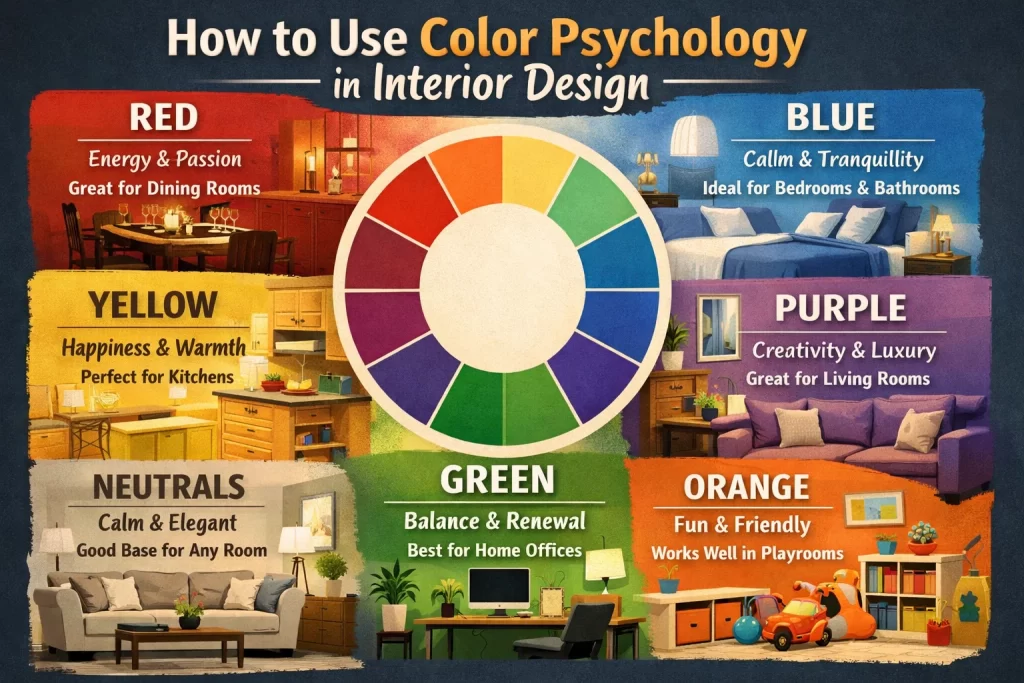
Warm colors are associated with energy, passion, and warmth. Red, for example, is a bold and stimulating color that can increase heart rate and encourage conversation. It works well in social spaces like living rooms and dining areas but should be used in moderation to avoid overwhelming the senses.
Orange combines the energy of red with the cheerfulness of yellow, making it an excellent choice for creating a lively and welcoming atmosphere. Yellow, often associated with sunshine and happiness, can brighten up spaces and evoke positivity. However, overly bright shades may cause visual fatigue, so softer tones are often preferred.
Cool Colors (Blue, Green, Purple)
Cool colors are known for their calming and soothing effects. Blue is one of the most popular choices for bedrooms and bathrooms due to its ability to promote relaxation and tranquility. Lighter shades create a peaceful ambiance, while darker blues add sophistication and depth.
Green, inspired by nature, symbolizes balance and harmony. It is ideal for creating refreshing and stress-free environments. Purple, on the other hand, is often associated with luxury and creativity. Soft lavender tones can be calming, while deeper shades like plum add richness and elegance.
Neutral Colors (White, Grey, Beige, Black)
Neutral colors form the foundation of most interior design palettes. They provide balance and allow other colors to stand out. White creates a sense of cleanliness and openness, making it a popular choice for modern interiors.
Grey adds sophistication and versatility, while beige brings warmth and comfort. Black, when used strategically, can create contrast and add a touch of elegance. Neutrals are essential for achieving timeless and cohesive designs.
Room-by-Room Guide to Using Color Psychology
Living Room
The living room is a social space where family and guests gather, so it should feel warm and inviting. Neutral bases combined with warm accents such as earthy tones or muted reds can create a balanced and welcoming atmosphere. Layering textures and colors can add depth without overwhelming the space.
Bedroom
A bedroom should be a sanctuary for rest and relaxation. Soft blues, greens, and pastel tones are ideal for creating a calming environment. Avoid overly bright or stimulating colors, as they can interfere with sleep quality. Subtle contrasts and soft lighting further enhance the soothing ambiance.
Kitchen
The kitchen is often the heart of the home, where energy and activity are essential. Warm tones like yellow and orange can stimulate appetite and create a lively atmosphere. Pairing these with neutral cabinets or countertops ensures the space remains balanced and visually appealing.
Bathroom
Bathrooms should evoke cleanliness and freshness. Light blues, whites, and soft greens are perfect for creating a spa-like environment. These colors reflect light well and make smaller bathrooms feel more spacious and airy.
Home Office
Productivity is key in a home office, and color plays a crucial role in maintaining focus. Shades of blue and green are known to enhance concentration and reduce stress. Adding subtle accents of yellow can boost creativity without causing distraction.
How to Choose the Right Color Palette
Understanding Color Combinations
Choosing the right color palette involves more than selecting individual colors. Complementary color schemes use opposite colors on the color wheel to create contrast, while analogous schemes use neighboring colors for a harmonious look. Monochromatic schemes rely on variations of a single color for a clean and cohesive design.
Using the 60-30-10 Rule
The 60-30-10 rule is a classic guideline in interior design. It suggests using 60% of a dominant color, 30% of a secondary color, and 10% of an accent color. This approach ensures balance and prevents any single color from overpowering the space.
Considering Natural Light
Lighting plays a crucial role in how colors appear. Natural light can enhance or alter the perception of a color throughout the day. A shade that looks perfect in the morning may appear completely different in the evening. Testing colors under different lighting conditions is essential before making a final decision.
Color Psychology Trends in Modern Interior Design
Modern interior design trends are increasingly focused on creating calming and nature-inspired spaces. Earthy tones such as terracotta, olive green, and warm browns are gaining popularity for their grounding effect. These colors help create a connection with nature and promote a sense of well-being.
Minimalist interiors often rely on neutral palettes with subtle contrasts, while bold designs incorporate statement colors to create visual interest. The key trend is personalization—choosing colors that reflect individual lifestyles and preferences rather than blindly following trends.
Common Mistakes to Avoid
One of the most common mistakes in interior design is overusing bold colors. While vibrant shades can add character, excessive use can make a space feel chaotic. Another mistake is ignoring lighting conditions, which can drastically affect how colors appear.
Failing to test colors before application can lead to disappointing results. It is always advisable to use sample swatches and observe them in different lighting conditions. Additionally, following trends without considering personal preferences can result in spaces that feel disconnected from the homeowner’s personality.
Tips from Avinnyya Interior Experts
At Avinnyya, we approach color selection as a deeply personalized process. Every client has unique preferences, lifestyles, and emotional needs, and these factors play a crucial role in determining the right color palette. Our experts carefully analyze each space, considering lighting, layout, and functionality before recommending colors.
We also emphasize the importance of textures and materials. Colors do not exist in isolation; they interact with surfaces, fabrics, and finishes. By combining colors with the right materials, we create interiors that are visually cohesive and emotionally engaging.
For those looking for complete home transformation solutions, exploring our expertise as an interior design company in bangalore can provide deeper insights into how we bring design concepts to life.
How Avinnyya Uses Color Psychology in Projects
Our design process begins with understanding the client’s vision and emotional goals for their space. We then create mood boards and color palettes that align with these objectives. Each element, from wall colors to furnishings, is carefully selected to ensure harmony and balance.
Execution involves meticulous attention to detail, ensuring that the chosen colors work seamlessly with lighting and materials. The result is a space that not only looks stunning but also feels intuitive and comfortable.
Conclusion
Color psychology is a powerful tool that can transform interiors in meaningful ways. By understanding how colors influence emotions and behavior, homeowners can create spaces that are not only visually appealing but also functional and emotionally supportive.
Whether you are designing a new home or refreshing an existing space, thoughtful color choices can make all the difference. With expert guidance from Avinnyya, you can harness the power of color psychology to create interiors that truly reflect your personality and enhance your lifestyle.