
Fixing Poor Lighting in Your Home Without Renovation
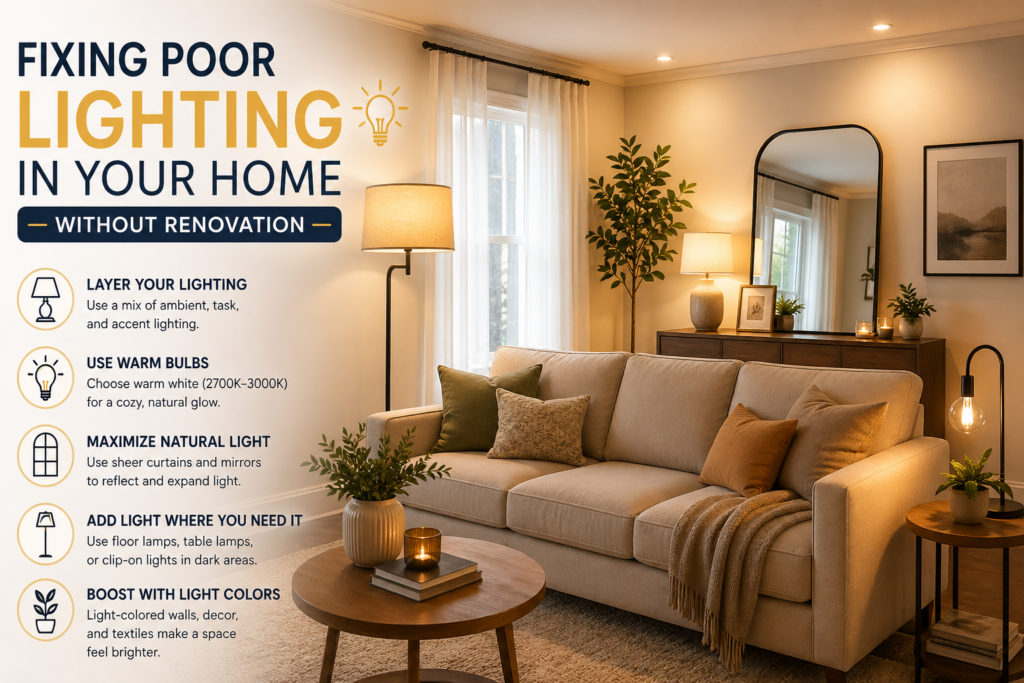

Lighting plays a far more critical role in your home than most people realize. It influences not just how your space looks, but also how it feels and functions. A well-lit home feels spacious, welcoming, and vibrant, while poor lighting can make even a beautifully designed room appear dull, cramped, and uninspiring. Unfortunately, many homeowners assume that correcting bad lighting requires expensive renovations, rewiring, or structural changes.
The truth is far simpler—and more encouraging. You can dramatically improve your home’s lighting using smart, non-invasive techniques that require little to no renovation. With the right strategies, you can transform dark corners, eliminate harsh shadows, and create a layered, balanced lighting scheme that enhances both aesthetics and functionality.
In this comprehensive guide, we will walk you through practical, budget-friendly methods to fix poor lighting in your home without renovation. Whether you’re dealing with a dim living room, a shadowy kitchen, or a dull bedroom, these expert-backed tips will help you create a brighter, more inviting space effortlessly.
Understanding the Problem – Why Your Home Feels Poorly Lit
Before jumping into solutions, it’s important to understand why your home feels poorly lit in the first place. Identifying the root cause helps you choose the most effective fixes rather than applying random changes.
Common Lighting Issues in Indian Homes
Many homes, especially in urban settings, suffer from limited natural light due to closely spaced buildings or small windows. This often leads to a reliance on artificial lighting that is not always planned effectively. Another common issue is the use of a single central ceiling light, which creates uneven illumination and leaves corners in shadow.
Dark wall colors and heavy furnishings can also absorb light instead of reflecting it, making rooms appear dimmer than they actually are. Additionally, outdated or incorrect bulb choices—such as low-lumen bulbs or mismatched color temperatures—can further worsen the lighting quality.
Signs Your Lighting Needs Improvement
If your room feels smaller than it actually is, or if you experience eye strain while reading or working, your lighting likely needs attention. Uneven brightness, harsh shadows, and overly yellow or overly blue tones are also indicators of poor lighting design. Kitchens and workspaces with shadowed countertops or bathrooms with unflattering mirror lighting are clear signs that your current setup isn’t working efficiently.
Layered Lighting – The Secret to Well-Lit Spaces
One of the most effective ways to fix poor lighting without renovation is by adopting a layered lighting approach.
What is Layered Lighting?
Layered lighting involves combining three types of lighting: ambient, task, and accent. Ambient lighting provides overall illumination, task lighting focuses on specific activities like reading or cooking, and accent lighting highlights decorative elements or architectural features. Together, they create a balanced and visually appealing environment.
Why It Works Without Renovation
The beauty of layered lighting is that it doesn’t require structural changes. You can achieve it using portable lighting fixtures such as floor lamps, table lamps, and plug-in wall lights. These solutions are flexible and can be rearranged as needed, making them ideal for renters and homeowners alike.
Examples of Layered Lighting Setup
In a living room, you can combine a ceiling light with a floor lamp in one corner and a table lamp near the sofa to create depth and warmth. In a bedroom, pairing soft ambient lighting with bedside lamps and subtle accent lighting can create a cozy and relaxing atmosphere.
Upgrade Your Bulbs – Small Change, Big Impact
Sometimes, the simplest changes make the biggest difference. Upgrading your bulbs is one of the easiest ways to improve lighting instantly.
Choosing the Right Bulb Type
LED bulbs are the most efficient and versatile option available today. They consume less energy, last longer, and come in a variety of brightness levels and color temperatures. Compared to CFLs and incandescent bulbs, LEDs offer better performance and flexibility.
Understanding Color Temperature
Color temperature significantly affects how a room feels. Warm white light (2700K–3000K) creates a cozy and inviting atmosphere, making it ideal for bedrooms and living rooms. Cool white (4000K) works well in kitchens and bathrooms, while daylight (5000K–6500K) is best for workspaces where clarity is important.
Increase Brightness the Smart Way
Instead of focusing on wattage, pay attention to lumens, which measure brightness. Higher lumens mean brighter light. Replacing low-lumen bulbs with higher-lumen ones can instantly brighten a room without adding more fixtures.
Strategic Placement of Lamps and Lights
Even the best lighting fixtures won’t be effective if they’re poorly placed. Strategic positioning can dramatically enhance your lighting setup.
Floor Lamps for Dark Corners
Floor lamps are perfect for illuminating neglected corners. By adding vertical light, they help balance the room and eliminate dark spots that make spaces feel smaller.
Table Lamps for Cozy Ambience
Table lamps add warmth and depth to a room. Placing them on side tables, consoles, or desks creates localized pools of light that enhance both functionality and aesthetics.
Clip Lights and Plug-in Wall Lights
For a no-drill solution, clip lights and plug-in wall lights are excellent options. They can be attached to shelves or mounted temporarily, providing targeted lighting without permanent installation.
Use Mirrors to Amplify Light
Mirrors are one of the most underrated tools in lighting design.
How Mirrors Reflect and Multiply Light
Mirrors reflect both natural and artificial light, effectively doubling the brightness in a room. This simple trick can make even the darkest spaces feel more open and airy.
Best Mirror Placement Ideas
Placing a mirror opposite a window allows it to reflect natural light throughout the room. Similarly, positioning mirrors behind light sources can enhance their effect and create a brighter ambiance.
Lighten Up Your Interiors Without Construction
Your choice of materials and colors plays a crucial role in how light behaves in your home.
Use Light-Colored Furnishings
Light-colored sofas, curtains, and rugs reflect light, making the space feel brighter and more spacious. Switching from dark to neutral tones can significantly improve the overall lighting effect.
Reflective Surfaces and Materials
Incorporating glass, metallic finishes, and glossy surfaces helps bounce light around the room. Even small additions like metallic decor or glass tables can make a noticeable difference.
Declutter to Allow Light Flow
Clutter blocks light and creates visual heaviness. A more minimal, organized space allows light to travel freely, enhancing brightness and openness.
Maximize Natural Light Without Renovation
Natural light is the most desirable form of lighting, and maximizing it doesn’t require major changes.
Window Treatment Hacks
Replacing heavy curtains with sheer fabrics allows more sunlight to enter while still maintaining privacy. This simple switch can transform the feel of a room.
Keep Windows Clean and Unblocked
Dusty windows reduce the amount of light entering your home. Keeping them clean and free from obstructions ensures maximum light penetration.
Rearrange Furniture Strategically
Avoid placing large furniture pieces in front of windows. Rearranging your layout to keep windows clear allows sunlight to spread evenly across the room.
Smart Lighting Solutions for Modern Homes
Technology has made it easier than ever to control and customize lighting.
Smart Bulbs and App Control
Smart bulbs allow you to adjust brightness and color temperature using your smartphone. This flexibility helps you create the perfect lighting for different times of the day.
Motion Sensor Lights
Motion sensor lights are ideal for areas like hallways and bathrooms. They provide convenience while ensuring spaces are always adequately lit.
Plug-in LED Strips
LED strip lights are versatile and easy to install. Placing them under cabinets, behind TVs, or along shelves adds both functionality and visual appeal.
Budget-Friendly DIY Lighting Ideas
Improving lighting doesn’t have to be expensive.
DIY Pendant Lights
You can create stylish pendant lights using affordable materials like baskets or metal frames. These add character while improving illumination.
Fairy Lights for Accent Lighting
Fairy lights are an easy way to introduce soft, ambient lighting. Draping them around mirrors, headboards, or shelves creates a cozy atmosphere.
Upcycling Old Lamps
Instead of discarding old lamps, consider updating them with new shades or paint. This simple upgrade can make them look modern and enhance their lighting effect.
Room-by-Room Lighting Fix Guide
Each room has unique lighting requirements, and addressing them individually ensures optimal results.
Living Room
Combine ambient lighting with floor and table lamps to create a layered, inviting space suitable for relaxation and entertainment.
Bedroom
Use soft, warm lighting to promote relaxation. Bedside lamps and dimmable lights work best in this setting.
Kitchen
Focus on task lighting for countertops and cooking areas. Under-cabinet lights can significantly improve visibility.
Bathroom
Bright, even lighting around mirrors is essential to avoid shadows and ensure functionality.
Home Office
Good lighting reduces eye strain and boosts productivity. A combination of natural light and task lighting is ideal.
Common Lighting Mistakes to Avoid
Many homeowners unintentionally make lighting mistakes that reduce effectiveness. Relying on a single light source is one of the most common issues, as it creates uneven illumination. Ignoring color temperature can also lead to uncomfortable lighting. Over-lighting can feel harsh, while under-lighting makes spaces impractical. Poor placement of fixtures further reduces their impact, even if the fixtures themselves are high quality.
When to Consider Professional Help
While these tips can significantly improve your lighting, some situations may require expert guidance. If your home has persistent lighting challenges or you want a cohesive, professionally designed lighting plan, consulting experts can be beneficial.
Working with an experienced team ensures that your lighting complements your interiors perfectly. If you’re looking for expert solutions, partnering with an interior design company in bangalore can help you achieve a balanced and aesthetically pleasing lighting design without unnecessary renovations.
Conclusion
Fixing poor lighting in your home doesn’t have to involve costly renovations or structural changes. With thoughtful planning and simple adjustments, you can transform your space into a bright, inviting, and functional environment. From upgrading bulbs and adding layered lighting to using mirrors and maximizing natural light, each step contributes to a noticeable improvement.
The key is to approach lighting as an integral part of your interior design rather than an afterthought. By experimenting with different techniques and understanding how light interacts with your space, you can create a home that feels both beautiful and comfortable.