
Interior Design Timeline: What to Expect from Start to Finish

Designing a home or commercial space is an exciting journey, but it often comes with one big question—how long will it take? Understanding the interior design timeline is essential for setting realistic expectations, managing budgets, and ensuring a smooth experience from concept to completion. Whether you are renovating a single room or designing an entire home, having clarity about each phase helps you stay prepared and confident throughout the process.
This comprehensive guide walks you through every stage of the interior design timeline, explaining what happens at each step, how long it typically takes, and what you should expect as a client. With expert insights, you’ll gain a clear roadmap to turn your vision into reality without unnecessary stress or delays.
Why Understanding the Interior Design Timeline Matters
A well-defined timeline is the backbone of any successful interior design project. Without it, even the most beautifully planned designs can face delays, budget overruns, and miscommunication. When you understand the process in advance, you are better equipped to make timely decisions, coordinate with professionals, and avoid common pitfalls.
One of the biggest advantages of knowing the timeline is that it helps you set realistic expectations. Interior design is not an overnight transformation—it involves careful planning, multiple revisions, sourcing materials, and executing complex tasks. By understanding how long each stage takes, you can plan your move-in date, manage finances efficiently, and reduce last-minute surprises.
Additionally, a structured timeline improves collaboration between clients, designers, and contractors. Everyone works towards a shared schedule, ensuring smoother communication and better results.
Overview of the Complete Interior Design Process
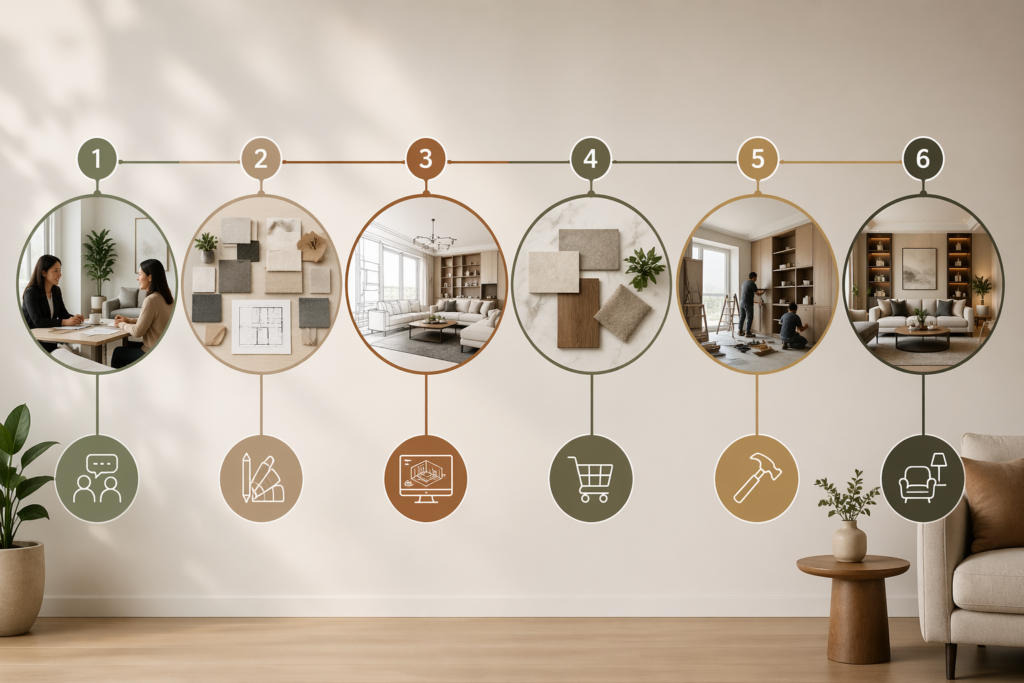
The interior design journey can be broadly divided into six major phases: consultation, concept development, detailed design, procurement, execution, and installation. Each phase plays a critical role in shaping the final outcome of your space.
The process begins with understanding your needs and preferences, followed by translating those ideas into a design concept. Once the concept is finalized, designers create detailed drawings and select materials. The next step involves sourcing furniture and coordinating with vendors before moving into on-site execution. Finally, the space is styled and handed over, ready for use.
While the timeline can vary depending on the size and complexity of the project, having a clear understanding of these stages helps you stay informed and involved throughout the journey.
Phase 1 – Initial Consultation & Requirement Gathering (1–2 Weeks)
The first phase of any interior design project focuses on understanding the client’s vision, lifestyle, and requirements. This stage lays the foundation for everything that follows, making it one of the most important steps in the entire process.
Understanding Client Needs
During the initial consultation, designers take the time to understand how you use your space and what you expect from it. This includes discussing your daily routines, family size, storage needs, and aesthetic preferences. Whether you prefer a modern minimalist look or a more traditional style, your inputs play a crucial role in shaping the design direction.
Site Visit & Measurements
A detailed site visit allows designers to assess the existing space, take accurate measurements, and identify any structural constraints. This step ensures that the design is both practical and feasible, avoiding issues later in the project.
Budget & Timeline Discussion
Setting a realistic budget and timeline is essential at this stage. Designers help you understand the cost implications of your choices and align your expectations with what can be achieved within your budget. This transparency ensures a smoother process moving forward.
Phase 2 – Concept Development (2–3 Weeks)
Once the initial requirements are clear, the next step is to transform ideas into a cohesive design concept. This phase focuses on creativity and visualization.
Mood Boards & Design Direction
Designers create mood boards that showcase color palettes, textures, materials, and overall themes. These boards help you visualize the look and feel of your space before any actual work begins.
Space Planning
Effective space planning ensures that your layout is functional and comfortable. Designers determine the placement of furniture, define zones, and optimize the flow of movement within the space.
Initial Design Presentation
The concept is presented to you for feedback. This is an interactive stage where revisions are made based on your preferences, ensuring the design aligns perfectly with your vision.
Phase 3 – Detailed Design & Documentation (3–5 Weeks)
After finalizing the concept, the project moves into the technical phase, where every detail is carefully planned and documented.
2D Drawings & 3D Visualizations
Designers create detailed floor plans and 3D renderings to give you a realistic view of the final space. These visuals help you understand how different elements will come together.
Material & Finish Selection
Choosing the right materials is crucial for both aesthetics and durability. This includes selecting flooring, wall finishes, fabrics, lighting fixtures, and more. Each choice is made to match the overall design concept.
Technical Drawings
Technical drawings serve as a blueprint for contractors and vendors. These include electrical layouts, plumbing plans, and custom furniture designs, ensuring precise execution on-site.
Phase 4 – Procurement & Vendor Coordination (4–8 Weeks)
With the design finalized, the focus shifts to sourcing materials and coordinating with vendors.
Sourcing Materials & Furniture
Designers procure all necessary items, including furniture, fixtures, and décor elements. Depending on the project, this may involve custom-made pieces or ready-made products.
Vendor Finalization
Reliable contractors, carpenters, and suppliers are selected based on the project requirements. Working with experienced professionals ensures quality and timely delivery.
Order Placement & Tracking
Orders are placed, and timelines are closely monitored to ensure everything arrives as scheduled. This phase requires careful coordination to avoid delays during execution.
Phase 5 – Execution & On-Site Work (6–12 Weeks)
This is where the design comes to life. The execution phase involves multiple teams working together to transform the space.
Civil & Structural Work
If required, demolition and structural modifications are carried out. This step prepares the space for further installations.
Electrical & Plumbing Installation
Wiring, lighting fixtures, switches, and plumbing systems are installed according to the technical plans. Proper execution at this stage ensures functionality and safety.
Carpentry & Furniture Work
Custom furniture such as wardrobes, modular kitchens, and cabinets are built and installed. This stage requires precision and attention to detail.
Painting & Finishing
Walls are painted, textures are applied, and finishes are completed to enhance the overall aesthetic appeal of the space.
Phase 6 – Installation & Styling (1–2 Weeks)
Once the major work is complete, the final stage focuses on styling and finishing touches.
Furniture Placement
Furniture is arranged according to the planned layout, ensuring both functionality and visual balance.
Decor & Accessories
Elements like curtains, rugs, artwork, and lighting fixtures are added to bring the design together.
Final Touches
Small details such as cushions, plants, and decorative items are carefully selected to create a cohesive and inviting space.
Phase 7 – Final Handover & Walkthrough (1 Week)
The final phase marks the completion of the project and the transition of the space to the client.
Quality Check
A thorough inspection is conducted to ensure everything meets the design specifications and quality standards.
Client Walkthrough
Designers guide you through the completed space, explaining features and functionalities.
Snag List & Corrections
Any minor issues are identified and resolved before the final handover, ensuring complete satisfaction.
Typical Interior Design Timeline Breakdown
In most cases, a complete interior design project can take anywhere between 3 to 6 months, depending on the scale and complexity. Smaller projects may be completed faster, while larger or highly customized designs may take longer. Understanding this timeline helps you plan better and avoid unnecessary stress.
Factors That Can Affect Your Interior Design Timeline
Several factors can influence how long your project takes. The size and complexity of the space play a major role, as larger projects require more time for planning and execution. Customization levels also impact timelines, as bespoke furniture and unique designs take longer to produce.
Material availability is another critical factor. Delays in sourcing specific materials can slow down the entire process. Additionally, client decision-making plays a significant role—delayed approvals can push timelines further.
External factors such as contractor availability and unforeseen site conditions can also affect progress. Being aware of these variables helps you stay flexible and prepared.
Tips to Keep Your Interior Design Project on Schedule
Staying on schedule requires active participation and clear communication. One of the most effective ways to avoid delays is to finalize decisions early. From selecting materials to approving designs, timely decisions keep the project moving forward.
Working with experienced professionals ensures better planning and execution. Regular progress updates and site visits also help you stay informed and address issues promptly.
Clear communication between all parties involved is essential. When expectations are aligned and everyone works collaboratively, the chances of delays are significantly reduced.
Why Choose Professional Expertise for Your Interior Design Journey
Partnering with a professional design team ensures a seamless and stress-free experience. From planning and design to execution and handover, experts manage every aspect of the project with precision.
If you are looking for a trusted interior design company in bangalore, working with experienced professionals can make a significant difference in achieving high-quality results within the planned timeline. Their expertise, vendor network, and project management skills ensure that your vision is brought to life efficiently and beautifully.
Conclusion
The interior design timeline is a structured journey that transforms your ideas into reality through careful planning, coordination, and execution. Each phase plays a vital role in ensuring the final result meets your expectations in both functionality and aesthetics.
By understanding what to expect at every stage, you can approach your project with confidence and clarity. Whether it’s a small renovation or a full-scale design project, having a clear timeline helps you stay organized and stress-free.