
Kids Room Interior Design – Creative Ideas to Build a Fun & Functional Space
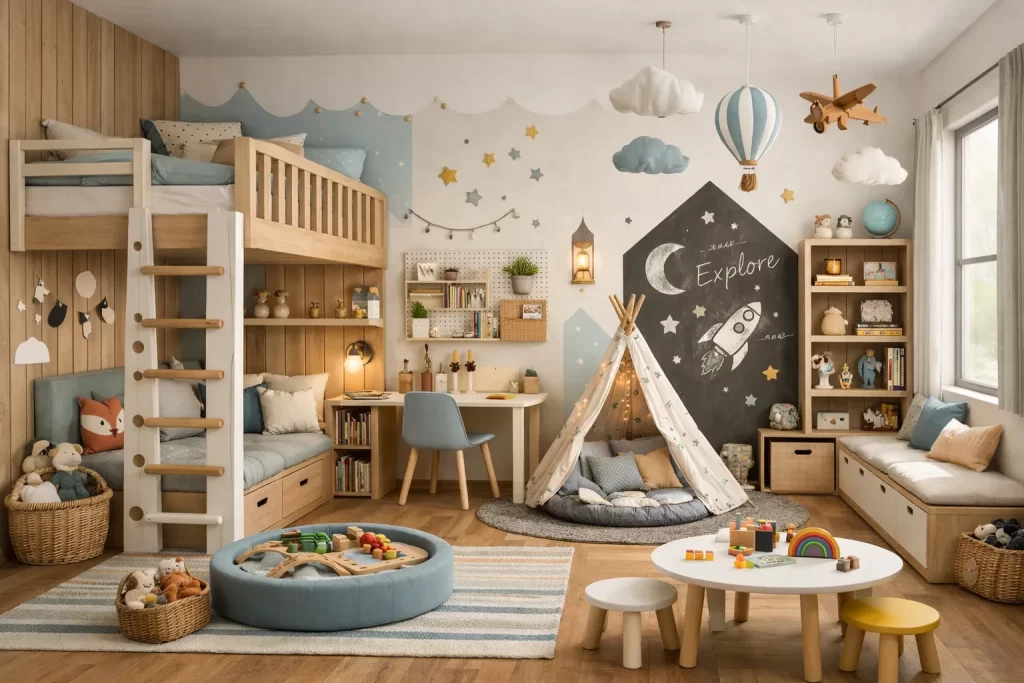

Designing a child’s room is very different from designing any other space in a home. A kids room is not just a bedroom—it is a place where children sleep, learn, play, imagine, and grow. Because of this, kids room interior design requires a careful balance between creativity, functionality, safety, and adaptability.
A well-designed kids room encourages imagination, supports learning, and provides a comfortable environment where children feel secure. From choosing the right colors and furniture to designing creative walls and storage solutions, every detail plays a role in shaping a child’s experience in the room.
Parents often struggle with several challenges while designing kids rooms. They need to ensure the space is safe, visually appealing, organized, and flexible enough to grow with the child. A room designed for a toddler may need a completely different setup once the child becomes a teenager.
That is why thoughtful planning is essential. With the right design strategy, a kids room can remain functional for many years while still reflecting the personality and interests of the child.
Why Kids Room Interior Design Matters
Children spend a significant amount of time in their rooms. The design of that environment can influence their mood, creativity, and even productivity. A thoughtfully designed space can positively impact a child’s growth and daily routine.
Supporting Child Development
Interior design has a direct effect on psychological and emotional development. Colors, textures, lighting, and spatial layout can influence how children feel and behave in a room.
For example, bright and cheerful colors can stimulate creativity, while soft tones can create a calming environment. Organized spaces help children develop discipline and responsibility by encouraging them to maintain cleanliness and order.
Furniture height, accessibility of shelves, and easy-to-reach storage areas also promote independence. When children can access their books, toys, and study materials without assistance, they naturally become more confident and self-reliant.
Encouraging Creativity and Imagination
Kids are naturally imaginative, and the design of their room should support that creativity. Decorative elements like themed wallpapers, interactive walls, creative lighting, and playful furniture can inspire storytelling and imaginative play.
For example, a wall mural featuring a jungle scene can transform the room into an adventurous playground. A chalkboard wall allows children to draw and express themselves freely. Even simple design elements like colorful cushions, creative shelves, or art displays can stimulate creative thinking.
A room that encourages exploration and imagination becomes more than just a bedroom—it becomes a personal world where children can dream and experiment.
Creating a Safe and Comfortable Space
Safety is one of the most important aspects of kids room interior design. Unlike adult spaces, children’s rooms must be designed with extra care to prevent accidents.
Furniture should have rounded edges, stable structures, and non-toxic finishes. Electrical outlets should be covered, and cables should be concealed. Flooring should be soft or anti-slip to minimize injury risks.
Comfort is equally important. Soft bedding, proper ventilation, and balanced lighting create a relaxing atmosphere that supports restful sleep and healthy daily routines.
Key Elements of a Perfect Kids Room Interior Design
A well-designed kids room includes several essential elements that work together to create a functional and inspiring environment.
Smart Space Planning
Effective space planning ensures that the room is organized and easy to use. Instead of randomly placing furniture, the room should be divided into functional zones for sleeping, studying, playing, and storage.
Proper space planning allows children to move freely while keeping the room tidy and efficient.
Zoning the Room
Dividing the room into specific areas helps create a structured environment.
Sleep Area
The sleeping area should be calm and comfortable. A cozy bed, soft bedding, and minimal distractions help children relax and sleep better. Placing the bed away from the study area can prevent distractions during bedtime.
Study Area
A dedicated study corner helps children focus on homework and reading. A well-designed study desk with proper lighting encourages good study habits and improves concentration.
Play Area
Children need space to play and explore. A play zone with soft flooring, toy storage, and open space allows children to move freely and enjoy their activities.
Storage Section
An organized storage system keeps the room clutter-free. Shelves, cabinets, and storage baskets help manage toys, books, and clothes effectively.
Child-Friendly Furniture
Furniture in a kids room should be comfortable, durable, and safe. Child-friendly furniture is usually designed with rounded edges, lightweight structures, and adjustable features.
Adjustable furniture is particularly useful because it grows with the child. For example, study chairs with adjustable height can be used for several years without needing replacement.
Multi-functional furniture such as beds with storage drawers or study tables with built-in shelves also helps maximize space while maintaining functionality.
Creative Wall Designs
Walls play a major role in defining the personality of a kids room. Instead of plain walls, creative design ideas can make the space more engaging and visually interesting.
Chalkboard walls are a popular option that allows children to draw and write freely. Educational wall art featuring alphabets, numbers, or world maps can make learning more interactive.
Wallpapers with themes like space, animals, forests, or fairy tales can transform the entire look of the room. Wall decals are also a great option because they can be easily changed as the child grows.
Proper Lighting Design
Lighting has both functional and aesthetic importance in kids room interior design.
Natural light should be maximized during the day to create a healthy and energetic environment. Large windows with light curtains allow sunlight to enter the room while maintaining privacy.
For evening lighting, a combination of ambient lights, task lights, and decorative lights works best. Study lamps provide focused lighting for reading and writing, while soft ambient lighting creates a cozy atmosphere.
Night lamps are also helpful for younger children who may feel uncomfortable sleeping in complete darkness.
Popular Kids Room Themes for Modern Homes
Themes add personality and excitement to a kids room. Choosing a theme based on the child’s interests makes the room more enjoyable and meaningful.
Space Explorer Theme
A space-themed room is perfect for children fascinated by planets, astronauts, and galaxies. Dark blue walls, glow-in-the-dark stars, and space-themed decor can create a magical cosmic atmosphere.
Astronaut figurines, rocket-shaped lamps, and galaxy murals can further enhance the theme.
Princess or Fairy Tale Theme
Many children love fairy tales and magical stories. A princess or fairy theme often features soft pastel colors, decorative curtains, elegant furniture, and sparkling lights.
Canopy beds, fairy lights, and floral decorations can transform the room into a dreamy storybook setting.
Animal or Jungle Theme
Nature-inspired rooms bring freshness and adventure into a child’s space. Animal wallpapers, green tones, and wooden textures create a jungle-like atmosphere.
Decor items like animal plush toys, leaf patterns, and tree-shaped shelves can enhance the theme.
Cartoon Character Theme
Cartoon characters are always a favorite among children. Wall murals or posters featuring beloved characters instantly make the room exciting.
However, it is important to avoid excessive decoration because children’s preferences may change quickly.
Minimal Modern Theme
A minimalist kids room focuses on simplicity and functionality. Neutral colors, clean lines, and organized furniture create a calm and elegant environment.
This style works particularly well for rooms that need to adapt as children grow older.
Choosing the Right Colors for Kids Rooms
Color selection plays a major role in shaping the atmosphere of a room. Different colors can influence emotions, creativity, and relaxation.
Best Color Psychology for Children
Blue is known for its calming effect and works well in study areas or bedrooms. Yellow stimulates creativity and energy, making it suitable for play zones.
Green is associated with balance and harmony, while soft pastel shades create a soothing and comfortable environment.
Gender-Neutral Color Ideas
Modern kids room interior design often focuses on gender-neutral color schemes. Colors such as mint green, soft beige, pastel grey, and peach create a balanced and versatile environment.
These colors allow the room to evolve with changing decor and preferences.
Accent Walls for Visual Interest
Accent walls add personality and depth to the room. Patterned wallpapers, geometric paint designs, or wall decals can transform a simple wall into a focal point.
Accent walls are also an easy way to introduce themes without overwhelming the entire space.
Smart Storage Solutions for Kids Rooms
Children’s rooms often become cluttered with toys, books, and clothes. Smart storage solutions help maintain organization while making it easier for children to access their belongings.
Toy Storage Ideas
Toy storage should be simple and accessible. Baskets, toy boxes, and open cabinets allow children to store and retrieve toys easily.
Color-coded bins can also make organization more fun and engaging.
Built-in Wardrobes for Kids
Built-in wardrobes help maximize space while keeping clothes and accessories organized. Adjustable shelves allow the storage layout to change as the child grows.
Sliding doors can also save space in smaller rooms.
Multi-functional Furniture
Furniture with built-in storage is extremely useful in kids rooms. Beds with drawers, benches with hidden storage, and desks with shelves help maximize space without overcrowding the room.
Open Shelves for Books and Decor
Open shelves are perfect for displaying books, toys, and decorative items. They also encourage children to keep their favorite items organized and easily accessible.
Study Area Design for Kids
Creating a dedicated study space is important for building good learning habits.
Importance of a Dedicated Study Space
When children have a specific area for studying, it becomes easier for them to concentrate and develop discipline. A well-designed study zone also reduces distractions.
Study Table Design Ideas
Study tables should be comfortable and spacious enough for books, notebooks, and stationery. Wall-mounted desks are ideal for small rooms, while foldable tables offer flexibility.
Lighting for Study Zones
Good lighting is essential for studying. Desk lamps with adjustable brightness help prevent eye strain and improve focus.
Organizing Study Materials
Wall organizers, shelves, and stationery holders keep study materials tidy and easy to access. This organization helps children maintain better study habits.
Safety Tips in Kids Room Interior Design
Safety should always be a priority in children’s spaces.
Safe Furniture Choices
Furniture should be sturdy, stable, and designed with rounded edges to prevent injuries.
Non-toxic Materials
Eco-friendly paints and materials ensure a healthier indoor environment for children.
Electrical Safety
Sockets should have protective covers, and wiring should be concealed to prevent accidents.
Anti-slip Flooring
Soft carpets or rubber flooring reduce the risk of slipping and provide a comfortable play surface.
Kids Room Design Ideas for Small Spaces
Small rooms require creative design strategies to maximize space.
Bunk Beds
Bunk beds are an excellent solution for shared rooms or compact spaces. They save floor space while providing comfortable sleeping arrangements.
Loft Beds with Study Area
Loft beds create space underneath for study desks or storage units.
Wall-mounted Storage
Using vertical space with wall shelves and cabinets keeps the floor area open and spacious.
Foldable Furniture
Foldable desks and chairs allow flexible room arrangements when needed.
Designing Kids Rooms That Grow With Them
Children’s needs change quickly, so flexible design is essential.
Flexible Furniture Designs
Expandable beds and adjustable desks can adapt to a child’s changing height and needs.
Neutral Base Design
Using neutral colors for walls and furniture allows easy updates through decor changes.
Replaceable Decor Elements
Items like wall decals, bedding, and accessories can be easily replaced to match the child’s evolving interests.
Latest Kids Room Interior Design Trends
Modern interior design trends are making kids rooms more interactive and functional.
Montessori Inspired Rooms
Montessori-style rooms focus on independence by using child-height furniture and accessible storage.
Eco-Friendly Kids Rooms
Sustainable materials, natural fabrics, and eco-friendly paints are becoming increasingly popular.
Interactive Learning Walls
Magnetic boards, chalkboard paint, and activity walls make learning more engaging.
Smart Kids Rooms
Technology is also influencing kids room design with smart lighting, automated blinds, and tech-friendly study spaces.
Conclusion
Kids room interior design is about more than just decorating a space—it is about creating an environment that supports learning, creativity, comfort, and growth. From selecting the right colors and furniture to planning storage and safety features, every design decision contributes to a child’s daily experience.
A well-designed kids room should adapt to changing needs while maintaining a balance between fun and functionality. With thoughtful planning and creative ideas, parents can create a space where children feel inspired, comfortable, and happy.
If you are planning a complete home transformation, exploring professional solutions such as an interior designer in Varanasi can help you design spaces that combine creativity, functionality, and long-term value.