
Modern vs Traditional Interior Design: Which One is Right for You?
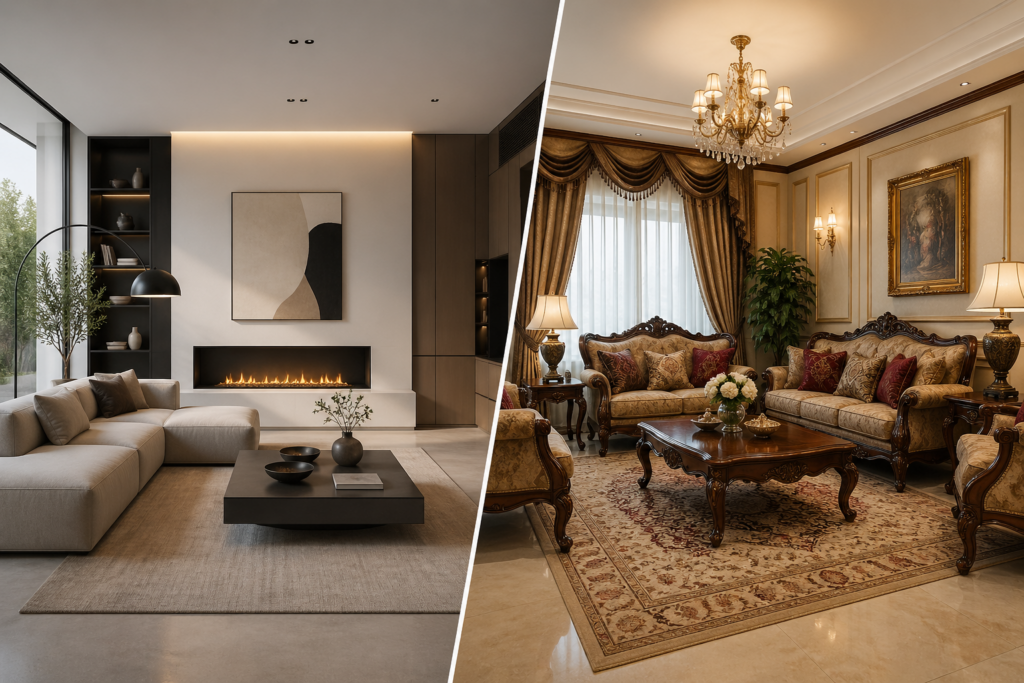

Choosing the right interior design style is more than just picking furniture or colors—it’s about shaping the way you live, feel, and interact with your space. Your home should reflect your personality, lifestyle, and comfort preferences, and that’s where the debate between modern and traditional interior design becomes important.
Modern and traditional styles represent two very different design philosophies. While modern interiors focus on simplicity, functionality, and clean aesthetics, traditional interiors emphasize warmth, detail, and timeless elegance. Many homeowners find themselves torn between the sleek appeal of modern design and the cozy charm of traditional spaces.
In this comprehensive guide, we’ll break down both styles in detail, compare their features, and help you determine which one truly suits your needs. Whether you’re designing a new home or renovating an existing one, this guide will give you clarity and confidence in your decision.
2. What is Modern Interior Design?
2.1 Definition & Origins
Modern interior design originated in the early to mid-20th century, influenced by the modernist movement that emphasized functionality over ornamentation. It was a response to the overly decorative styles of the past, focusing instead on simplicity, clean structures, and purposeful design.
The philosophy behind modern design is simple: “less is more.” Every element in a modern space serves a function, and unnecessary details are eliminated.
2.2 Key Characteristics of Modern Design
Modern interiors are defined by their clean and uncluttered appearance. Spaces are designed to feel open, breathable, and efficient. Neutral color palettes dominate, often featuring shades like white, grey, beige, and black. These colors create a calm and sophisticated atmosphere.
Furniture in modern design is sleek and minimal, often featuring straight lines and geometric shapes. Materials such as glass, metal, and concrete are commonly used, adding to the contemporary feel. Open floor plans are another defining feature, allowing natural light to flow freely and making spaces feel larger.
Decor is kept to a minimum. Instead of multiple accessories, modern interiors rely on a few statement pieces that stand out without overwhelming the space.
2.3 Advantages of Modern Interior Design
One of the biggest advantages of modern design is its practicality. With fewer decorative elements, maintenance becomes easier, making it ideal for people with busy lifestyles. The simplicity of the design also makes spaces look more organized and stress-free.
Modern interiors are particularly effective in smaller homes or apartments, where space optimization is crucial. The open layouts and minimal furniture help create an illusion of more space.
Another benefit is the timeless appeal of minimalism. While trends may change, clean and functional spaces rarely go out of style.
2.4 Disadvantages of Modern Interior Design
Despite its many benefits, modern design may not appeal to everyone. Some people find it too minimal or lacking in warmth and personality. The heavy reliance on neutral tones can sometimes make spaces feel cold or impersonal.
Additionally, achieving the perfect modern look requires precision. Even small design mistakes, like clutter or mismatched elements, can disrupt the entire aesthetic.
- What is Traditional Interior Design?
3.1 Definition & Origins
Traditional interior design is deeply rooted in European styles from the 18th and 19th centuries. It draws inspiration from classical architecture, featuring rich details, symmetry, and timeless elegance.
Unlike modern design, traditional interiors celebrate ornamentation, craftsmanship, and history. They create a sense of familiarity and comfort that feels both luxurious and welcoming.
3.2 Key Characteristics of Traditional Design
Traditional interiors are known for their warm and inviting atmosphere. They often use rich color palettes, including deep reds, browns, greens, and gold tones. These colors add depth and character to the space.
Furniture is typically ornate, featuring curved lines, carved details, and luxurious fabrics. Materials such as wood, marble, and textiles play a significant role in creating a classic look.
Symmetry is a key principle in traditional design. Rooms are often arranged in balanced layouts, with matching furniture and decor elements placed thoughtfully.
Accessories like curtains, rugs, chandeliers, and artwork are layered to create a cohesive and elegant environment.
3.3 Advantages of Traditional Interior Design
Traditional design offers a timeless appeal that never feels outdated. Its rich detailing and classic elements create a sense of luxury and sophistication.
Another major advantage is the warmth it brings to a space. Unlike modern interiors, traditional homes feel cozy and lived-in, making them perfect for families.
The use of high-quality materials and craftsmanship also ensures durability and longevity.
3.4 Disadvantages of Traditional Interior Design
However, traditional interiors can be more expensive due to the use of premium materials and intricate designs. Maintenance can also be a challenge, as detailed furniture and layered decor require regular upkeep.
In smaller spaces, traditional design may feel heavy or crowded if not executed carefully. Additionally, some people may find it too formal or outdated for contemporary lifestyles.
4. Key Differences: Modern vs Traditional Interior Design
4.1 Design Philosophy
The fundamental difference lies in their approach. Modern design focuses on functionality and simplicity, while traditional design prioritizes comfort and decorative beauty.
4.2 Color Schemes
Modern interiors lean towards neutral and monochromatic palettes that create a calm and understated look. In contrast, traditional interiors embrace richer and more vibrant colors that add warmth and depth.
4.3 Furniture Style
Furniture in modern spaces is minimal and geometric, designed for functionality. Traditional furniture, on the other hand, is detailed, curved, and often handcrafted.
4.4 Materials Used
Modern design incorporates materials like glass, steel, and concrete, reflecting a contemporary aesthetic. Traditional design relies on natural materials such as wood, stone, and fabrics.
4.5 Space Usage
Modern interiors favor open layouts that enhance flow and connectivity. Traditional interiors tend to have more defined and segmented spaces, creating a structured environment.
5. How to Choose the Right Style for You
5.1 Consider Your Lifestyle
Your daily routine plays a significant role in determining the right design style. If you prefer a clutter-free, low-maintenance home, modern design is a practical choice. However, if you value comfort, detail, and a homely atmosphere, traditional design may suit you better.
5.2 Evaluate Your Space
The size and layout of your home also influence your decision. Modern design works exceptionally well in compact spaces, as it maximizes openness. Traditional design, on the other hand, thrives in larger homes where its details can be fully appreciated.
5.3 Budget Considerations
Budget is another important factor. Modern interiors are generally more cost-effective due to their simplicity. Traditional interiors, with their intricate details and premium materials, often require a higher investment.
5.4 Personal Taste
Ultimately, your personal preference matters the most. If you’re drawn to clean lines and minimalism, modern design is the way to go. If you love rich textures and classic aesthetics, traditional design will feel more satisfying.
For homeowners looking for expert guidance, consulting an interior design company in bangalore can help translate your vision into reality with professional precision.
6. Can You Combine Both? (Transitional Style)
If choosing between modern and traditional feels limiting, you’re not alone. Many homeowners today prefer a transitional style that blends the best of both worlds.
Transitional design combines the simplicity of modern interiors with the warmth of traditional elements. For example, you might use a neutral color palette with classic furniture pieces or pair sleek lighting fixtures with textured fabrics.
The key to achieving this balance is moderation. Avoid overcrowding the space and ensure that both styles complement rather than compete with each other.
This hybrid approach allows you to create a unique and personalized home that reflects your taste without being confined to a single style.
7. Expert Tips from Avinnyya
Designing your home can be overwhelming, but a few expert tips can make the process smoother. Start by choosing a base style and then layer it with complementary elements. This helps maintain consistency while allowing room for creativity.
Lighting plays a crucial role in defining any space. Whether modern or traditional, the right lighting can enhance the overall ambiance significantly.
Avoid over-decorating, especially in traditional interiors, as it can make the space feel cluttered. Similarly, ensure that modern spaces don’t become too sterile—adding a few personal touches can make them more inviting.
Investing in quality furniture and materials is always a wise decision, as it ensures durability and long-term satisfaction.
8. Common Mistakes to Avoid
One of the most common mistakes is mixing styles without a clear plan. This can lead to a chaotic and unbalanced look. Always aim for harmony when combining elements.
Ignoring functionality is another pitfall. No matter how beautiful a space looks, it should also be practical and comfortable.
Overcrowding is a frequent issue in traditional interiors, while excessive minimalism can make modern spaces feel lifeless. Striking the right balance is key.
9. Conclusion
Modern and traditional interior design each offer unique advantages, and the right choice ultimately depends on your lifestyle, space, and personal taste. Modern design is ideal for those who appreciate simplicity, efficiency, and a contemporary look, while traditional design is perfect for those who value warmth, detail, and timeless elegance.
If you find yourself drawn to both styles, consider blending them through transitional design to create a space that feels both stylish and comfortable.
At the end of the day, your home should reflect who you are. Take the time to explore your preferences, experiment with ideas, and create a space that truly feels like your own.