
Modular Kitchen Design Ideas for Indian Families
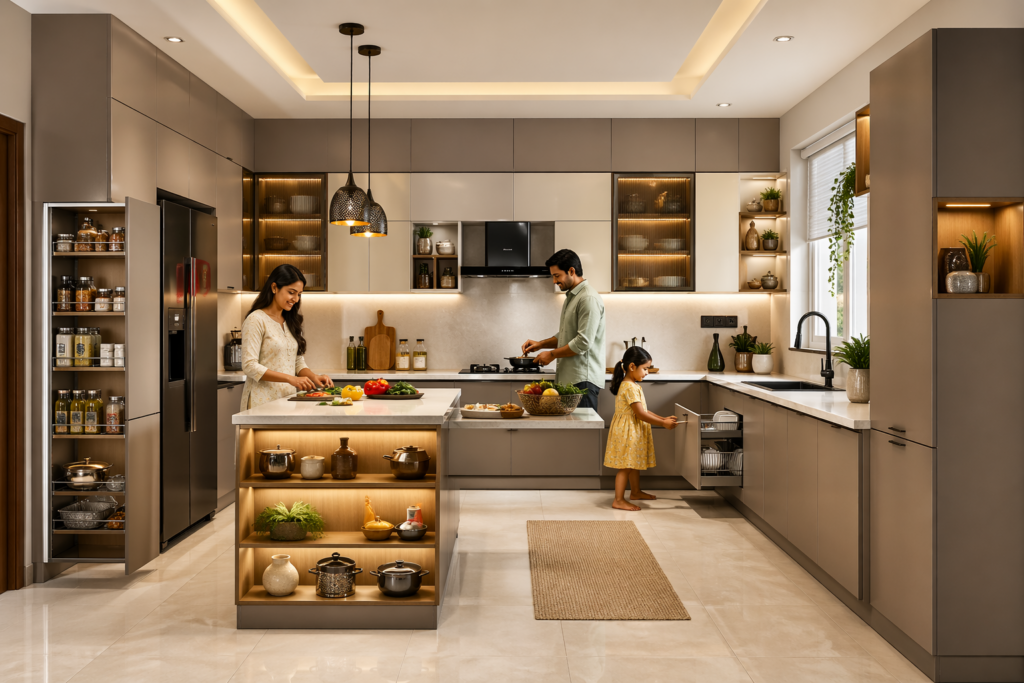

The kitchen has always been the heart of Indian homes—a place where not just meals, but traditions and memories are created. However, as lifestyles evolve and urban homes become more compact, the need for functional, efficient, and aesthetically pleasing kitchen spaces has grown significantly. This is where modular kitchens have revolutionized Indian interiors.
Unlike traditional kitchens that are often built on-site with fixed structures, modular kitchens consist of pre-designed cabinet modules that can be customized, assembled, and installed with precision. This approach allows homeowners to achieve a perfect balance of style and functionality. Indian families, in particular, benefit greatly from modular kitchens because of their adaptability to diverse cooking styles, heavy usage, and storage needs.
Today, modular kitchens are no longer a luxury but a practical necessity. They offer better organization, improved workflow, and modern aesthetics, making daily cooking more efficient and enjoyable.
Why Modular Kitchens Are Ideal for Indian Families
Efficient Space Utilization
One of the biggest challenges in Indian homes—especially in urban apartments—is limited space. Modular kitchens are designed to maximize every inch, ensuring no area goes to waste. From vertical cabinets that utilize wall height to compact drawer systems that optimize corner spaces, these kitchens are engineered for efficiency.
For Indian families who often store large quantities of groceries, utensils, and cookware, this smart utilization becomes essential. Instead of cluttered countertops and overflowing shelves, modular kitchens offer designated spaces for everything, creating a clean and organized environment.
Customization for Indian Cooking Needs
Indian cooking involves a wide variety of ingredients, utensils, and appliances—from heavy pressure cookers to spice boxes and mixers. Modular kitchens can be tailored to accommodate all these elements seamlessly.
Designers incorporate specific features such as spice pull-outs, oil trays, and deep drawers for large vessels. Additionally, provisions for gas pipelines, chimneys, and water purifiers are integrated into the design, ensuring both safety and convenience. This level of customization ensures that the kitchen works in harmony with the family’s cooking habits.
Easy Maintenance and Durability
Indian cooking often involves oil, spices, and high heat, which can take a toll on kitchen surfaces. Modular kitchens are built using materials that are resistant to stains, moisture, and heat, making them easy to maintain.
Surfaces like laminates and acrylic finishes can be cleaned with minimal effort, while high-quality hardware ensures long-lasting performance. This durability makes modular kitchens a practical investment for Indian households.
Popular Modular Kitchen Layouts for Indian Homes
L-Shaped Kitchen
The L-shaped layout is one of the most popular choices for Indian homes. It utilizes two adjacent walls, creating an efficient work triangle between the stove, sink, and refrigerator. This layout is ideal for small to medium-sized kitchens, as it maximizes corner space while leaving enough room for movement.
For families that prefer an open kitchen connected to the living or dining area, the L-shaped design offers both functionality and visual appeal.
U-Shaped Kitchen
The U-shaped kitchen is perfect for larger families that require extensive storage and workspace. With cabinets and countertops on three sides, this layout provides ample room for multiple users to work simultaneously.
This design is particularly useful for Indian cooking, where meal preparation can be elaborate and time-consuming. The additional storage ensures that all essentials are within easy reach.
Parallel (Galley) Kitchen
Parallel kitchens, also known as galley kitchens, are highly efficient and commonly found in urban apartments. This layout features two parallel countertops, creating a streamlined workflow.
It is especially suitable for compact homes where space is limited but functionality cannot be compromised. The separation of cooking and cleaning zones makes it ideal for Indian households.
Island Kitchen
Island kitchens are a symbol of modern luxury and are best suited for spacious homes. The central island can serve multiple purposes—additional workspace, storage, or even a casual dining area.
For Indian families who enjoy hosting guests, the island becomes a social hub, allowing interaction while cooking.
Straight Kitchen
Straight kitchens are designed along a single wall and are perfect for studio apartments or very small spaces. Despite their compact size, they can be highly functional when designed thoughtfully with modular components.
Smart Storage Solutions for Indian Kitchens
Pull-Out Cabinets and Drawers
Pull-out systems are a game-changer in modular kitchens. They allow easy access to items stored at the back, eliminating the need to dig through cluttered shelves. Specialized pull-outs for spices, oils, and groceries ensure that everything is organized and within reach.
Corner Storage Solutions
Corners are often underutilized in traditional kitchens, but modular designs make the most of these spaces with solutions like magic corners and carousel units. These innovative mechanisms ensure that even the deepest corners are accessible and functional.
Overhead Cabinets
Overhead cabinets provide additional storage for items that are not used daily. They help keep the countertop clutter-free while maintaining a clean and minimalist look.
Tall Units and Pantry Storage
Tall units are ideal for storing bulk groceries, grains, and packaged food items. With adjustable shelves and pull-out trays, they offer both convenience and organization, which is essential for Indian households.
Best Materials for Modular Kitchens in India
Cabinets
Choosing the right material for cabinets is crucial for durability. Plywood is widely preferred due to its strength and resistance to moisture. MDF and HDF are also used for their smooth finish and affordability, but they may require additional protection in high-moisture areas.
Countertops
Countertops must withstand heat, stains, and heavy usage. Granite is a popular choice in Indian kitchens due to its durability and heat resistance. Quartz, on the other hand, offers a more uniform appearance and is non-porous, making it easier to maintain.
Finishes
The finish of the cabinets plays a significant role in the kitchen’s overall look. Laminates are cost-effective and available in a wide range of designs. Acrylic finishes provide a high-gloss, modern appearance, while membrane and PU finishes offer a premium feel.
Trending Modular Kitchen Design Ideas (2026)
Smart Kitchens with Technology
Technology is transforming kitchens into smart, efficient spaces. Features like sensor-based lighting, automated drawers, and smart appliances are becoming increasingly popular. These innovations not only enhance convenience but also improve energy efficiency.
Minimalist and Clutter-Free Designs
Minimalism is a growing trend in modern interiors. Handleless cabinets, concealed storage, and clean lines create a sleek and sophisticated look. This approach is particularly effective in small kitchens, where simplicity enhances the sense of space.
Bold Color Combinations
Gone are the days of all-white kitchens. Today, homeowners are experimenting with bold color combinations such as navy blue and gold, matte black and wood, or dual-tone cabinets. These designs add personality and character to the kitchen.
Eco-Friendly Kitchen Designs
Sustainability is becoming a priority for many homeowners. Eco-friendly materials, energy-efficient appliances, and waste management solutions are being incorporated into modular kitchen designs. This not only reduces environmental impact but also promotes healthier living.
Vastu Tips for Modular Kitchen Design
In Indian homes, Vastu plays an important role in interior design. The kitchen is ideally located in the southeast direction, which is associated with the fire element. The stove should be placed in a way that the person cooking faces east, while the sink should be positioned away from the stove to maintain balance between fire and water elements.
Colors like yellow, orange, and red are considered auspicious for kitchens, while clutter should be minimized to ensure positive energy flow. Incorporating Vastu principles can enhance both functionality and harmony within the home.
Budget Planning for Modular Kitchens
Cost Breakdown
The cost of a modular kitchen depends on several factors, including materials, design complexity, hardware, and appliances. Basic kitchens are more affordable, while premium designs with advanced features can be significantly more expensive.
Budget vs Premium Kitchens
Budget kitchens focus on functionality with standard materials and finishes, while premium kitchens offer high-end materials, advanced storage solutions, and smart technology. Understanding your priorities helps in making the right choice.
Tips to Save Money
To optimize your budget, choose cost-effective materials without compromising on quality. Avoid unnecessary add-ons and focus on essential features. Planning the layout efficiently can also reduce costs.
Common Mistakes to Avoid
Designing a modular kitchen requires careful planning. One common mistake is ignoring ventilation, which can lead to discomfort during cooking. Poor lighting can also affect functionality, making it difficult to work efficiently.
Another mistake is inadequate storage planning, which results in clutter. Choosing the wrong materials can lead to maintenance issues, while overcrowding the kitchen with too many elements can reduce usability. Avoiding these pitfalls ensures a practical and long-lasting design.
Why Choose Avinnyya for Modular Kitchen Design
Avinnyya stands out as a trusted name in interior design, offering customized solutions tailored to the needs of Indian families. With a deep understanding of modern trends and traditional requirements, the brand delivers kitchens that are both stylish and functional.
From concept to installation, Avinnyya provides end-to-end services, ensuring a seamless experience for homeowners. Whether you are renovating your existing kitchen or designing a new one, their expertise ensures exceptional results. If you are also exploring broader home solutions, you can connect with an experienced interior design company in bangalore to create a cohesive and beautifully designed living space.
Conclusion
Modular kitchens have transformed the way Indian families experience cooking and living. By combining smart design, efficient storage, and modern aesthetics, they offer a perfect solution for contemporary homes.
Investing in a modular kitchen is not just about upgrading your space—it’s about enhancing your lifestyle. With the right planning, materials, and design approach, you can create a kitchen that is both functional and visually appealing.
FAQs on Modular Kitchen Design
What is the average cost of a modular kitchen in India?
The cost can range from ₹1.5 lakhs to ₹10 lakhs or more, depending on the size, materials, and features.
Which layout is best for small Indian kitchens?
L-shaped and parallel kitchens are ideal for small spaces due to their efficient use of available area.
What materials are best for durability?
Plywood for cabinets and granite or quartz for countertops are among the most durable options.
How long does it take to install a modular kitchen?
Installation typically takes 2 to 6 weeks, depending on the complexity of the design.
Is a modular kitchen worth it for Indian cooking?
Yes, modular kitchens are highly suitable for Indian cooking as they are designed to handle heavy usage, storage needs, and maintenance requirements.
Transform your kitchen into a smart, stylish, and highly functional space with Avinnyya. Get in touch today for a personalized modular kitchen design consultation and bring your dream kitchen to life.