
Dining Room Interior Design Ideas for Modern Homes
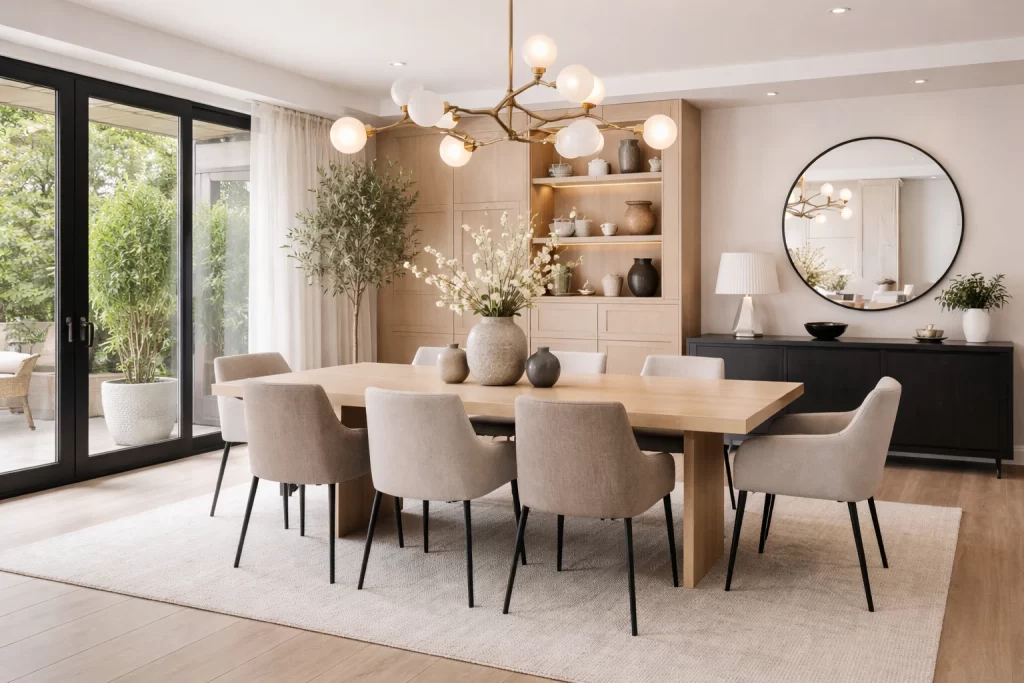

The dining room has evolved beyond just a place to eat—it is now a central hub for conversations, celebrations, and daily family interactions. In modern homes, dining spaces are designed to be both functional and visually appealing, reflecting the homeowner’s personality while ensuring comfort and usability. Whether you live in a compact apartment or a spacious villa, a well-designed dining room can significantly enhance your lifestyle.
With changing design trends, modern dining rooms emphasize minimalism, smart layouts, and seamless integration with other living spaces. From elegant furniture to statement lighting and innovative storage solutions, every element plays a crucial role in shaping the overall ambiance. In this detailed guide, Avinnyya explores the best dining room interior design ideas to help you create a stylish and practical modern dining space.
Understanding Modern Dining Room Design
What Defines a Modern Dining Room?
A modern dining room is characterized by simplicity, clean lines, and a clutter-free environment. Unlike traditional dining spaces that often feature heavy furniture and elaborate décor, modern designs focus on minimalism and functionality. The idea is to create a space that feels open, airy, and inviting without unnecessary elements.
Modern dining rooms also prioritize practicality. Furniture is chosen not just for its aesthetic appeal but also for its usability. Materials such as glass, metal, engineered wood, and marble are commonly used to create a sleek and contemporary look.
Key Elements of Modern Dining Spaces
The essence of modern dining room design lies in balance. Neutral color palettes form the base, while textures and accents add visual interest. Lighting is often used as a focal point, and furniture is carefully selected to maximize comfort and space efficiency. Open layouts are another defining feature, allowing the dining area to flow seamlessly into the living room or kitchen.
Choosing the Right Dining Room Layout
Open vs. Separate Dining Spaces
In modern homes, open-plan layouts are increasingly popular. An open dining space connected to the living room or kitchen creates a sense of spaciousness and encourages social interaction. It allows family members and guests to engage freely, making the home feel more welcoming.
However, separate dining rooms still have their charm, especially in larger homes. They offer privacy and a more formal dining experience. The choice between open and separate layouts depends on your lifestyle, space availability, and personal preferences.
Space Planning Tips
Proper space planning is essential for a functional dining room. There should be enough space between the dining table and surrounding furniture to allow easy movement. Ideally, at least 36 inches of clearance should be maintained around the table.
The layout should also ensure that chairs can be pulled out comfortably without obstruction. Thoughtful planning not only improves usability but also enhances the overall aesthetic appeal of the space.
Dining Layouts for Different Home Sizes
For small apartments, compact dining setups with foldable or extendable tables work best. In medium-sized homes, a dedicated dining area with a standard table and storage units can create a balanced look. Large homes offer the flexibility to experiment with grand dining tables, statement lighting, and luxurious décor elements.
Modern Dining Room Color Schemes
Neutral Color Palettes
Neutral colors such as white, beige, grey, and soft pastels are the foundation of modern dining room design. These shades create a calm and sophisticated environment while making the space appear larger and brighter.
Bold Accent Colors
To avoid monotony, bold accent colors can be introduced through chairs, artwork, or decorative pieces. Deep blues, emerald greens, and even matte black accents can add depth and character to the dining room.
Two-Tone and Contrast Designs
Combining two contrasting colors is a popular trend in modern interiors. For example, pairing a light-colored table with dark chairs creates visual interest. Similarly, contrasting wall colors can make the dining area stand out within an open-plan layout.
Dining Furniture Selection
Choosing the Perfect Dining Table
The dining table is the centerpiece of the room, and its selection should be based on both style and functionality. Rectangular tables are ideal for larger families, while round tables work well in compact spaces and promote better interaction.
Material choice also plays a crucial role. Wooden tables offer warmth and durability, glass tables create a sense of openness, and marble tables add a touch of luxury.
Dining Chairs: Comfort Meets Style
Dining chairs should strike the perfect balance between comfort and aesthetics. Upholstered chairs provide a cozy seating experience, while wooden or metal chairs contribute to a modern look. Ergonomics should not be overlooked, as comfortable seating enhances the overall dining experience.
Storage Solutions
Modern dining rooms often incorporate smart storage solutions such as sideboards, cabinets, and buffets. These not only help in organizing dining essentials but also add to the visual appeal of the space. Built-in storage units are especially useful in smaller homes where space optimization is crucial.
Lighting Ideas for Modern Dining Rooms
Statement Chandeliers
A statement chandelier can instantly elevate the look of a dining room. It acts as a focal point and adds a touch of elegance and sophistication. Modern chandeliers come in various designs, from minimal geometric shapes to artistic installations.
Pendant Lights
Pendant lights are a popular choice for modern dining spaces. They are versatile, stylish, and perfect for creating focused lighting over the dining table. Multiple pendant lights arranged in a row can enhance the visual appeal of the space.
Layered Lighting Approach
Layered lighting involves combining ambient, task, and accent lighting to create a well-lit and balanced environment. While ambient lighting provides overall illumination, task lighting focuses on specific areas, and accent lighting highlights décor elements.
Wall Décor and Styling Ideas
Wall Art and Paintings
Wall art plays a significant role in defining the character of a dining room. Abstract paintings, modern art pieces, or even framed photographs can add personality and charm to the space.
Mirrors for Space Enhancement
Mirrors are an excellent addition to dining rooms, especially smaller ones. They reflect light and create an illusion of a larger space, making the room feel more open and airy.
Accent Walls
An accent wall can serve as a focal point in the dining area. Whether it’s textured paint, wallpaper, or wooden paneling, an accent wall adds depth and visual interest.
Flooring and Ceiling Design
Flooring Options
Flooring sets the tone for the dining room. Options such as marble, tiles, hardwood, and vinyl each offer unique benefits. While marble adds luxury, wooden flooring brings warmth and comfort.
Rugs and Carpets
A well-chosen rug can define the dining area and add a layer of comfort. It should be large enough to accommodate the table and chairs while complementing the overall design.
Ceiling Design Ideas
Modern ceiling designs often incorporate false ceilings with integrated lighting. These designs enhance the ambiance and add a sophisticated touch to the dining space.
Modern Dining Room Décor Accessories
Table Centerpieces
Centerpieces such as fresh flowers, candles, or decorative bowls can enhance the dining table’s appeal. They should be simple yet elegant, avoiding clutter.
Curtains and Window Treatments
Curtains play a crucial role in controlling natural light and adding softness to the space. Light fabrics create an airy feel, while heavier drapes add a sense of luxury.
Indoor Plants
Indoor plants bring life and freshness to the dining room. They improve air quality and add a natural element to modern interiors.
Space-Saving Dining Room Ideas
Foldable and Extendable Tables
Foldable and extendable tables are ideal for small homes. They provide flexibility and can be adjusted based on the number of users.
Wall-Mounted Dining Units
Wall-mounted dining units are innovative solutions for compact spaces. They can be folded away when not in use, saving valuable floor space.
Multi-Functional Furniture
Multi-functional furniture, such as dining tables with built-in storage, helps maximize space while maintaining a clean and organized look.
Dining Room Design Trends for Modern Homes (2026)
Sustainable and Eco-Friendly Designs
Sustainability is becoming a key focus in modern interiors. Using eco-friendly materials, energy-efficient lighting, and sustainable furniture contributes to a greener home.
Smart Dining Spaces
Technology is playing a significant role in modern dining rooms. Smart lighting systems, automated blinds, and integrated sound systems enhance convenience and comfort.
Minimalist Luxury
Minimalist luxury combines simplicity with premium materials and finishes. It focuses on quality over quantity, creating a refined and elegant dining space.
Common Dining Room Design Mistakes to Avoid
One of the most common mistakes is overcrowding the dining room with too much furniture, which makes the space feel cramped. Poor lighting placement can also affect the ambiance and functionality of the room. Ignoring comfort in favor of aesthetics can lead to an unpleasant dining experience.
Another mistake is a lack of cohesion in design. All elements, from furniture to décor, should work together to create a harmonious look.
Tips from Avinnyya Experts
According to Avinnyya’s design experts, the key to a perfect dining room lies in personalization. Every home is unique, and the design should reflect the homeowner’s lifestyle and preferences. Balancing style with functionality is crucial, as a beautiful space should also be practical.
Custom furniture and tailored design solutions can help achieve a cohesive and well-designed dining room that stands out.
Why Choose Avinnyya for Dining Room Interior Design
Avinnyya stands out for its expertise in creating modern, functional, and aesthetically pleasing interiors. As a trusted interior design company in bangalore, the brand offers customized solutions tailored to individual needs.
From concept to execution, Avinnyya ensures a seamless design experience, delivering spaces that are both stylish and practical.
Conclusion
Designing a modern dining room requires careful planning, creativity, and attention to detail. From selecting the right layout and furniture to choosing appropriate lighting and décor, every element contributes to the overall ambiance.
By incorporating the ideas discussed in this guide, you can create a dining space that is not only visually appealing but also functional and comfortable. Investing in professional design services can further enhance the outcome, ensuring a space that truly reflects your style and needs.