
Space-Enhancing Ceiling Styles for Small Bedrooms
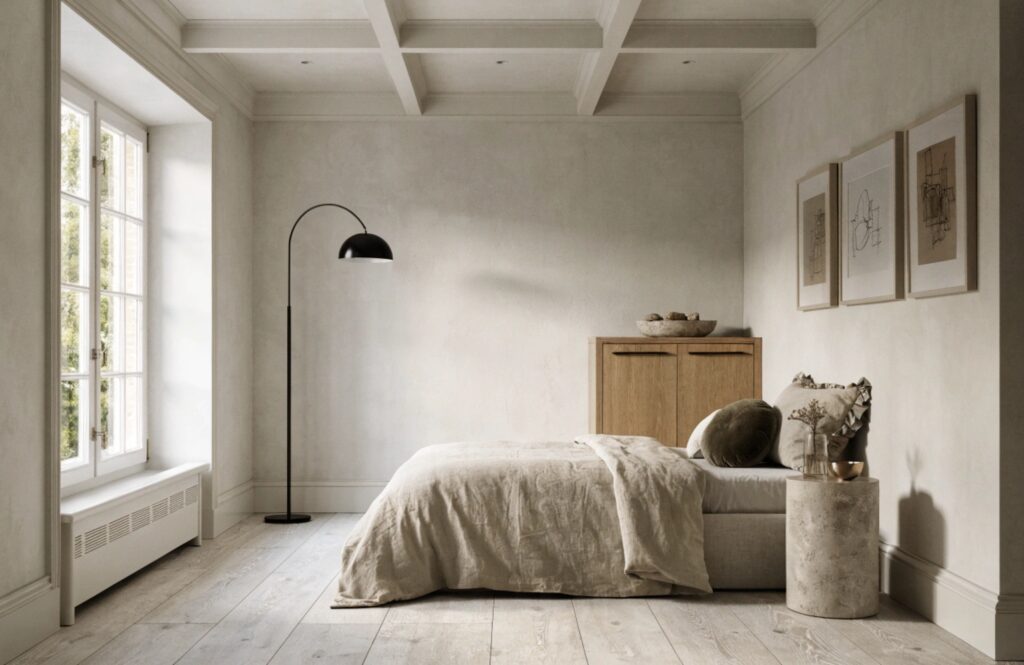

Designing a small bedroom can feel like a puzzle—especially when every inch matters. While most homeowners focus on wall color, layout, or furniture, one element has even more influence over how spacious the room feels: the ceiling.
The way your ceiling is styled directly affects:
- How tall the room feels
- How light spreads across the surfaces
- How open or compressed the room appears
- The overall mood and depth of the space
When used intentionally, the ceiling becomes a powerful design tool that visually expands compact rooms. This guide explores proven, space-enhancing ceiling ideas, analyzed from top-ranking SERP pages and refined to be practical, modern, and visually impactful for small spaces.
Let’s unlock the full potential of your ceiling.
Why Ceiling Design Matters in Small Bedrooms
In a compact bedroom, you’re working with limited square footage—meaning vertical space becomes your biggest asset. A well-designed ceiling can instantly make the space feel brighter, more open, and more comfortable.
Here’s why the ceiling matters so much:
1. It directs visual movement upward
When the eye is drawn upward, the room feels taller and more expansive.
2. It affects lighting distribution
Indirect or well-strategized lighting can wash walls evenly, eliminating dark corners that usually shrink a room.
3. It influences perceived spaciousness
Colors, shapes, materials, and textures all change how the brain interprets room size.
4. It supports overall aesthetics
A thoughtfully designed ceiling anchors your interior design and prevents the room from feeling busy or cluttered.
5. It determines comfort and ambiance
Lighting style, brightness, and ceiling height can make small rooms feel warm, calming, and breathable.
Now, let’s explore the ceiling styles that can actually make your bedroom look bigger.
1. Minimalist Ceiling Designs That Open Up Space
Minimalist ceilings consistently rank at the top of SERP results because they’re the simplest and most effective for visually expanding small rooms.
A minimalist ceiling focuses on:
- Clean lines
- A smooth finish
- Light or neutral color palettes
- Little to no ornamentation
Why it works:
Clutter draws attention downward. Minimalist ceilings declutter the “fifth wall,” giving the room the illusion of height and openness.
Best uses:
- Small bedrooms with low ceilings
- Minimalist or Scandinavian interiors
- Rooms with limited natural light
The beauty of minimalism lies in how effortlessly it makes the space feel larger without overwhelming the eye.
2. Recessed & Cove Lighting to Visually Lift the Ceiling
Lighting is one of the strongest tools for space expansion.
Recessed lights, also known as can lights, keep the ceiling flush, eliminating bulky fixtures.
Cove lighting, hidden within ceiling grooves, gently bounces light upward.
Why these methods work:
Both lighting styles create illusionary height by:
- Eliminating shadows
- Softening edges
- Highlighting the upper plane
- Making the ceiling appear weightless
Where it’s ideal:
- Modern bedrooms
- Rooms with low or standard ceilings
- Compact rectangular rooms
Cove lighting especially gives a “floating ceiling” effect—perfect for elevating tight spaces.
3. Reflective & Mirror Ceiling Styles
A lesser-used but highly effective method for enlarging small spaces is incorporating reflective materials.
This includes:
- Glossy paint finishes
- Lacquered ceiling panels
- Mirror inserts
- High-gloss stretch ceilings
Why it works:
Reflection multiplies both space and light, making the room instantly feel double its size.
Best considerations:
- Use sparingly to avoid overwhelming the design
- Keep the rest of the décor soft and neutral
Reflective ceilings are incredibly impactful in bedrooms with minimal natural light, as they brighten the space dramatically.
4. Painted Accent Ceilings That Add Visual Height
A painted ceiling can make or break a small room, but when done right, it strategically adds depth and height.
Space-enhancing paint strategies:
- Use lighter shades than the walls to lift the ceiling visually
- Try soft pastel gradients to stretch the perception of height
- Use a color wash for a subtle reflective effect
Why it works:
Color influences perception. Lighter shades visually blend the ceiling and walls, avoiding sharp visual boundaries that shrink the room.
Perfect for:
- Bedrooms with low ceilings
- Minimalist, contemporary, or modern styles
- Spaces with warm or cool lighting
A soft-looking ceiling creates an airy environment that feels open and breathable.
5. Geometric and Patterned Ceiling Designs with Depth
Contrary to popular belief, geometric designs can make rooms feel bigger—when used correctly.
Designs that enhance space:
- Thin linear patterns
- Long stripes running lengthwise
- Subtle chevron designs
- Soft grid patterns
Why it works:
Geometric ceilings guide the eye and elongate the room. Patterns that follow the longest measurement of the bedroom add linear stretch.
Important note:
Avoid heavy, bold, or dark geometric patterns—they compress the space.
6. Wooden Slat & Beam Ceilings Without Reducing Height
Wood is warm, timeless, and character-rich. However, heavy beams can shrink a room—unless used smartly.
Space-enhancing wood ceiling ideas:
- Narrow vertical slats
- Light-colored wood (pine, ash, bamboo)
- Thin beam outlines instead of solid beams
- Wooden panels with integrated LED strips
Why it works:
Thin wood elements create rhythm and direction, guiding the eye upward rather than weighing the ceiling down.
Best for:
- Modern, Japandi, or Scandinavian interiors
- Bedrooms needing warmth
Wooden slats add texture without visual heaviness.
7. Curved, Arched & Floating Ceiling Concepts
Curved ceilings soften edges and expand the room visually. Floating ceilings, on the other hand, detach visually from the walls, giving the illusion of extra height.
Why curved ceilings help:
- They remove sharp corners, making the room feel more open
- Rounded forms look more fluid and less boxed-in
Floating ceilings help by:
- Creating depth between layers
- Allowing hidden cove lighting
- Making the ceiling appear suspended
These designs work especially well in contemporary rooms where architectural creativity is encouraged.
8. 3D & Multi-Level Ceiling Styles for Depth Illusion
You might assume multi-level ceilings shrink a room—but shallow, well-designed layers do the opposite.
How 3D ceilings expand space:
- They add controlled depth
- Create an upward-pulling perspective
- Integrate LED lighting for vertical “lift”
Best practices:
- Keep layers minimal
- Use light tones
- Pair with cove or recessed lighting
A subtle tray ceiling is one of the most effective ways to make a bedroom feel taller without overwhelming the space.
9. Wallpapered & Subtly Textured Ceilings
Wallpaper can enhance or compress space depending on the design. In small bedrooms, choose:
- Small patterns
- Light tones
- Subtle textures
- Reflective or metallic accents
Why this works:
Patterns add depth. When done lightly, they create a visual field that trick the eye into perceiving more vertical space.
Avoid:
- Heavy floral prints
- Dark patterns
- Large motifs
Used correctly, wallpaper ceilings add character without sacrificing space.
10. Skylights, Light Wells & Natural Light Solutions
Nothing enlarges a small bedroom more effectively than natural light. Skylights visually open the ceiling and extend the room upward into the sky.
How natural light expands space:
- Removes ceiling boundaries
- Creates the feeling of infinite height
- Maximizes brightness
Other good options:
- Light wells
- Roof windows
- Sun tube ceilings
If structural changes are possible, skylights are the ultimate space-enhancing upgrade.
Quick Tips to Make Any Ceiling Feel Taller
Regardless of your ceiling style, these universal tricks always help:
- Use lighter colors overhead
- Choose flat or recessed lighting
- Avoid dark, heavy ceiling fans
- Draw the eye upward with vertical elements
- Keep patterns minimal
Small adjustments can make big visual differences.
Common Mistakes That Make Small Bedrooms Look Smaller
Avoid these ceiling errors to maintain a sense of openness:
- Adding heavy beams that visually drag the ceiling downward
- Using dark ceiling paint in a small room
- Installing bulky chandeliers
- Overtexturing the ceiling
- Using designs with excessive depth
Small bedrooms thrive with simplicity and strategic lighting.
For additional affordable ceiling inspirations, visit our main guide: 25+ Small Bedroom Ceiling Ideas & Inspirations to Transform Compact Spaces.
Conclusion
Small bedrooms don’t have to feel tight or closed off. With the right ceiling design—whether minimalist, reflective, wooden, curved, or lighting-based—you can completely transform how spacious and comfortable the room feels.
Your ceiling is not just the fifth wall—it’s a powerful design element that can elevate light, height, and visual depth.