
Step-by-Step Guide to Planning Your Home Interiors
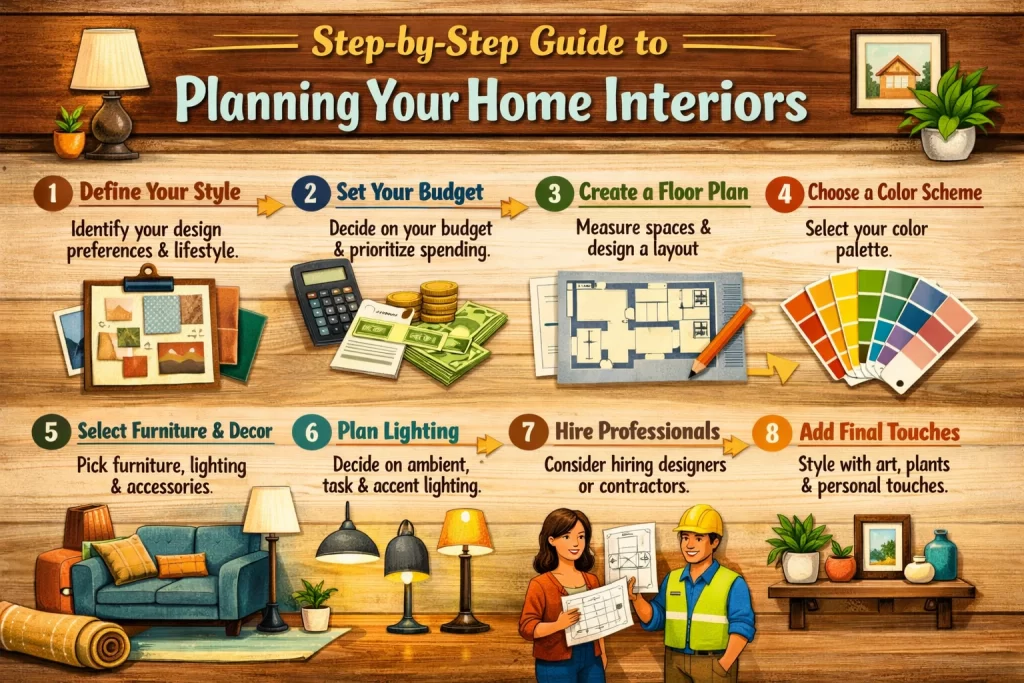

Planning your home interiors is one of the most exciting yet challenging aspects of creating your dream living space. Whether you are moving into a new home or renovating your existing one, proper planning is the foundation of a successful interior design project. Without a clear roadmap, homeowners often face issues like budget overruns, mismatched designs, poor space utilization, and unnecessary delays.
A step-by-step approach ensures that every detail—from layout to lighting—is carefully considered. It helps you align your vision with practicality while maintaining control over costs and timelines. This guide walks you through every stage of planning your home interiors, making the process smoother, more efficient, and far more enjoyable.
At Avinnyya, we believe that great design is not just about aesthetics but also about functionality and personalization. Let’s dive into the complete process to help you design a home that reflects your lifestyle and personality.
Understanding Your Needs and Lifestyle
Define Your Purpose for Each Space
The first step in planning your home interiors is to clearly define how each space will be used. Every room in your home serves a specific purpose, and understanding this purpose helps guide design decisions. For example, your living room may be used for entertaining guests, while your bedroom should prioritize comfort and relaxation.
Instead of focusing only on how a space should look, think about how it should function. A well-designed kitchen should enhance efficiency, while a home office should support productivity. When you define the purpose of each room, you create a strong foundation for all subsequent design choices.
Analyze Your Lifestyle
Your lifestyle plays a crucial role in determining the design of your home. A family with children will have very different needs compared to a working professional living alone. Factors such as daily routines, work-from-home requirements, hobbies, and storage habits must all be considered.
For instance, if you work remotely, investing in a well-designed home office becomes essential. Similarly, if you love hosting gatherings, your living and dining areas should be spacious and inviting. By aligning your interiors with your lifestyle, you ensure that your home is not just beautiful but also practical.
Identify Must-Haves vs Nice-to-Haves
It’s important to distinguish between essential features and optional upgrades. Must-haves are elements that are necessary for your daily life, such as storage solutions, comfortable seating, or functional lighting. Nice-to-haves, on the other hand, include luxury additions like statement décor pieces or high-end finishes.
Prioritizing your needs helps you allocate your budget effectively and avoid overspending on non-essential items. This clarity also ensures that your home remains functional even if you need to make compromises.
Setting a Realistic Budget
Determine Your Total Budget
Budget planning is one of the most critical steps in interior design. Before you begin, you need to decide how much you are willing to invest in your home interiors. This includes everything from furniture and materials to labor and décor.
Having a clear budget prevents unnecessary stress later in the process. It also helps you make informed decisions and avoid overspending.
Break Down Costs
Once your total budget is defined, the next step is to break it down into categories. Allocate funds for furniture, lighting, materials, labor, and accessories. This detailed breakdown ensures that no aspect of your project is overlooked.
It also allows you to track expenses and make adjustments if needed. For example, if you spend more on furniture, you may need to reduce costs in décor or finishes.
Allocate Contingency Funds
Unexpected expenses are a common part of any interior design project. This is why it is essential to set aside an additional 10–15% of your budget as a contingency fund. This buffer helps you handle unforeseen costs without disrupting your overall plan.
Cost-Saving Tips
Smart budgeting doesn’t mean compromising on quality. Focus on high-impact areas such as the living room and kitchen, where design makes the most difference. You can also save money by refurbishing existing furniture or choosing cost-effective materials that mimic premium finishes.
Choosing Your Interior Design Style
Popular Interior Design Styles
Choosing a design style gives your home a cohesive look and feel. Some popular styles include modern, contemporary, minimalist, traditional, and industrial. Each style has its own characteristics, color palettes, and material preferences.
Understanding these styles helps you identify what resonates with your taste and vision.
How to Find Your Style
Finding your style can be an enjoyable process. Explore design inspiration on platforms like Pinterest or create mood boards that reflect your preferences. Pay attention to colors, textures, and layouts that appeal to you.
Over time, you will notice patterns in your choices, helping you define a clear design direction.
Mixing Styles the Right Way
While sticking to one style ensures consistency, mixing styles can add depth and personality to your interiors. The key is to maintain balance and avoid clutter. Choose a dominant style and complement it with elements from other styles to create a harmonious look.
Space Planning and Layout Design
Importance of Space Planning
Space planning is the backbone of interior design. It involves organizing furniture and elements in a way that maximizes functionality and flow. Proper space planning ensures that your home feels spacious, comfortable, and easy to navigate.
Furniture Layout Planning
The placement of furniture plays a significant role in defining the usability of a space. Ensure that there is enough room for movement and that furniture is arranged logically. Avoid overcrowding, as it can make a space feel cramped and uncomfortable.
Zoning Different Areas
In modern homes, especially open-plan layouts, zoning is essential. It helps define different areas within a single space, such as separating the living room from the dining area. This can be achieved through furniture placement, rugs, lighting, or partitions.
Using Technology
Advanced tools like 2D layouts and 3D visualizations allow you to see your design before execution. These tools help you experiment with different layouts and make informed decisions, reducing the risk of errors.
Selecting Color Schemes and Materials
Choosing the Right Color Palette
Colors have a powerful impact on mood and perception. Light colors can make a space feel larger and brighter, while darker tones add warmth and depth. Choosing the right color palette is essential for creating the desired ambiance in your home.
Material Selection
Materials define the look and durability of your interiors. Common options include wood, glass, metal, laminates, and fabrics. Each material has its own advantages and should be chosen based on functionality and aesthetics.
Durability vs Aesthetics
While aesthetics are important, durability should never be overlooked. High-quality materials may cost more initially but offer long-term value by reducing maintenance and replacement costs.
Lighting Design for Every Room
Types of Lighting
Lighting is a key element of interior design that enhances both functionality and ambiance. It includes ambient lighting for overall illumination, task lighting for specific activities, and accent lighting for highlighting features.
Room-Wise Lighting Tips
Different rooms require different lighting strategies. For example, the kitchen needs bright task lighting, while the bedroom benefits from soft, warm lighting. A layered lighting approach ensures that each space is well-lit and visually appealing.
Natural Lighting Optimization
Maximizing natural light can significantly improve the look and feel of your home. Use sheer curtains, mirrors, and reflective surfaces to enhance daylight and create a brighter environment.
Furniture and Storage Planning
Choosing the Right Furniture
Furniture should be selected based on size, comfort, and functionality. Oversized furniture can make a room feel cramped, while undersized pieces may look out of place. Always consider the scale of your space before making a decision.
Custom vs Ready-Made Furniture
Custom furniture offers flexibility and personalization, allowing you to design pieces that perfectly fit your space. Ready-made furniture, on the other hand, is more convenient and cost-effective. The choice depends on your budget and requirements.
Smart Storage Solutions
Efficient storage is essential for maintaining a clutter-free home. Options like modular wardrobes, built-in cabinets, and multi-functional furniture help maximize space and improve organization.
Décor and Finishing Touches
Soft Furnishings
Soft furnishings such as curtains, rugs, and cushions add warmth and comfort to your interiors. They also provide an opportunity to introduce color and texture into your design.
Wall Décor
Walls play a significant role in defining the character of a space. From paintings and wallpapers to textured finishes, there are numerous ways to enhance your walls and make them visually appealing.
Accessories and Personalization
Accessories like plants, artwork, and souvenirs add personality to your home. These elements make your space unique and reflect your individual style.
Hiring Professionals vs DIY
When to Hire an Interior Designer
While DIY projects can be cost-effective, hiring a professional is often the better choice for complex projects. Interior designers bring expertise, creativity, and technical knowledge to the table.
Benefits of Hiring Experts
Working with professionals ensures a smoother process, better resource management, and high-quality results. They also help you avoid costly mistakes and save time.
Why Choose Avinnyya
Avinnyya offers end-to-end interior design solutions tailored to your needs. With a focus on innovation and quality, the team ensures that every project is executed to perfection. If you are looking for an expert interior design company in bangalore, Avinnyya stands out for its personalized approach and attention to detail.
Execution and Project Management
Creating a Timeline
A well-defined timeline is essential for keeping your project on track. It outlines each phase of the design and execution process, ensuring timely completion.
Coordinating with Vendors
Interior design involves multiple stakeholders, including contractors, carpenters, and electricians. Effective coordination ensures that all tasks are completed efficiently and without delays.
Quality Checks
Regular inspections and quality checks help maintain high standards throughout the project. This ensures that the final outcome meets your expectations.
Final Styling and Handover
Styling Your Space
The final stage involves arranging décor elements and adding finishing touches. This is where your vision truly comes to life.
Snag List and Fixes
Before completion, create a snag list to identify and fix any issues. This ensures that everything is perfect before you move in.
Moving In and Maintenance Tips
Once your interiors are complete, proper maintenance is key to preserving their beauty. Regular cleaning and timely repairs help keep your home looking fresh and elegant.
Common Mistakes to Avoid in Home Interior Planning
Many homeowners make mistakes such as ignoring functionality, choosing poor lighting, overcrowding spaces, or skipping professional guidance. Avoiding these pitfalls ensures a smoother design process and better results.
Conclusion
Planning your home interiors step by step is the key to creating a space that is both functional and visually appealing. From understanding your needs to executing the final design, every stage plays a crucial role in achieving your dream home.
With the right approach and expert guidance, you can transform your vision into reality. Thoughtful planning not only enhances the beauty of your home but also improves your overall quality of life.