
Open Layout Interiors: Pros, Cons & Design Tips
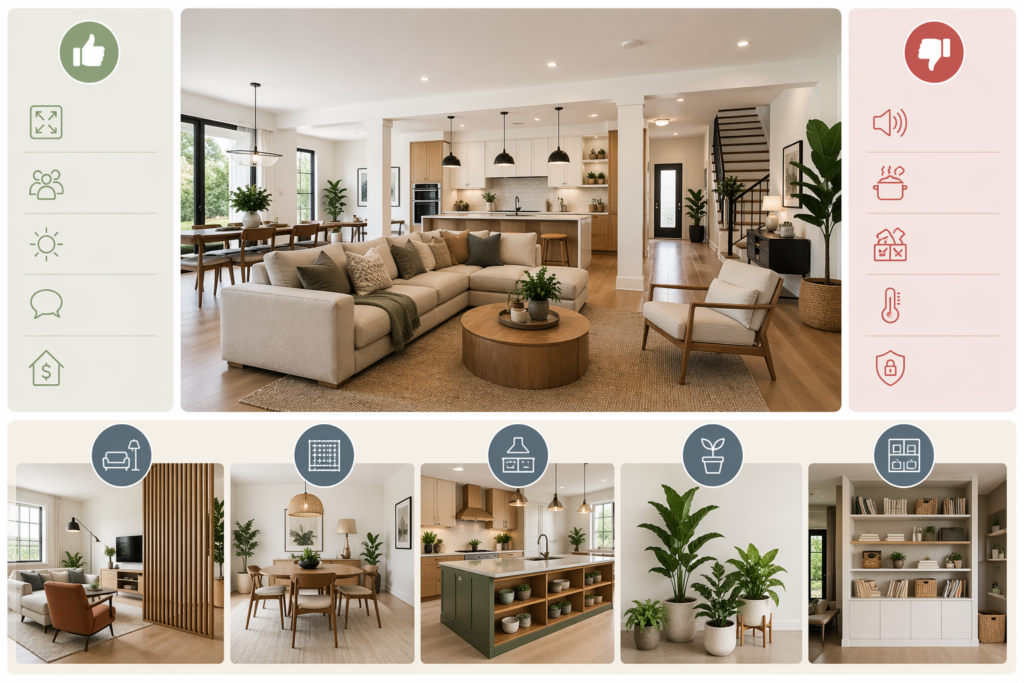

Open layout interiors have become a defining feature of modern homes, especially in urban living spaces where functionality meets aesthetics. By removing unnecessary walls and barriers, this design approach creates a seamless flow between different areas such as the living room, dining space, and kitchen. While the concept offers a sense of openness and flexibility, it also comes with certain challenges that homeowners must carefully consider.
In this comprehensive guide, we’ll explore everything you need to know about open layout interiors—from their key benefits and drawbacks to expert design tips that ensure your space looks cohesive, practical, and visually appealing.
Introduction to Open Layout Interiors
Open layout interiors refer to a design style where multiple functional areas are combined into a single, continuous space without rigid partitions. Traditionally, homes were divided into separate rooms with specific purposes, but modern lifestyles demand more fluid and adaptable spaces. This shift has led to the growing popularity of open-plan living.
In Indian homes, especially in cities where space optimization is crucial, open layouts have become increasingly desirable. They not only make compact apartments feel larger but also enhance connectivity among family members. Whether it’s a small flat or a luxury villa, the open layout concept reflects a contemporary lifestyle that values comfort, interaction, and flexibility.
What Defines an Open Layout Design?
Key Characteristics
An open layout interior is defined by its lack of physical barriers. Instead of walls separating each room, spaces flow into one another naturally. This creates a unified environment where each area is visually connected yet functionally distinct.
One of the most notable features is the emphasis on natural light. Without walls blocking windows, sunlight can travel freely across the entire space, making the home feel brighter and more inviting. Additionally, open layouts often incorporate multi-functional zones where a single area can serve multiple purposes, such as a dining space doubling as a workspace.
Another defining aspect is the visual continuity achieved through consistent design elements like flooring, color schemes, and materials. This cohesion is essential to maintain harmony within the open space.
Common Open Layout Configurations
There are several popular configurations within open layout designs. The most common is the living and dining combination, where both areas share a unified space but are differentiated through furniture placement or decor elements. Another widely used configuration is the kitchen and dining integration, often enhanced with a breakfast counter or island that acts as a subtle divider.
Studio-style layouts take openness a step further by combining all living functions into a single room, making them ideal for compact apartments. In larger homes and villas, open layouts may include expansive living areas with double-height ceilings, creating a luxurious and airy ambiance.
Pros of Open Layout Interiors
Enhanced Space Perception
One of the biggest advantages of open layout interiors is their ability to make spaces appear larger than they actually are. By eliminating walls, the visual boundaries disappear, allowing the eye to travel freely across the room. This creates an illusion of spaciousness, which is especially beneficial in smaller homes and apartments.
Even in compact areas, an open layout can significantly improve the overall feel of the space, making it less cramped and more comfortable.
Better Natural Light Flow
Open layouts maximize the use of natural light. Without walls obstructing windows, sunlight can illuminate the entire area, reducing the need for artificial lighting during the day. This not only enhances the aesthetic appeal of the home but also contributes to energy efficiency.
A well-lit space feels more welcoming and positively impacts mood and productivity, making open layouts a preferred choice for modern homeowners.
Improved Social Interaction
An open layout fosters better communication and interaction among family members. Whether you’re cooking in the kitchen or relaxing in the living room, you remain connected with others in the space. This is particularly beneficial for families and those who frequently entertain guests.
Hosting gatherings becomes more convenient, as guests can move freely between areas without feeling confined to a single room.
Flexibility in Design
Open layouts offer unmatched flexibility when it comes to design and functionality. Furniture can be rearranged easily to suit changing needs, and spaces can be adapted for multiple uses. For instance, a dining area can double as a workspace or study zone when required.
This adaptability makes open layouts ideal for evolving lifestyles, especially in homes where space needs may change over time.
Modern Aesthetic Appeal
The clean, uncluttered look of open layout interiors aligns perfectly with contemporary design trends. The seamless flow and minimalist approach create a sophisticated and premium appearance that enhances the overall value of the home.
This modern aesthetic is highly appealing to homeowners looking for stylish yet functional living spaces.
Cons of Open Layout Interiors
Lack of Privacy
While openness has its advantages, it also means reduced privacy. Without walls, it can be challenging to create personal spaces, especially in households with multiple members. Activities in one area are easily visible and audible from others, which may not always be desirable.
Noise and Distractions
In an open layout, sound travels freely across the space. This can lead to increased noise levels, making it difficult to focus on work or enjoy quiet moments. For families with children or individuals working from home, this can be a significant drawback.
Cooking Smells Spread Easily
One of the common concerns with open kitchens is the spread of cooking odors throughout the home. Without proper ventilation, smells can linger in the living and dining areas, affecting the overall comfort of the space.
Clutter Visibility
In a closed layout, clutter can be confined to a single room. However, in an open layout, everything is visible at once. This means that even minor disorganization can impact the overall appearance of the home, requiring consistent maintenance and cleanliness.
Temperature Control Challenges
Maintaining a consistent temperature in a large open space can be challenging. Cooling or heating the entire area may require more energy compared to smaller, enclosed rooms, potentially increasing utility costs.
Open Layout vs Traditional Layout
Key Differences
The primary difference between open and traditional layouts lies in their structure. Traditional layouts feature clearly defined rooms with specific purposes, offering greater privacy and separation. In contrast, open layouts prioritize fluidity and connectivity.
While traditional homes may feel more organized and private, open layouts provide a sense of freedom and modernity that appeals to contemporary lifestyles.
Which One is Right for You?
Choosing between an open and traditional layout depends on your lifestyle, family size, and personal preferences. If you value privacy and defined spaces, a traditional layout may be more suitable. However, if you prefer a modern, interactive environment with flexible usage, an open layout is the better choice.
Expert Design Tips for Open Layout Interiors
Define Zones Without Walls
Creating distinct zones within an open layout is essential for functionality. This can be achieved through strategic furniture placement, rugs, or lighting. For example, a sofa can act as a divider between the living and dining areas, while a rug can visually anchor a specific zone.
Maintain a Cohesive Color Palette
Consistency in color schemes helps unify the space and create a harmonious look. Using a limited palette of two to three primary colors ensures that the different areas blend seamlessly without appearing chaotic.
Use Smart Furniture Placement
Furniture plays a crucial role in defining spaces within an open layout. Sectional sofas, open shelving units, and console tables can serve as subtle partitions without disrupting the flow.
Layer Lighting Strategically
Lighting should be carefully planned to suit each zone. A combination of ambient, task, and accent lighting can enhance functionality while adding depth and character to the space.
Invest in Storage Solutions
Since clutter is more visible in open layouts, efficient storage solutions are essential. Built-in cabinets, hidden storage, and multi-functional furniture can help keep the space organized and visually appealing.
Control Acoustics
Soft furnishings like curtains, rugs, and upholstered furniture can help absorb sound and reduce noise levels. This improves comfort and makes the space more livable.
Add Statement Elements
Incorporating focal points such as feature walls, artwork, or indoor plants can enhance the visual appeal of the space while subtly defining different areas.
Optimize Kitchen Design
In open layouts, the kitchen should be both functional and aesthetically pleasing. Installing a high-quality chimney or exhaust system is crucial to manage cooking odors. Kitchen islands or breakfast counters can also serve as effective separators.
Best Open Layout Ideas for Indian Homes
Small Apartment Solutions
For compact homes, space-saving furniture and smart layouts are key. Foldable tables, modular storage units, and minimalist decor can maximize functionality without overcrowding the space.
Luxury Open Layout Designs
In larger homes, open layouts can be elevated with features like double-height ceilings, large windows, and premium materials. Glass partitions can be used to create a semi-open feel while maintaining visual continuity.
Vastu Considerations
In Indian homes, Vastu plays an important role in design. Ensuring proper placement of the kitchen and living areas, along with maintaining a balanced flow of energy, can enhance both comfort and positivity in the home.
Common Mistakes to Avoid
One of the most common mistakes in open layout design is overcrowding the space with too much furniture. This defeats the purpose of openness and can make the area feel cluttered. Another mistake is ignoring storage needs, which leads to visible mess and disorganization.
Poor lighting planning can also impact the functionality and ambiance of the space. Additionally, failing to create visual separation between zones can result in a lack of structure, making the layout feel chaotic.
Cost Considerations for Open Layout Interiors
Designing an open layout may involve structural changes such as removing walls, which can increase costs. Additionally, investing in high-quality furniture, lighting, and ventilation systems is essential for achieving the desired look and functionality.
However, with careful planning, it is possible to create a stunning open layout that fits within your budget. Balancing cost and quality is key to achieving long-term value.
Is an Open Layout Right for You?
Before opting for an open layout, consider your lifestyle and daily needs. If you enjoy hosting guests and prefer a modern, interactive living environment, an open layout is an excellent choice. However, if privacy and quiet spaces are a priority, you may need to incorporate semi-open elements or reconsider the design.
Conclusion
Open layout interiors offer a perfect blend of style, functionality, and modern living. While they come with certain challenges, thoughtful planning and smart design choices can help you overcome these limitations and create a space that truly reflects your lifestyle.
Whether you’re redesigning your home or starting from scratch, embracing the open layout concept can transform your living experience into something more connected, spacious, and visually appealing.