
Interior Designer vs Architect: Who Should You Hire?
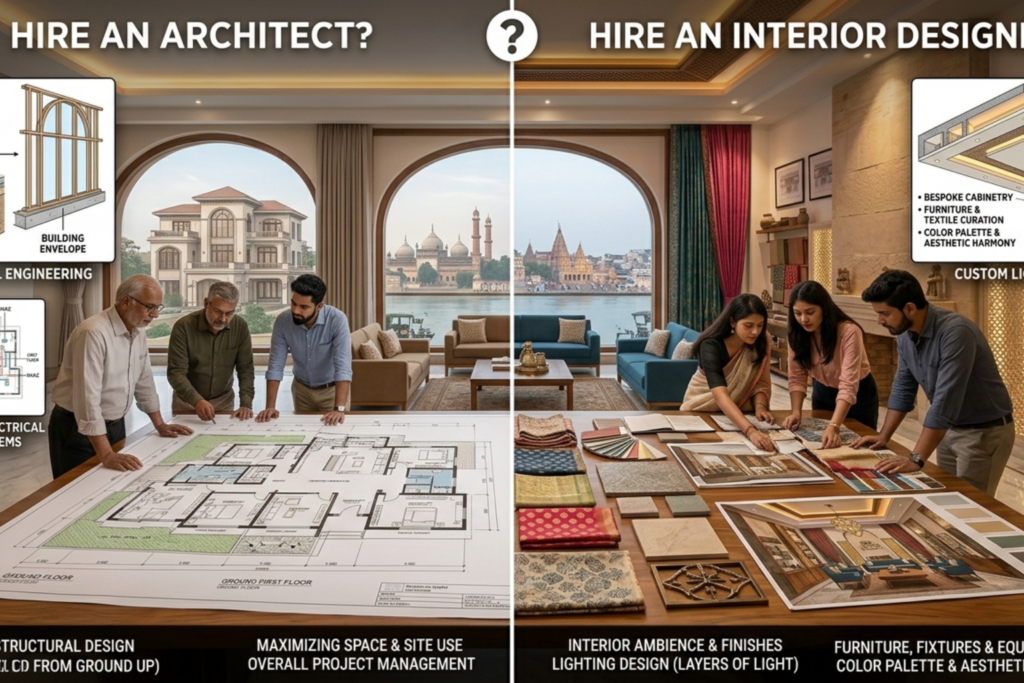

When planning a new home, renovation, apartment interior, or luxury residence, homeowners often face a common question:
Should you hire an architect or an interior designer?
Although both professionals contribute to creating better living spaces, their roles are fundamentally different. Confusion usually happens because architecture and interior design frequently overlap during residential projects.
However, understanding the distinction is important because hiring the right professional at the right stage can significantly improve:
- project efficiency
- functionality
- aesthetics
- budget management
- execution quality
- long-term usability
Modern homes today require much more than attractive visuals. Homeowners increasingly seek spaces that combine:
- intelligent planning
- practical functionality
- modern aesthetics
- emotional comfort
- organized living
- lifestyle personalization
Depending on the scope of your project, you may require:
- an architect
- an interior designer
- or both working together
For homeowners planning modern turnkey interiors, Avinnyya – Interior Design & Turnkey Solutions creates customized living environments focused on intelligent planning, refined aesthetics, and practical contemporary living.
What Does an Architect Do?
An architect primarily focuses on:
- building design
- structural planning
- spatial layout
- construction planning
- exterior form
- building regulations
Architects are involved in projects where:
- a house is being built from scratch
- structural changes are required
- layout planning needs major modification
- construction approvals are necessary
Their responsibilities often include:
- floor plans
- structural coordination
- elevation design
- construction drawings
- site planning
- ventilation planning
- building compliance
Architects shape the physical structure of the building itself.
What Does an Interior Designer Do?
An interior designer focuses on:
- interior functionality
- aesthetics
- space optimization
- furniture planning
- lighting design
- storage solutions
- material selection
- overall user experience
Interior designers transform interior spaces into environments that feel:
- organized
- comfortable
- visually cohesive
- personalized
- functional
Their work often includes:
- modular kitchens
- wardrobes
- lighting concepts
- false ceiling design
- furniture layouts
- color palettes
- décor coordination
- storage integration
Interior designers improve how people experience and live inside the space.
The Core Difference Between Architects and Interior Designers
Aspect | Architect | Interior Designer |
Primary Focus | Building structure | Interior experience |
Scope | Construction & planning | Interior functionality & aesthetics |
Involvement Stage | Before construction | During or after construction |
Structural Work | Yes | Limited |
Furniture Planning | Minimal | Extensive |
Lighting Design | Basic | Detailed |
Storage Optimization | Limited | Comprehensive |
Material Styling | Moderate | Extensive |
Space Personalization | Limited | High |
Turnkey Execution | Rare | Common |
When You Should Hire an Architect
You typically need an architect if you are:
- constructing a new home
- building a villa
- redesigning structural layouts
- planning elevations
- making major structural modifications
- developing large residential projects
Architects are especially important during:
- land development
- building planning
- construction approval stages
- civil construction
They ensure:
- structural safety
- planning efficiency
- architectural coherence
throughout the building process.
When You Should Hire an Interior Designer
You should hire an interior designer when your focus is:
- interior transformation
- functionality improvement
- modern aesthetics
- modular solutions
- storage optimization
- lighting planning
- space personalization
Interior designers are especially valuable for:
- apartments
- luxury homes
- renovations
- turnkey interiors
- modern family homes
They improve:
- usability
- comfort
- organization
- emotional experience
through intelligent interior planning.
Can Architects and Interior Designers Work Together?
Absolutely.
In high-quality residential projects, architects and interior designers often collaborate closely.
Architect Responsibilities
- structural layout
- building envelope
- floor planning
- elevations
- construction coordination
Interior Designer Responsibilities
- interior functionality
- modular systems
- material palettes
- lighting concepts
- furniture planning
- styling integration
When coordinated properly, this collaboration creates homes that feel:
- structurally efficient
- visually refined
- highly livable
Space Planning Differences
Architectural Space Planning
Architectural planning focuses on:
- room placement
- structural flow
- ventilation
- construction practicality
Interior Space Planning
Interior planning focuses on:
- furniture usability
- movement comfort
- storage efficiency
- emotional comfort
- lifestyle optimization
Interior designers improve how spaces function daily.
Aesthetic Role Comparison
Architects typically influence:
- building form
- façade identity
- structural proportions
Interior designers focus heavily on:
- textures
- materials
- colors
- lighting
- visual harmony
- emotional ambiance
They shape how interiors feel experientially.
Lighting Planning Differences
Architectural lighting planning is usually functional.
Interior designers create:
- layered lighting
- cove lighting
- accent lighting
- mood-focused illumination
- ambient balance
Lighting dramatically influences:
- luxury perception
- comfort
- visual sophistication
inside modern homes.
Storage and Functionality
Modern living requires intelligent organization.
Interior designers integrate:
- modular wardrobes
- kitchen storage systems
- concealed organization
- multifunctional furniture
- utility optimization
Architectural planning alone may not address detailed daily storage functionality.
Furniture and Lifestyle Planning
Interior designers carefully plan:
- furniture layouts
- ergonomic comfort
- room circulation
- practical usability
This improves:
- openness
- convenience
- family comfort
- daily functionality
while maintaining visual balance.
Material and Finish Selection
Interior designers coordinate:
- laminates
- veneers
- fabrics
- countertops
- flooring finishes
- lighting fixtures
This creates stronger:
- visual continuity
- design consistency
- luxury perception
throughout the home.
Renovation Projects: Who Is More Important?
For most apartment renovations and interior upgrades, homeowners generally benefit more from hiring an interior designer.
However, if the renovation involves:
- wall demolition
- structural modification
- major civil changes
architectural consultation may also become necessary.
Cost Considerations
Architectural Costs
Architecture fees often depend on:
- project scale
- structural complexity
- construction scope
Interior Design Costs
Interior costs vary based on:
- modular requirements
- customization
- material selection
- turnkey scope
- luxury level
Interior design significantly affects everyday living quality and home experience.
Modern Homeowners Increasingly Prioritize Interior Design
Urban homeowners increasingly value:
- organized living
- modern aesthetics
- intelligent storage
- emotional comfort
- turnkey convenience
As lifestyles evolve, interiors now influence:
- productivity
- wellness
- comfort
- family interaction
- daily convenience
more than ever before.
Common Mistakes Homeowners Make
Hiring Only for Visual Styling
Interior design is far more than decoration.
Ignoring Functional Planning
Poor layouts reduce long-term usability.
Underestimating Lighting Design
Lighting strongly affects ambiance and comfort.
Skipping Storage Optimization
Insufficient storage creates long-term clutter issues.
Choosing Professionals Without Clear Scope Understanding
Understanding responsibilities avoids confusion and project inefficiency.
Why Turnkey Interior Solutions Are Growing in Demand
Turnkey interior solutions simplify:
- project coordination
- procurement
- execution management
- vendor handling
- quality supervision
Homeowners increasingly prefer turnkey services because they improve:
- accountability
- finishing consistency
- communication efficiency
- project convenience
while reducing overall execution stress.
Why Homeowners Choose Avinnyya – Interior Design & Turnkey Solutions
Modern homeowners increasingly seek homes that combine:
- intelligent functionality
- elegant aesthetics
- organized living
- modern comfort
- refined luxury
Avinnyya – Interior Design & Turnkey Solutions creates customized turnkey interiors tailored around:
- space optimization
- modular functionality
- premium material selection
- sophisticated lighting concepts
- seamless project execution
Every project is designed to balance practicality, comfort, and timeless contemporary living.
Frequently Asked Questions
Is an architect necessary for apartment interiors?
Usually no, unless structural modifications are required.
Can an interior designer plan layouts?
Yes. Interior designers optimize layouts for functionality, storage, and usability.
Who handles modular kitchens and wardrobes?
Interior designers typically manage modular systems and storage planning.
Do architects and interior designers work together?
Yes. Large residential projects often involve collaboration between both professionals.
Which professional is better for home renovation?
For most interior-focused renovations, an interior designer is generally more suitable.
Conclusion
Architects and interior designers both play important but distinct roles in residential projects.
Architects primarily focus on:
- building structure
- construction planning
- spatial foundations
Interior designers focus on:
- functionality
- aesthetics
- comfort
- storage optimization
- lifestyle personalization
Modern homes increasingly require thoughtful interior planning to support:
- organized living
- emotional comfort
- practical usability
- sophisticated aesthetics
Whether designing a luxury residence, modern apartment, or family home, choosing the right professional significantly improves both project quality and long-term living experience.
For homeowners seeking customized turnkey interiors, Avinnyya – Interior Design & Turnkey Solutions offers intelligent interior solutions designed around modern functionality, elegant aesthetics, and refined contemporary living.