
Ready-Made Furniture vs Custom Furniture: Which Option Makes More Sense for Modern Homes?
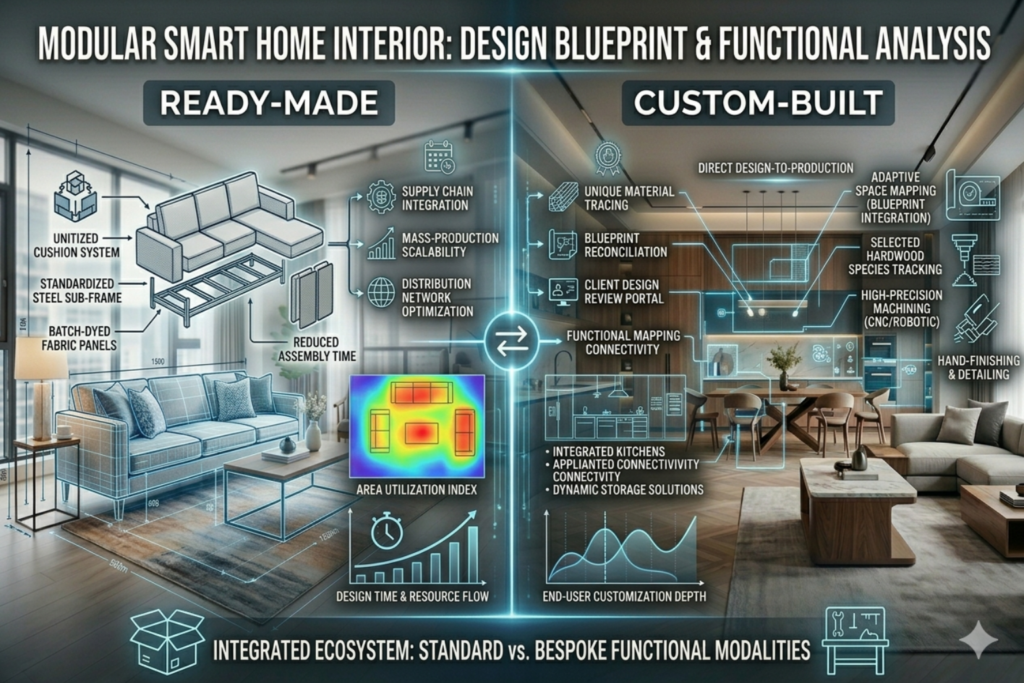

Furniture is one of the most important investments homeowners make during an interior design project.
Whether you’re moving into a new apartment, building a house, or renovating an existing home, one question inevitably arises:
Should you buy ready-made furniture or invest in custom furniture?
At first glance, ready-made furniture often appears to be the simpler choice. It is readily available, easy to purchase, and typically faster to install.
Custom furniture, on the other hand, requires planning, design discussions, manufacturing time, and a larger commitment.
However, the decision is not simply about convenience versus customization.
It is about understanding which option aligns better with your lifestyle, space requirements, budget, and long-term expectations.
The reality is that both approaches have advantages. The right choice depends on how you intend to use your home and what you expect from your furniture over the coming years.
Understanding Ready-Made Furniture
Ready-made furniture refers to furniture that is manufactured in standard sizes and sold through furniture stores, showrooms, and online platforms.
Examples include:
- Sofas
- Dining tables
- Beds
- Coffee tables
- Bookshelves
- TV units
- Accent chairs
These products are designed to suit a wide range of homes and are generally available for immediate purchase.
The biggest advantage is convenience.
Homeowners can see the product, compare options, and often have it delivered within days.
Understanding Custom Furniture
Custom furniture is designed and manufactured specifically for a particular home, room, or homeowner requirement.
Instead of selecting from existing products, homeowners work with designers and manufacturers to determine:
- Dimensions
- Materials
- Finishes
- Storage configurations
- Design aesthetics
- Functional requirements
The furniture is then produced according to those specifications.
Custom furniture is commonly used for:
- Wardrobes
- TV units
- Study units
- Storage systems
- Walk-in closets
- Modular kitchens
- Bedroom furniture
Its primary advantage is personalization.
Space Utilization: The Biggest Difference
One of the most important distinctions between ready-made and custom furniture is space efficiency.
Ready-made furniture is manufactured using standard dimensions.
This means it may not always fit perfectly within a room.
For example:
A wardrobe may leave unused gaps near the ceiling or walls.
A TV unit may not align with the room’s proportions.
A study table may not fit awkward corners effectively.
Custom furniture is designed around the available space.
This allows homeowners to maximize every inch of the room.
In modern apartments where space is valuable, this advantage can be significant.
Customization and Personalization
Ready-made furniture offers limited customization.
Homeowners usually choose from:
- Available colors
- Standard sizes
- Existing designs
Custom furniture provides much greater flexibility.
Homeowners can select:
Materials
- Plywood
- MDF
- Veneers
- Laminates
- Acrylic finishes
Storage Features
- Drawers
- Pull-out units
- Organizers
- Hidden compartments
Design Details
- Hardware
- Handles
- Lighting integration
- Finishing styles
This flexibility allows furniture to align closely with lifestyle requirements.
Cost Comparison
One of the most common assumptions is that custom furniture is always significantly more expensive.
The reality is more nuanced.
Ready-Made Furniture
Advantages:
- Lower initial cost
- Faster purchasing decisions
- Wide price range
However, costs can increase when homeowners need multiple pieces to compensate for storage limitations.
Custom Furniture
Advantages:
- Better space utilization
- Integrated storage
- Long-term functionality
While custom furniture often requires a higher upfront investment, many homeowners find it delivers better value over time.
The key consideration is not simply cost, but cost relative to functionality.
Quality and Durability Considerations
Furniture quality varies widely in both categories.
However, custom furniture often provides greater transparency regarding:
- Material specifications
- Hardware quality
- Manufacturing standards
Homeowners can make informed decisions about durability.
With ready-made furniture, internal construction details may not always be obvious.
This doesn’t mean ready-made furniture is inferior.
Many premium brands offer exceptional quality.
The important factor is understanding what materials and construction methods are being used.
Design Consistency Across the Home
One challenge homeowners frequently encounter is maintaining a cohesive design language.
Ready-made furniture purchased from multiple brands can sometimes create visual inconsistency.
Differences in:
- Finishes
- Proportions
- Materials
- Design styles
may result in a fragmented appearance.
Custom furniture allows designers to create a unified aesthetic throughout the home.
This often contributes to a more refined and professionally designed environment.
Installation and Project Timelines
Ready-made furniture has a clear advantage in terms of speed.
Most products can be:
- Purchased immediately
- Delivered quickly
- Installed within days
Custom furniture requires:
- Design development
- Material selection
- Manufacturing
- Quality checks
- Installation
This process may take several weeks.
For homeowners with urgent timelines, ready-made furniture can be an attractive option.
For those planning a long-term residence, the additional time may be worthwhile.
Maintenance and Future Modifications
Another factor often overlooked is adaptability.
Ready-made furniture offers limited flexibility for future changes.
Custom furniture can often be designed with:
- Modular components
- Expandable storage
- Future upgrades
This can be particularly valuable for growing families whose requirements may evolve over time.
A Practical Approach for Modern Homes
Interestingly, the best solution is often not choosing one option exclusively.
Many successful homes combine both.
For example:
Custom Furniture
Used for:
- Wardrobes
- Modular kitchens
- Study units
- TV units
- Storage systems
Ready-Made Furniture
Used for:
- Sofas
- Accent chairs
- Dining chairs
- Coffee tables
- Decorative furniture
This hybrid approach combines customization with convenience.
What Homeowners Regret Most
When reviewing completed interior projects, several patterns emerge.
Homeowners rarely regret investing in:
- Better storage
- Quality materials
- Functional customization
However, they frequently regret:
- Insufficient storage
- Poor space utilization
- Furniture that doesn’t fit properly
- Short-term purchasing decisions
These observations highlight the importance of evaluating furniture beyond aesthetics alone.
Which Option Is Right for You?
Ready-made furniture may be ideal if you:
- Need quick installation
- Have a limited budget
- Prefer flexibility in furniture replacement
- Require standalone furniture pieces
Custom furniture may be ideal if you:
- Want maximum space utilization
- Need specialized storage
- Prefer personalized design
- Plan to stay in the home long-term
- Want a cohesive interior aesthetic
The decision should be based on lifestyle and functionality rather than trends.
Expert Insight: Furniture Should Solve Problems, Not Just Fill Space
One observation consistently emerges across successful interior projects.
The furniture homeowners appreciate most after several years is rarely the most expensive piece.
Instead, it is the furniture that makes daily life easier.
Whether that comes from a ready-made product or a custom solution is less important than how effectively it supports the homeowner’s needs.
Good furniture is not simply about appearance.
It is about creating comfort, organization, efficiency, and long-term value.
FAQ
Is custom furniture better than ready-made furniture?
Not necessarily. The right choice depends on budget, space requirements, customization needs, and long-term plans.
Is custom furniture more expensive?
Custom furniture often has a higher upfront cost but may provide better value through improved functionality and space utilization.
What furniture should be customized?
Wardrobes, modular kitchens, study units, TV units, and storage systems typically benefit most from customization.
Is ready-made furniture durable?
Quality varies by manufacturer and materials. Premium ready-made furniture can be highly durable.
Can homeowners combine both options?
Yes. Many well-designed homes use custom furniture for storage solutions and ready-made furniture for movable pieces.