
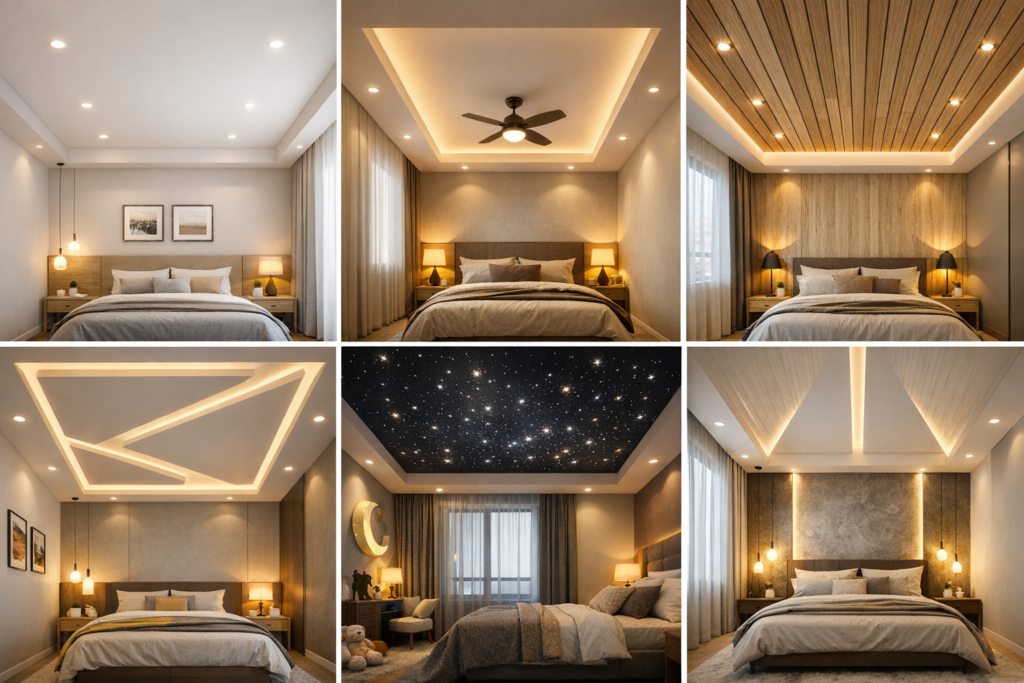
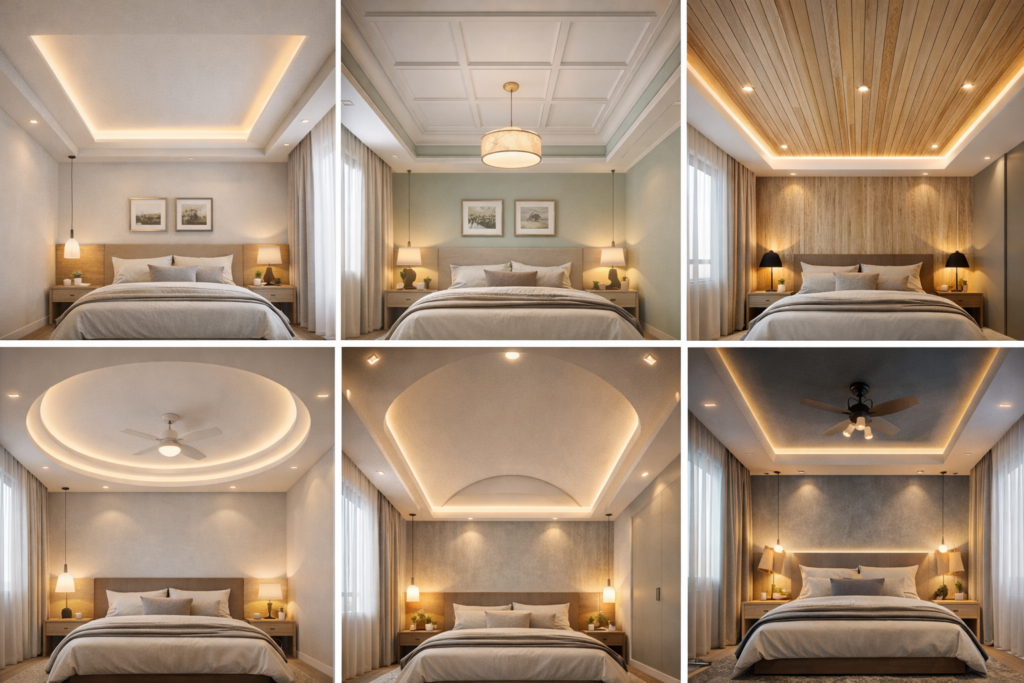
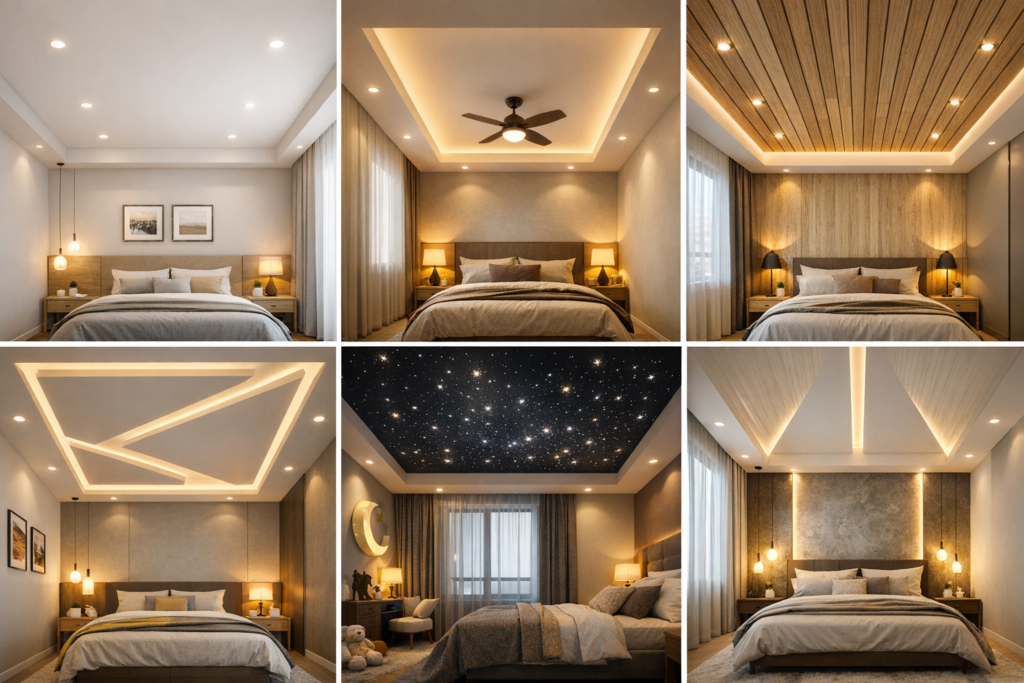

Small bedrooms deserve big design ideas. A thoughtful ceiling design can transform a compact room into a sanctuary that feels spacious, stylish, and serene. This ultimate guide walks you through every aspect of small bedroom ceiling design — from lighting tricks to architectural details, from minimalist ceilings to bold statement treatments. Curated with expert insights from Avinnyya – leading interior designer in Bengaluru, this guide ensures your small bedroom becomes a beautifully optimized space tailored for comfort and style.
Why Ceiling Design Matters in Small Bedroom
In small bedrooms, the ceiling plays a more vital role than in larger rooms. It influences:
- Perception of height — smart design can make a low ceiling feel taller.
- Atmosphere and mood — lighting, material, and color affect how the room feels.
- Visual flow — connecting the ceiling with walls and décor can visually expand space.
- Concealment — using false ceilings can hide wiring, ducting, and imperfections.
A well-designed ceiling in a compact bedroom is not just decoration — it’s a strategy to maximize space, light, and comfort.
Core Design Principles
Before jumping into styles and ideas, keep these principles in mind:
1. Light Colors = Light Space
Using light tones like crisp white, soft pastels, or neutrals makes the ceiling reflect more light — creating a sense of openness. Lighter ceilings recede visually, making rooms feel taller and brighter.
2. Good Lighting Expands Space
Direct and indirect light (recessed LEDs, strip lights, cove lighting) makes the ceiling plane appear higher and more dynamic.
3. Avoid Heavy Visual Weight
Dark paints, thick beams, or overly busy textures on ceilings can make a compact room feel tighter — use them thoughtfully and in balance.
4. Create Vertical Flow
Visual cues like recessed lines, indirect lighting, or continuity with wall colors encourage the eye to move upward, stretching perception.
Where to Use Images in Your Blog
Suggested Image Placements:
- Hero image at top — inspiring small bedroom ceiling design
- Before/after comparison — highlight transformation with lighting
- Recessed LED lighting schemes — show soft uplighting effects
- Tray & peripheral ceiling visuals — depth and dimension examples
- Wood slats / beams installation visuals — texture with height emphasis
- Accent paint or wallpaper ceiling effects — bold yet elegant
- 3D panel or geometric patterns — artistic impact
- Natural and indirect lighting setups — cozy ambiance examples
Discover a curated collection of simple, modern, minimalist, budget-friendly, and space-enhancing ceiling ideas for small bedrooms.
See the ideas here – 25+ Small Bedroom Ceiling Ideas & Inspirations to Transform Compact Spaces
This guide highlights design concepts, color combinations, lighting tricks, and creative styles that make compact rooms feel brighter, taller, and more visually appealing.-
Top Small Bedroom Ceiling Design Ideas
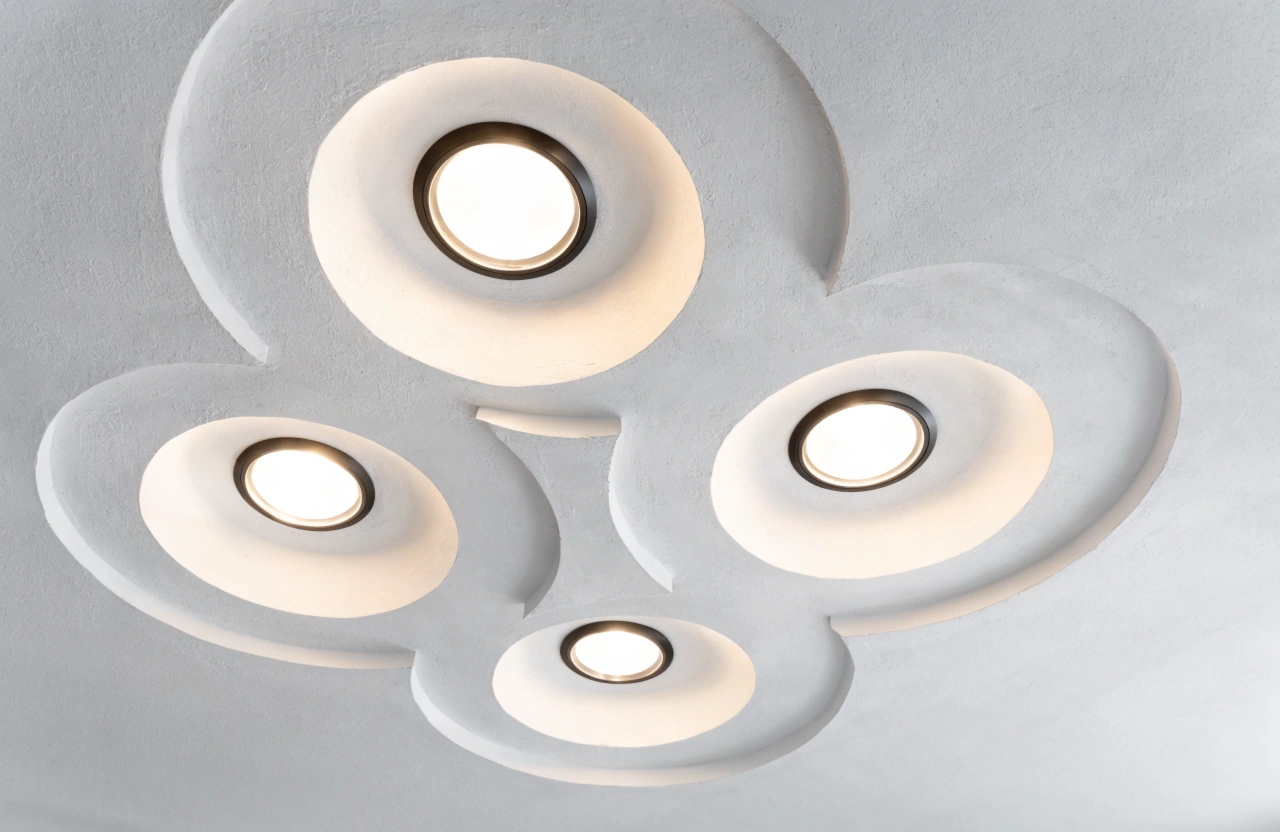
1. Minimalist White Ceiling — Effortless & Elegant
A straightforward white ceiling with clean plaster and recessed LED lights is timeless and functional. The neutral tone reflects light, minimizes visual clutter, and pairs with any décor.
Best for:
- Low ceilings
- Modern minimal interiors
- Small guest bedrooms
Why it works: Soft white ceiling treatments visually merge with walls, making corners fade and height appear greater.
2. Recessed LED & Cove Lighting — Elevate Without Height Loss
LED cove lighting installed in perimeter recesses creates a floating effect, washing light upward and enhancing height perception. This integrates beautifully with false ceilings or POP borders.
Lighting Tips:
- Use warm white LEDs (~3000K) for a calming vibe.
- Add dimmers to switch moods from energizing to cozy.
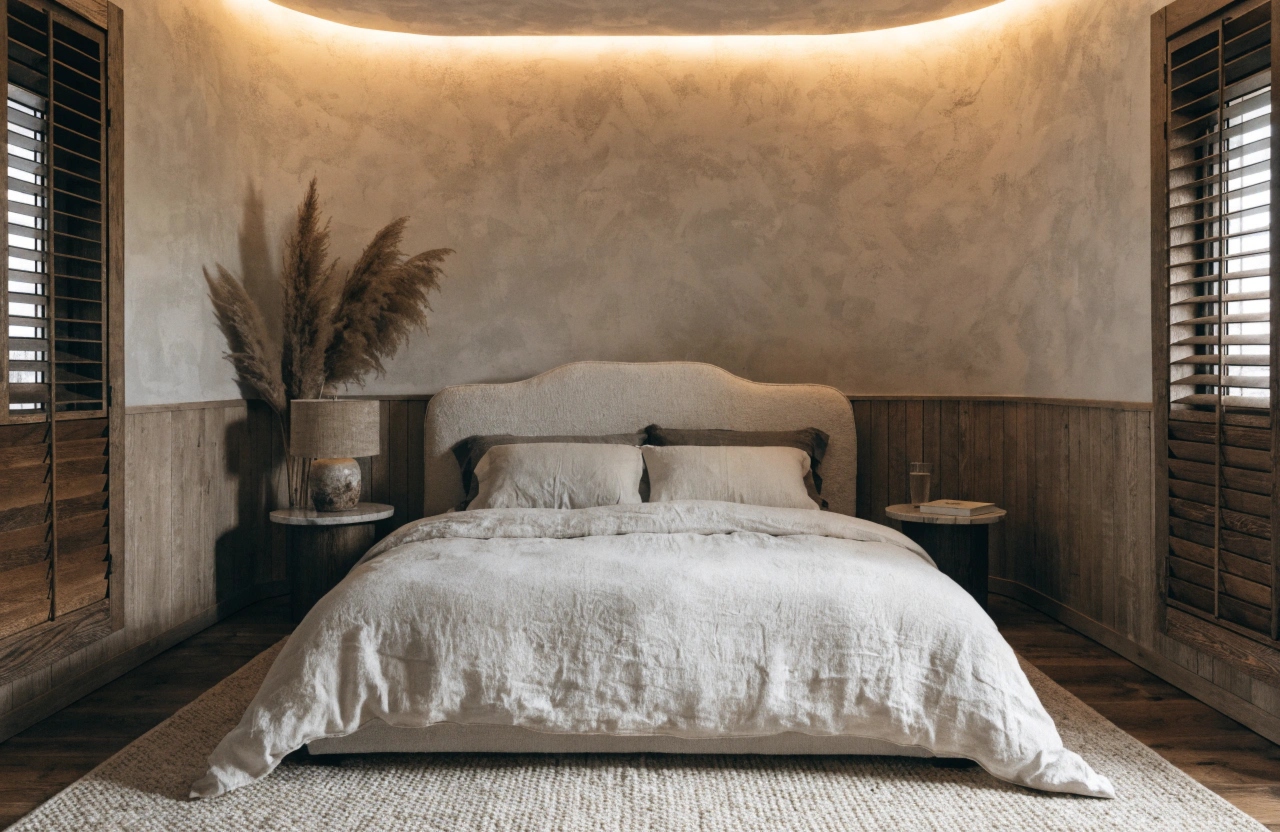
3. Wood Slats & Faux Beams — Warm Texture, Height Illusion
Thin wooden slats or faux beams running lengthwise draw the eye upward and lend warmth without heaviness. Light-toned wood keeps the space feeling open.
Style ideas:
- Parallel slats for Scandinavian simplicity
- Chevron or herringbone patterns for a modern twist
Tip: Avoid heavy dark beams as they can visually pull the ceiling down.
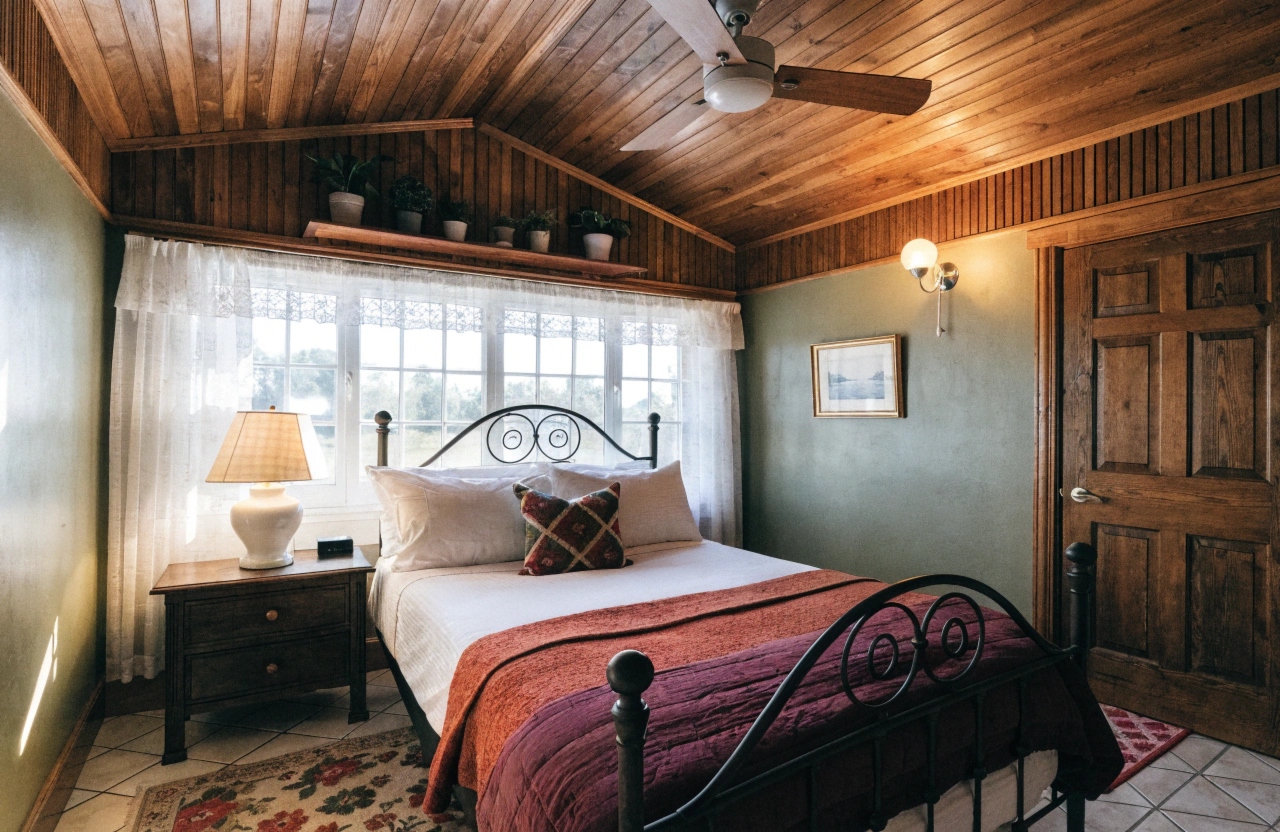
4. Painted Accent Ceiling — Stylish Vertical Interest
Use soft or subtle accent colors on the ceiling for personality. A matte finish helps soften glare and expand visual space.
Color picks:
- Pastel blue
- Light sage green
- Muted terracotta
- Soft gray
Pro Design Tip: Match accent ceilings with bedding or décor for visual continuity.
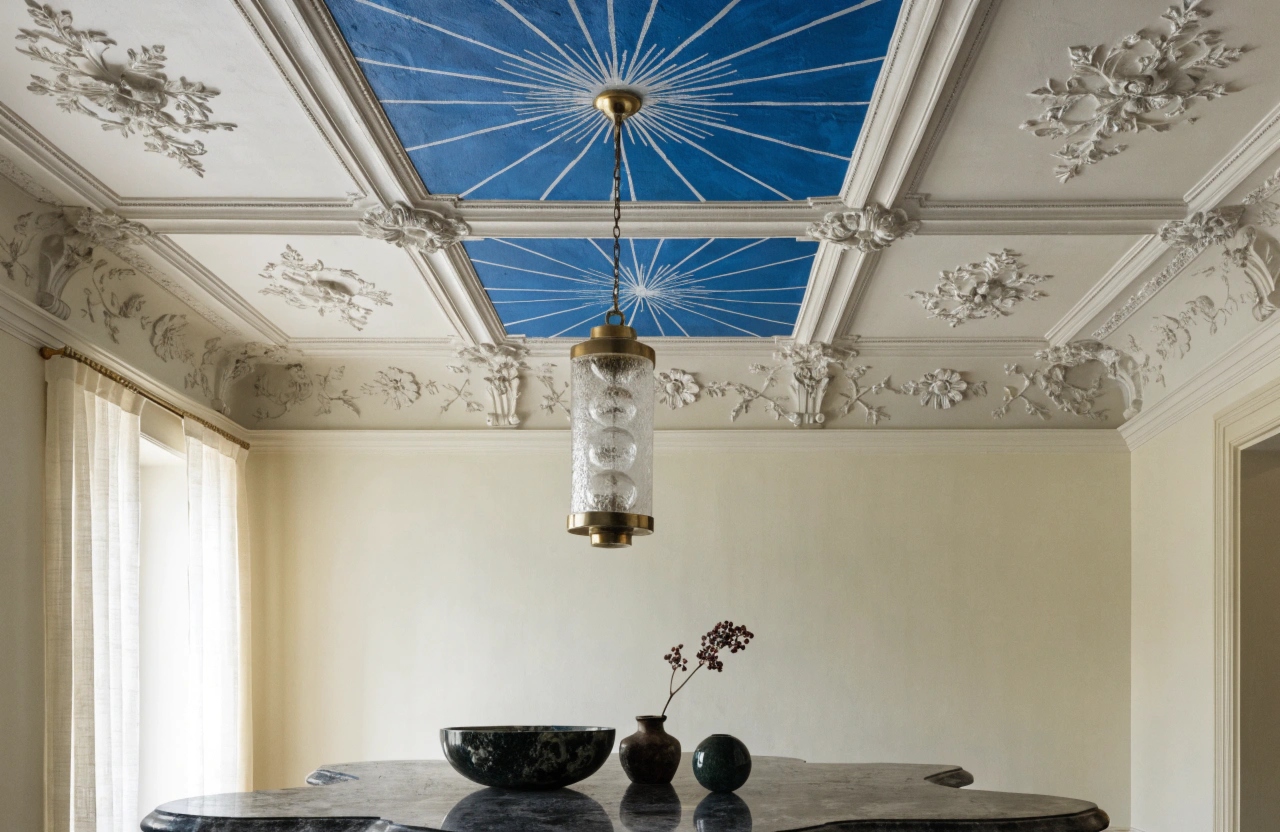
5. Tray & Peripheral Ceiling — Depth Without Chaos
Tray ceilings create an architectural depth by recessing the center section slightly — perfect when paired with hidden lighting. Peripheral ceilings outline the walls and lift the visual height subtly.
Benefits:
- Adds dimension
- Works with minimal drops (4–6 inches)
- Doesn’t eat headroom
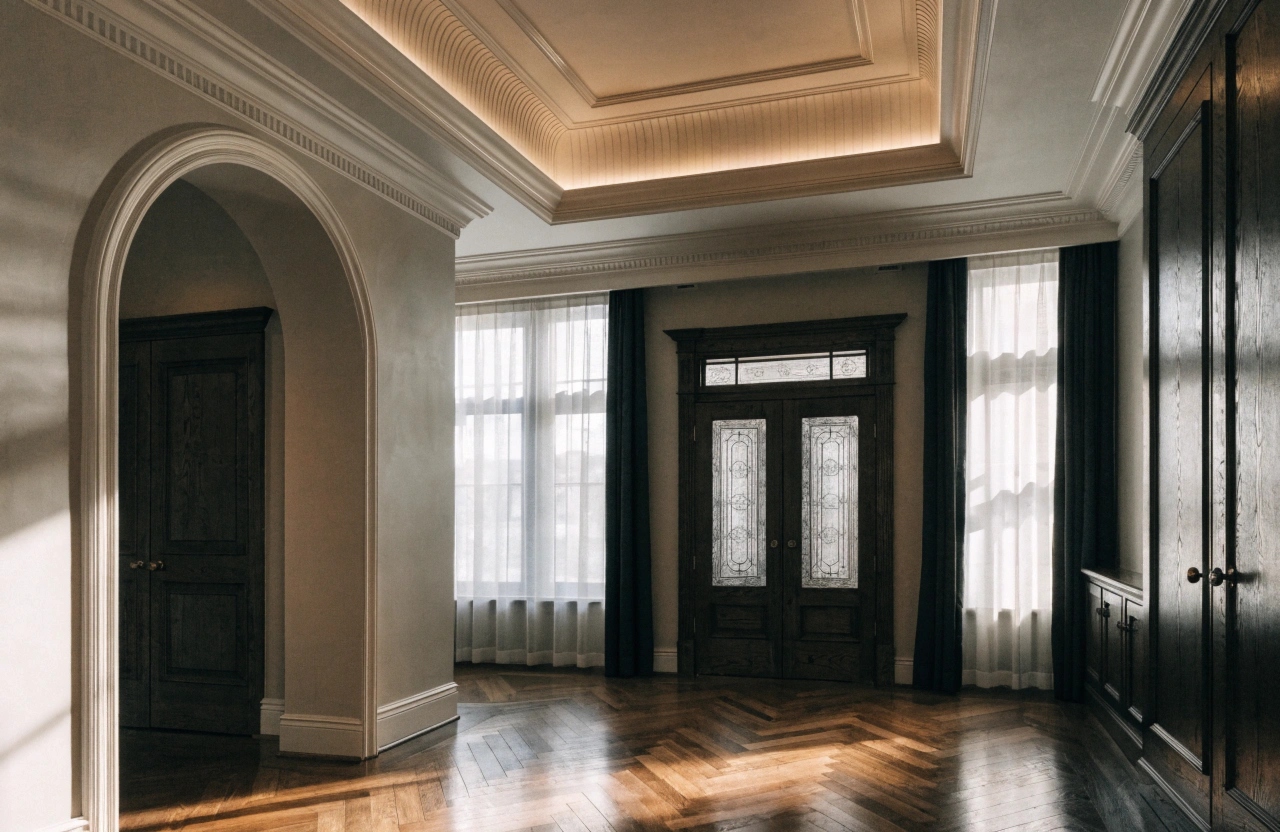
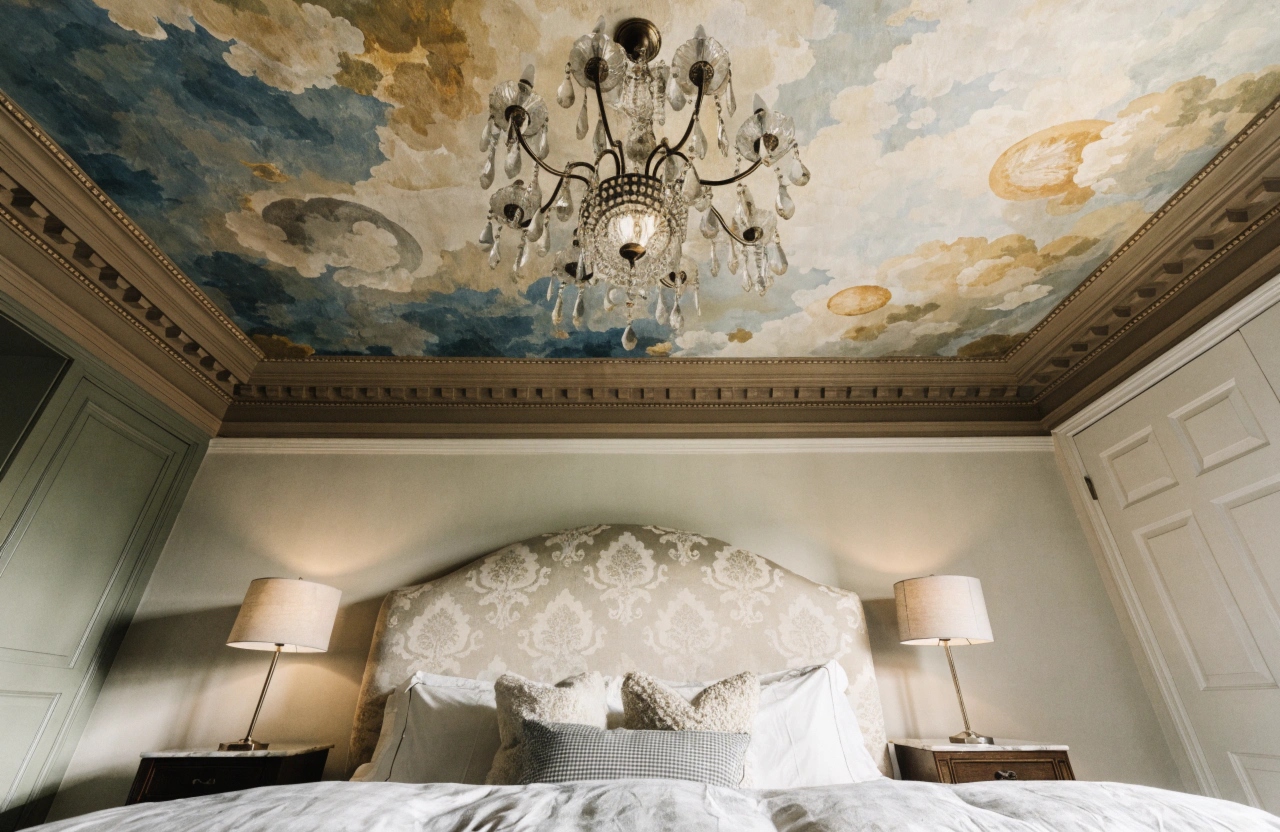
6. Wallpaper or Patterned Ceiling — The “Fifth Wall” Effect
Applying wallpaper or pattern overhead turns the ceiling into a design highlight. Subtle patterns or light-colored prints enhance depth without visual clutter. Thick, busy designs should be avoided in very small spaces.
Best uses:
- Subtle floral murals
- Vertical pattern prints
- Light geometric wallpapers
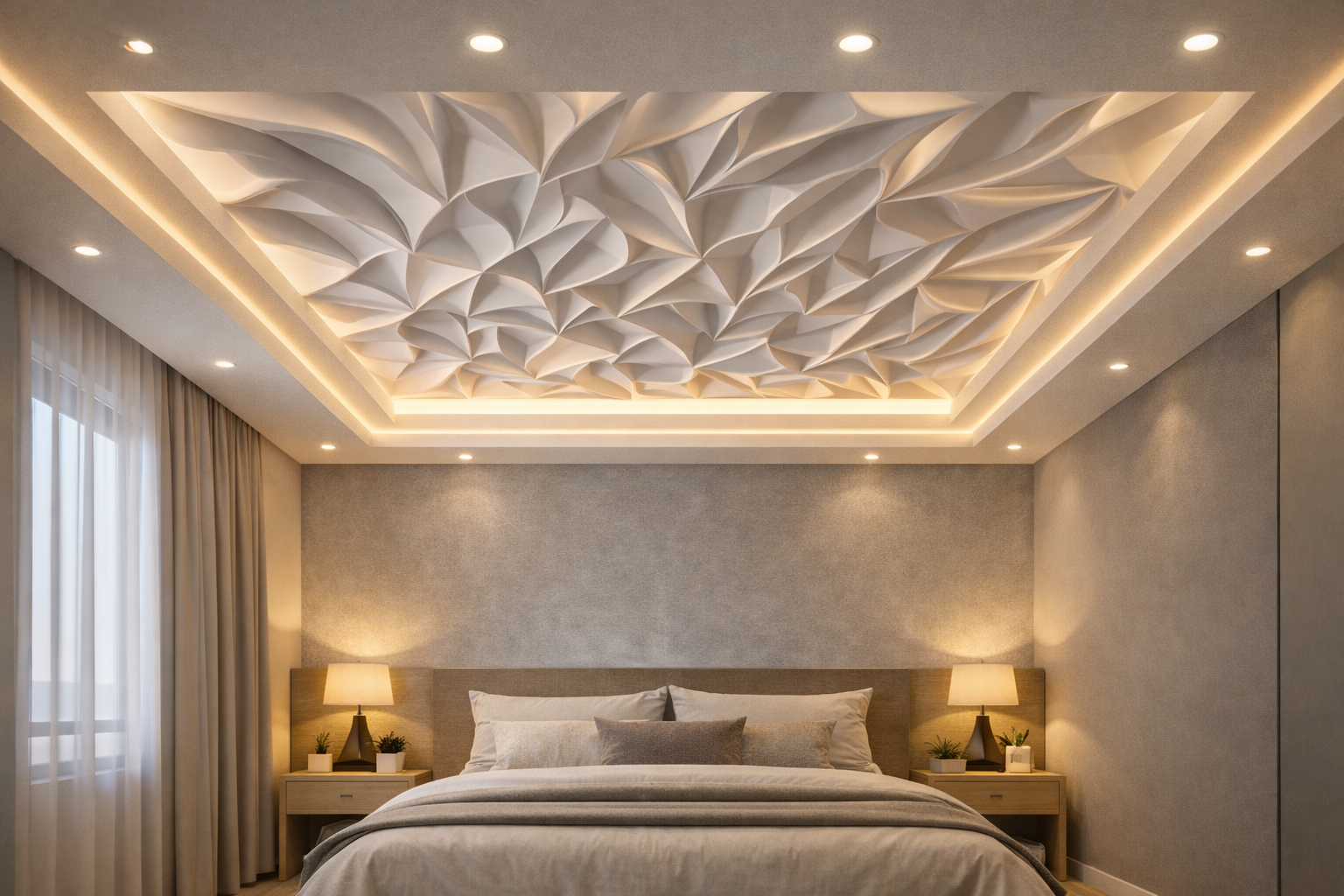
7. 3D Panels & Sculptural Details — Artistic Statement
Lightweight 3D ceiling panels add texture and visual interest without structural modifications. They can improve acoustics and create shadow play that elevates mood.
Use sparingly: Let 3D elements be focal points — not overwhelming.
8. Starry or LED Integrated Designs — Magical & Cozy
Using fiber-optic LED lights in false ceilings can mimic a starry night or soft constellation pattern — beautiful especially in kids’ bedrooms or bedrooms with relaxed, dreamy themes.

Lighting: The Magical Third Dimension
Lighting is the most transformative component in any ceiling design:
- Recessed lights — clean, modern illumination
- Cove lights — soft indirect glow
- LED strips — color tuning & mood changes
- Pendant lights — for accent in minimal setups
- Ceiling fans with integrated LEDs — good combination for tight spaces
💡 Tip: Hide fixtures if possible — flush lighting opens up more vertical space.
A detailed breakdown of the most popular ceiling materials used in small bedrooms, including gypsum, POP, PVC, wooden panels, and more.
Read the Full Guide here – The Complete Guide to Ceiling Types & Materials for Small Bedrooms (Gypsum, POP, PVC, Wood & More)
Learn their pros and cons, best use cases, durability, cost expectations, and how each material impacts the look, feel, and height of compact spaces.
Material & Construction Insights
False Ceiling Choices
- Gypsum board — versatile & smooth finish
- POP (Plaster of Paris) — great for curved or creative shapes
- PVC or lightweight panels — budget-friendly and moisture-resistant
- Wood or laminate slats — warm texture
Installation tip: Opt for minimal drop heights (2–6 inches) to preserve actual ceiling height.
Integration With Other Bedroom Elements
Connect Ceiling With Bed Area
Focus the ceiling design above the headboard — this creates a natural framed look and makes the room feel taller.
Match Ceiling Tone With Walls
Painting walls and ceiling in similar hues visually blurs boundaries and expands space.
Coordinate With Lighting Scheme
Ensure natural and artificial lights complement ceiling design — bright daytime, warm night ambience.
Avoid These Common Mistakes
- Dark overhead colors — make ceilings feel lower.
- Too many design elements overhead — clutter shrinks perception.
- Heavy beams or deep coffers — eat headroom and compress space.
- Busy patterns without enough light — visually heavy ceilings.
Budget-Friendly Ceiling Ideas for Small Rooms
You don’t need expensive renovations for big impact:
🔹 White paint + recessed LEDs
🔹Simple POP border with LED strip
🔹Wallpaper accent panel
🔹Minimal wood slats
🔹Matte finish paint to bounce more light
These can be achieved within modest budgets but still offer high style and spatial enhancement.
A practical buyer’s guide covering ceiling pricing, installation steps, material cost comparisons, contractor selection, and long-term maintenance.
Read the Full costs guide here – Small Bedroom Ceiling Costs, Installation Steps & Professional Services (Full Buyer’s Guide) Ideal for homeowners planning a new ceiling, renovation, or professional upgrade for their small bedroom.
Small Bedroom Ceiling Design Checklist
Feature | Recommended ✓ | Skip ✗ |
Light reflective paint | ✓ | Dark, heavy colors ✗ |
Recessed lighting | ✓ | Large hanging lights ✗ |
Cove or hidden LED strips | ✓ | Bulky fixtures ✗ |
Minimal drop ceilings | ✓ | Deep multi-tiered false ceilings ✗ |
Wood or textured accents | ✓ (light tones) | ✗ (heavy beams) |
Wallpaper or pattern | ✓ (subtle) | ✗ (loud & busy) |
Small bedrooms don’t mean small design potential. With thoughtful ceiling solutions — from light color treatments, creative lighting, architectural depth, to textural accents — you can sculpt a space that feels larger, brighter, and more cohesive.
The key is balance: use design elements that highlight vertical space, reflect light effectively, and maintain visual simplicity with intentional focal points.