
POP Ceiling Ideas for Small Bedrooms — Stylish & Space-Smart Designs
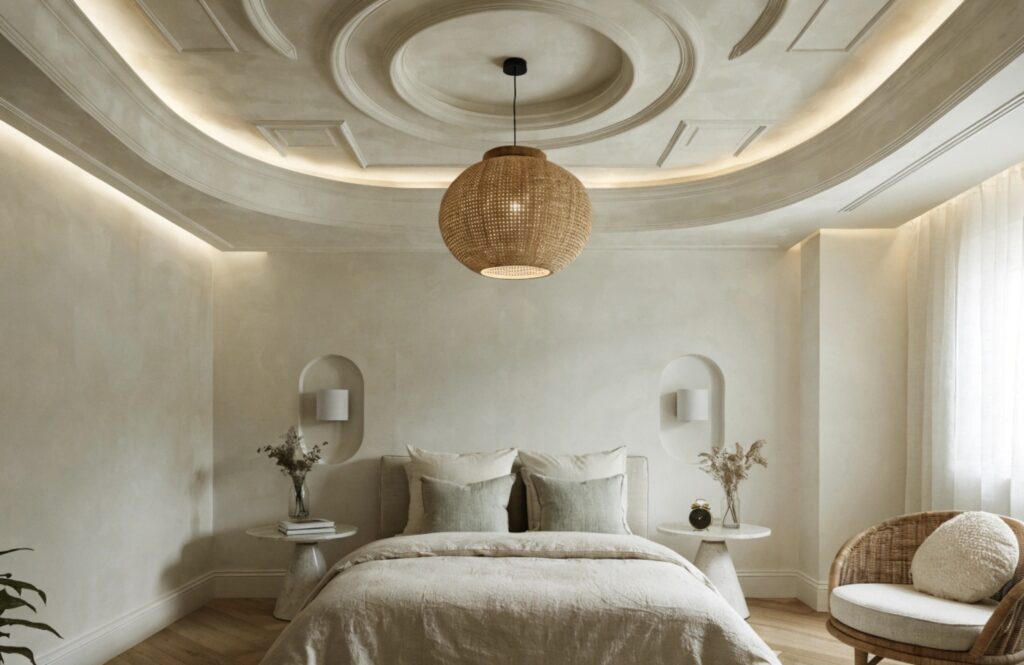

Designing a stunning ceiling in a small bedroom can feel overwhelming. With limited height and compact dimensions, every design element must be intentional. Among all ceiling materials available today, POP (Plaster of Paris) remains one of the most versatile and beautiful choices—especially for smaller bedrooms.
Lightweight, moldable, and capable of hiding wiring while enabling seamless lighting integration, POP ceilings can transform even the smallest bedrooms into stylish, visually open spaces. This guide explores the best POP ceiling ideas, lighting strategies, cost expectations, design principles, and practical tips to help you choose the perfect POP ceiling design for your home.
Why Choose POP for Small Bedroom Ceilings?
POP has become one of the most trusted materials in modern ceiling design—and for good reason. It works especially well in small bedrooms where space efficiency and visual lightness are essential.
1. Lightweight & Easy to Mold
POP is extremely flexible, allowing designers to create flat ceilings, layered designs, curves, patterns, and recessed lighting sections without adding excessive weight.
2. Enhances Lighting Performance
POP works perfectly with cove lighting, recessed LEDs, backlit panels, and hidden strips. Good lighting is especially important in small bedrooms because it heavily affects how big and open the room feels.
3. Hides Wiring & Imperfections
A POP false ceiling conceals cables, ducting, and wiring, creating a smooth and polished appearance without clutter.
4. Makes Small Rooms Look Larger
Flat POP surfaces reflect light better, and the right ceiling shape can even lift the room visually. Small bedrooms need materials that open the space—not shrink it.
5. Blends With Any Interior Style
Whether your bedroom theme is minimal, modern, classic, or rustic, POP can be shaped to match it.
Top POP Ceiling Design Ideas for Small Bedrooms
Below you’ll find the most effective, trending, and small-space-friendly POP designs. These are carefully expanded based on SERP-leading patterns, user behavior, and best-performing design principles.
1. Minimalist Flat POP Ceiling with Cove Lighting
Flat POP ceilings are the most recommended for small bedrooms. They create a clean, seamless surface without adding visual heaviness—a crucial advantage in compact spaces.
When paired with cove lighting, the ceiling becomes a soft light source rather than a visually intrusive structure. LED strips inside the coves bounce light upward, illuminating the ceiling gently. This upward glow visually “lifts” the room and makes walls appear taller.
For rooms under 9 feet in height, this combination is ideal because it doesn’t require deep recessed layers.
Why it works:
- Visually opens up the room
- Soft, ambient lighting improves sleep comfort
- Eliminates harsh shadows
- Adds modern elegance without clutter
2. Slim Geometric POP Patterns
Geometric designs are popular in modern decor, but using heavy shapes in a small bedroom can create visual bulk. Instead, opt for slim, shallow POP lines in shapes like linear strips, hexagons, or squares.
These patterns give structure to the ceiling without lowering it significantly. They also pair beautifully with recessed lighting or edge LEDs.
Best for:
- Small modern bedrooms
- Rooms with monochrome decor
- Minimalist design lovers
Pro tip: Use matte white paint to keep the ceiling feeling airy.
3. Floating POP Panels
A floating POP panel is an excellent way to create a focal point without using a full false ceiling. These panels are mounted only partially, leaving most of the ceiling untouched. This reduces installation depth and makes the room feel less “boxed in.”
Floating panels look best when placed:
- Above the bed (most common)
- Above a study corner
- At the center of the room with soft LED glow around edges
These panels provide a luxurious feel while keeping the ceiling visually light.
4. Perimeter Border POP Designs
A thin POP border running along the perimeter of the ceiling is one of the most effective small-bedroom design tricks. It outlines the room, giving structure and elegance without reducing ceiling height.
Combine it with:
- Hidden LED strips
- Warm cove lighting
- Simple recessed spotlights
The perimeter frame draws the eye outward, subtly increasing the perception of room width.
5. Subtle Curved or Arched POP Ceilings
Curves add softness to a small bedroom, which often feels boxy due to its compact shape. Using a gentle curve in the POP ceiling brings fluidity, elegance, and visual calmness.
You can create:
- A soft arch near the headboard
- A wave-like recess across the ceiling
- Curved cove lighting for an organic glow
Curves work especially well in cozy or warm-themed bedrooms.
6. Tray POP Ceilings with LED Accents
Tray ceilings add depth and layers to a room, but for small spaces, they need to be kept shallow and simplified. A low-profile tray ceiling (1–3 inches deep) can dramatically enhance the room without overwhelming it.
Add:
- LED strips within the tray
- Soft recessed lights
- A contrasting paint color
A pastel or off-white base keeps the tray from looking too heavy.
7. POP + Wooden Accent Ceilings
POP pairs beautifully with thin wood strips or panels, creating a cozy, contemporary style. However, in small bedrooms, wood must be used sparingly to avoid darkening the space.
A POP ceiling with:
- Light wood strips
- Wooden beams
- Wooden framing around borders
Adds natural warmth without overpowering the room.
Best colors:
- Warm beige
- Ash grey wood
- Natural oak
- Light teak
8. POP Ceilings with Metallic or Mirror Inlays
For small bedrooms that lack depth or brightness, reflective elements like metallic inlays or small mirrored inserts can help. They bounce light around the room and add a premium finish.
Use them in:
- Borders
- Medallions
- Floating panels
Avoid overusing them, as too much reflection can cause visual clutter.
9. Dual-Tone POP Ceiling Designs
Colour blocking is trending in ceiling design, and POP makes it easy. Keeping the central section light while giving the borders a slightly darker shade adds depth without closing the room.
For small rooms:
- Use soft neutrals
- Avoid heavy dark colors
- Combine with cove lighting for clean separation
A dual-tone ceiling adds character while preserving spaciousness.
10. Plus-Minus POP Ceiling Patterns
Plus-minus POP works by raising certain sections while lowering others. When done subtly, it gives a dynamic, 3D effect without eating into ceiling height.
Use minimal depth (1–2 inches) and soft lighting for the best results.
Explore a detailed breakdown of materials used in modern small-bedroom ceilings. – The Complete Guide to Ceiling Types & Materials for Small Bedrooms (Gypsum, POP, PVC, Wood & More)
Lighting Tips for POP Ceilings in Small Bedrooms
Lighting is critical in small bedrooms. Even the best POP design can look flat without the right lighting choices.
Best LED Temperature:
For bedrooms, use 2700–3000K warm white to create a calm and sleep-friendly ambiance.
Key recommendations:
- Use cove lighting for a soft glow
- Pair recessed downlights with accent LEDs
- Avoid harsh white light (makes rooms feel smaller)
- Use dimmers to control mood
Indirect lighting enhances openness and smoothens the POP design.
How to Prevent POP Ceilings from Making a Room Look Smaller
A POP ceiling can make a room look bigger or smaller depending on how it’s executed. Follow these rules to avoid shrinking the space:
✔ Keep POP depth minimal
Aim for 1–3 inches to maintain height.
✔ Use soft, bright colors
White, cream, and pastel shades make the ceiling feel higher.
✔ Avoid heavy motifs
Complicated designs create visual noise.
✔ Use LED cove lighting
It lifts the ceiling visually and reduces shadows.
POP Ceiling Cost Expectations
Costs depend on design complexity and lighting needs.
Basic flat POP ceiling:
Budget-friendly, simple design.
Geometric or floating panel POP ceilings:
Mid-range cost due to extra shaping.
Wood-accent, metallic, or layered POP ceilings:
Higher cost due to added materials and detailing.
Costs also vary by:
- Region
- Labor experience
- Room size
- Electrical needs
Maintenance & Practical Considerations
POP ceilings require minimal maintenance if installed correctly.
Avoid cracks:
Hire trained installers because improper mixing leads to cracking.
Regular dusting:
Recesses and lighting coves collect dust, so occasional cleaning is needed.
Moisture protection:
POP is not ideal for humid rooms unless treated properly—ensure good ventilation.
Plan wiring in advance:
Changing wiring later is difficult; plan lighting points beforehand.
Best POP Ceiling Recommendations for Small Bedrooms
- Best for low ceilings: Minimalist flat POP with warm LED cove lighting
- Best for modern interiors: Slim geometric POP patterns
- Best for cozy ambiance: POP with light wooden accents
- Best for budget: Simple POP border with recessed LEDs
- Best for adding depth: Shallow tray ceiling with dual-tone colors
Conclusion
POP ceilings are a powerful design tool for small bedrooms. Their flexibility, smooth finish, and compatibility with modern lighting allow homeowners to completely transform compact spaces without overwhelming the room.
By choosing the right shape, depth, lighting, and accents, you can create a ceiling that doesn’t just decorate your room—it expands it visually.